


liver support
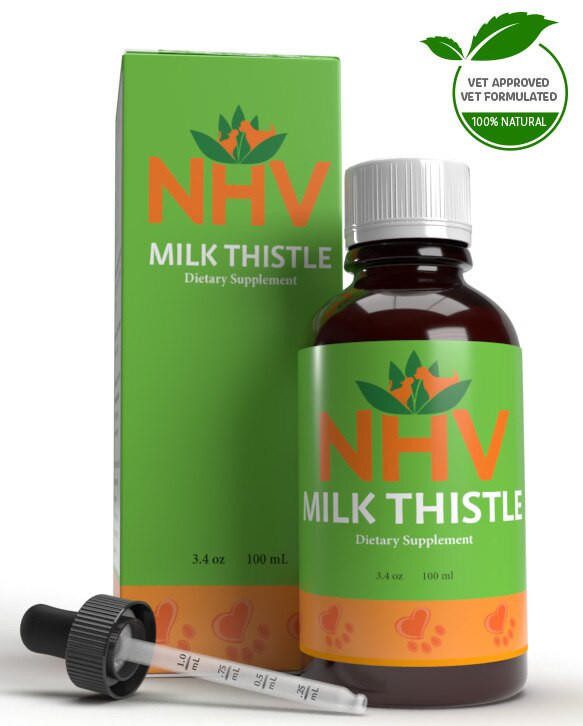
Milk Thistle for Cats
USD $42.95
free shipping over $100 (USA & Canada)
1-877-937-4372 the pet expert hotline

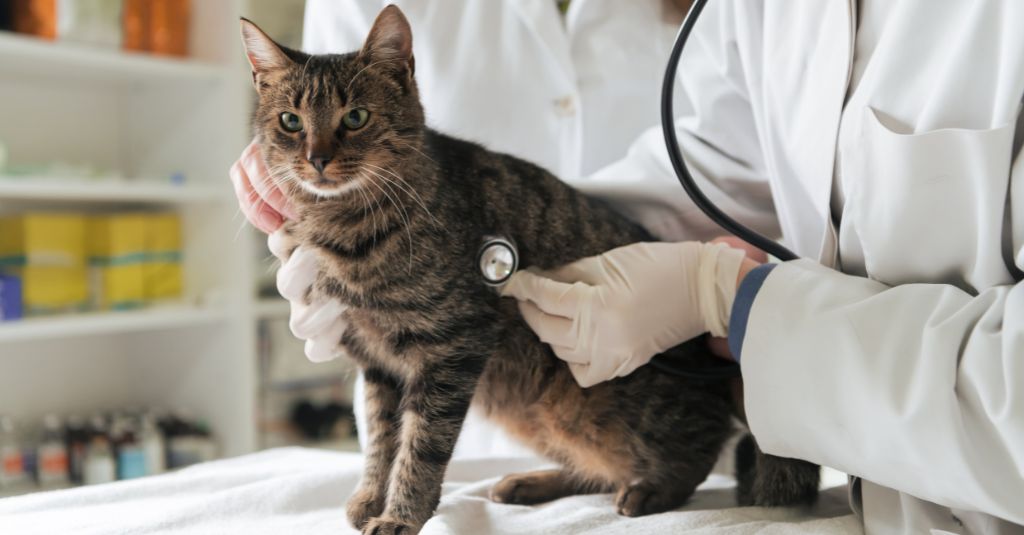
Learning that your cat has hepatic (liver) disease can be overwhelming. Among all the feline liver conditions, hepatic lipidosis, also known as fatty liver disease, is one of the most common and can be life-threatening.
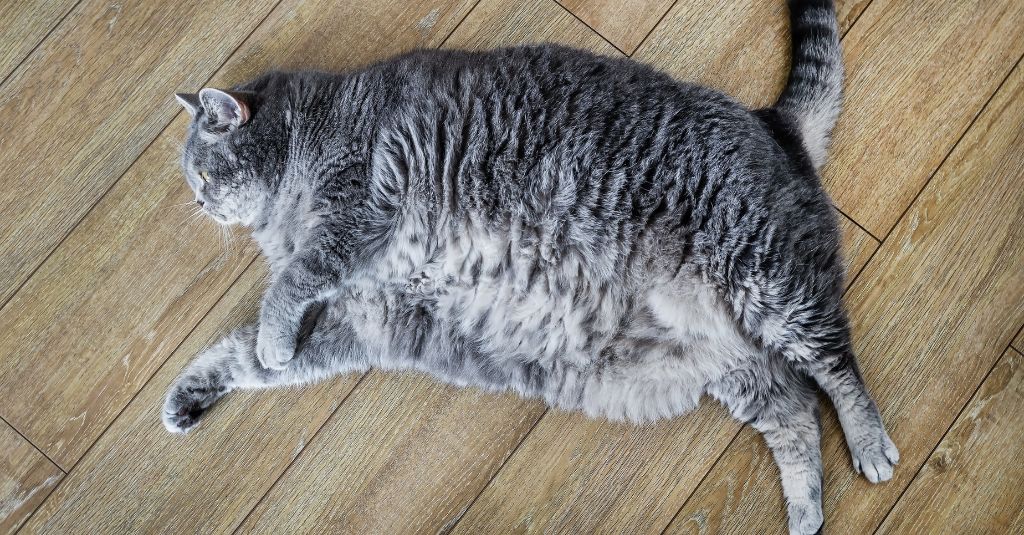
In very simple terms, hepatic lipidosis occurs when too much fat is accumulated in the liver, compromising the liver’s ability to function properly. The liver plays an important role in metabolism, detoxification, and nutrient storage in the body. When cats, especially overweight ones, stop eating suddenly, their bodies start breaking down fat to get energy. Thus, the liver becomes overwhelmed by processing this quantity of fat, leading to liver dysfunction.
This is a condition that is mostly seen in middle-aged and/or overweight cats who go through periods of stress, illness, or appetite loss.
Hepatic lipidosis can progress quickly, making early recognition critical.
Common symptoms include:
Risk factors and causes:
If the cat shows any of those symptoms, it is crucial to seek veterinary attention as soon as possible. Early diagnosis through bloodwork, ultrasound, and sometimes liver biopsy can be beneficial to improve outcomes.
The diagnosis of hepatic lipidosis is made through a combination of clinical symptoms, laboratory tests, and imaging. For example, blood tests typically reveal elevated liver enzymes and bilirubin levels, while an ultrasound may show an enlarged and/or fatty liver.
Treatment involves intensive veterinary care that often includes:
Some scientific/clinical studies have shown that early nutritional intervention is very important for survival for cats with hepatic lipidosis, with success rates reaching over 80% when treatment begins immediately.
Cats with hepatic lipidosis need a high-protein, calorie-dense, easily digestible diet to restore energy and liver function. If you need support choosing the best diet for your cat with hepatic lipidosis, talk with a veterinary nutritionist; at NHV, we offer personalized nutritional guidance to help your pet recover safely.
In addition to your veterinary care, natural supplements can support the cat’s recovery and overall well-being. NHV supplements can provide gentle, plant-based formulations that complement the conventional treatment. Here are the suggested supplements for fatty liver disease in cats:
NHV Milk Thistle: It is rich in silymarin, a compound known for its antioxidant and hepatoprotective properties. Milk thistle supports the natural regeneration of liver cells, improving detoxification and reducing oxidative stress. Scientific research in both human and veterinary medicine supports its use for liver health maintenance.
NHV PetOmega 3: Omega-3 fatty acids (EPA and DHA) can help reduce inflammation, support cellular repair, and improve metabolic function. In hepatic lipidosis, omega-3 supplementation may aid in reducing fat accumulation within the liver.
NHV Turmeric: The active component in NHV Turmeric has anti-inflammatory and antioxidant effects. It supports liver health by reducing cellular damage and modulating inflammatory pathways, which can be beneficial in chronic liver disease management.
NHV Yucca: Yucca may help reduce inflammation and may assist the body in detoxification. It supports liver function and may help with appetite and digestion during recovery.
These supplements are formulated by veterinarians and herbalists to work synergistically with prescribed treatments, helping your cat’s liver heal naturally and safely. However, before adding any supplement to a pet’s diet, it is important to talk with a veterinarian first.
To prevent hepatic lipidosis, maintaining a healthy lifestyle and minimizing stress are essential. These guidelines can help with both:
It is important to remain aware that early intervention greatly affects outcomes, as most cats recover well when treated promptly and supported holistically.
Hepatic lipidosis in cats can be a serious condition; however, with prompt veterinary care and natural liver support, recovery is possible. If you suspect your cat may have liver issues, contact your veterinarian immediately.
liver support
100% Natural Liver and Kidney Detox and Cancer Support in Cats
buy 2 and save $3
3 month supply for a small to medium size pet
What Is It?
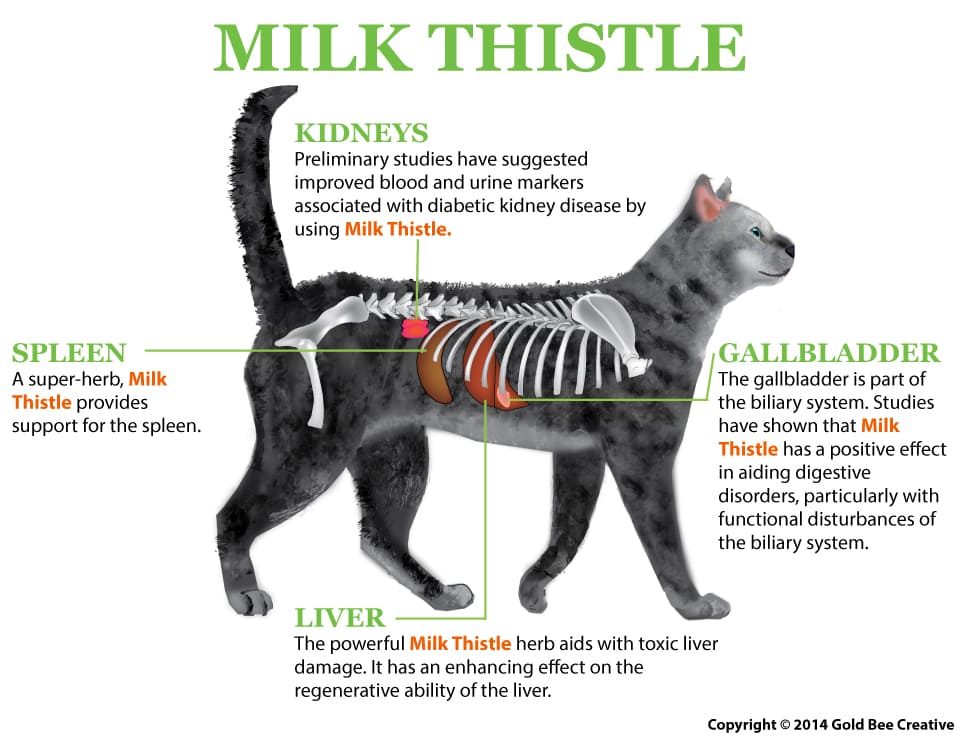
Milk Thistle is a well-known herb among conventional and holistic veterinarians, often recommended for cats who have liver disorders, are fighting cancer, diabetes, kidney issues, gallbladder and bile duct issues, as well as hyperthyroidism.
How Does it Work?
Why Should I Trust It?
100% natural supplement approved and formulated by vets.


What Is It?
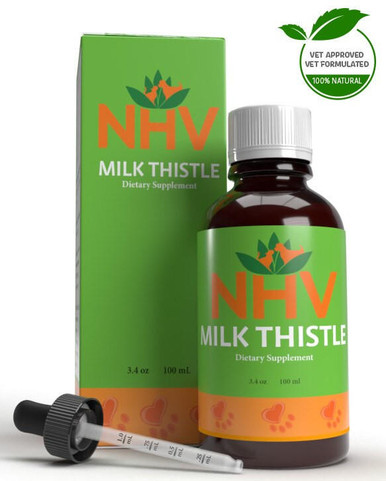
Milk Thistle is a well-known herb among conventional and holistic veterinarians, often recommended for cats who have liver disorders, are fighting cancer, diabetes, kidney issues, gallbladder and bile duct issues, as well as hyperthyroidism.
How Does it Work?
Why Should I Trust It?
100% natural supplement approved and formulated by vets.
Milk thistle, also known as Silybum Marianum is an herb that has been used for thousands of years by humans for its powerful medicinal properties. The active ingredient is Silymarin which contains flavonoids that have many beneficial properties including:
Milk thistle is one of the few herbs that have no equivalent in conventional medicine and has many uses. You can read about the many applications of Milk Thistle for cats and dogs on Dr. Hillary Cook's blog.
Milk Thistle for Liver Function
Milk Thistle for cats with liver disease is glycerin-based and safe for long-term use. This potent herbal formula provides excellent proactive support and can be taken in conjunction with conventional treatment.
Milk Thistle for Kidney Function
Milk Thistle for Anti-Cancer Support
Milk Thistle may also be beneficial to cats undergoing chemotherapy as Silymarium may enhance the activity of certain chemo drugs.
You can read Peachez's Story with Milk Thistle for cats and how it helped her with cancer and liver problems.
NHV’s certified organic Milk Thistle is a safe herb that is recommended and used by holistic practitioners. All of our products are all-natural and formulated by veterinarians with a focus on comprehensively supporting the health and well-being of your feline family member.
If you have questions about Milk Thistle or any of our plant-based products, ask an NHV expert because at NHV we want your kitty’s health to be purrfect!
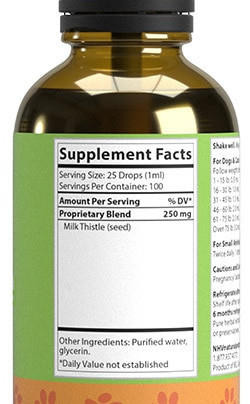
NHV’s Milk Thistle for Cats contains just one ingredient.
Select your pet's weight to determine the correct dose.
To be taken twice daily. Determine your pet’s weight and then use the easy chart below to determine the correct dose. This is the minimum dosage.
Pet's Weight Dosage
0 - 15 lb = 0.5 ml
16 - 30 lb = 1.0 ml
31 - 45 lb = 1.5 ml
46 - 60 lb = 2.0 ml
61 - 75 lb = 2.5 ml
Over 75 lb = 3.0 ml
How to Administer
Shake well before use. The easiest method is to use the dropper provide and places the drops into your pet’s food or favorite treat. You can also use the dropper and squirt directly into the pet’s mouth.
Some pets can be finicky, if this occurs consider hiding the drops in foods most pet’s love such as fish, chicken or yogurt or a favorite treat. If your pet only eats dry food then soak a few kibbles at feeding time.
For Best Results
Herbal dietary supplements are beneficial to the health and wellbeing of your pet and are safe for long-term use. Every pet responds to natural herbal supplements differently, therefore it is important to be consistent and administer the product daily. Supplements generally take two to four weeks to take effect, however this will vary from one animal to the next.
Product Storage
All NHV Natural Pet Products are pure herbal extracts and contain no artificial additives, preservatives or coloring. Shelf life after opening is 6 months and must be refrigerated after opening.
Cautions and Contraindications
Do not use Milk Thistle in pregnant or nursing animals. Speak to your vet before using our products. A second visit is recommended if your pet’s condition does not improve, or deteriorates after continued use of the supplements.
All information provided by NHV Natural Pet Products is for educational purposes only.
Milk thistle, also known as Silybum Marianum is an herb that has been used for thousands of years by humans for its powerful medicinal properties. The active ingredient is Silymarin which contains flavonoids that have many beneficial properties including:
Milk thistle is one of the few herbs that have no equivalent in conventional medicine and has many uses. You can read about the many applications of Milk Thistle for cats and dogs on Dr. Hillary Cook's blog.
Milk Thistle for Liver Function
Milk Thistle for cats with liver disease is glycerin-based and safe for long-term use. This potent herbal formula provides excellent proactive support and can be taken in conjunction with conventional treatment.
Milk Thistle for Kidney Function
Milk Thistle for Anti-Cancer Support
Milk Thistle may also be beneficial to cats undergoing chemotherapy as Silymarium may enhance the activity of certain chemo drugs.
You can read Peachez's Story with Milk Thistle for cats and how it helped her with cancer and liver problems.
NHV’s certified organic Milk Thistle is a safe herb that is recommended and used by holistic practitioners. All of our products are all-natural and formulated by veterinarians with a focus on comprehensively supporting the health and well-being of your feline family member.
If you have questions about Milk Thistle or any of our plant-based products, ask an NHV expert because at NHV we want your kitty’s health to be purrfect!
NHV’s Milk Thistle for Cats contains just one ingredient.
Select your pet's weight to determine the correct dose.
To be taken twice daily. Determine your pet’s weight and then use the easy chart below to determine the correct dose. This is the minimum dosage.
Pet's Weight Dosage
0 - 15 lb = 0.5 ml
16 - 30 lb = 1.0 ml
31 - 45 lb = 1.5 ml
46 - 60 lb = 2.0 ml
61 - 75 lb = 2.5 ml
Over 75 lb = 3.0 ml
How to Administer
Shake well before use. The easiest method is to use the dropper provide and places the drops into your pet’s food or favorite treat. You can also use the dropper and squirt directly into the pet’s mouth.
Some pets can be finicky, if this occurs consider hiding the drops in foods most pet’s love such as fish, chicken or yogurt or a favorite treat. If your pet only eats dry food then soak a few kibbles at feeding time.
For Best Results
Herbal dietary supplements are beneficial to the health and wellbeing of your pet and are safe for long-term use. Every pet responds to natural herbal supplements differently, therefore it is important to be consistent and administer the product daily. Supplements generally take two to four weeks to take effect, however this will vary from one animal to the next.
Product Storage
All NHV Natural Pet Products are pure herbal extracts and contain no artificial additives, preservatives or coloring. Shelf life after opening is 6 months and must be refrigerated after opening.
Cautions and Contraindications
Do not use Milk Thistle in pregnant or nursing animals. Speak to your vet before using our products. A second visit is recommended if your pet’s condition does not improve, or deteriorates after continued use of the supplements.
All information provided by NHV Natural Pet Products is for educational purposes only.
overall vitality
For Overall Health and Well-Being
buy 2 and save $3
What is it?
An Omega 3 supplement for cats to support their joints, heart, eyes, immune system, and overall organ function.
How does it help?
Why trust it?
Petomega 3 is made from human-grade fish, so your pet only gets the best.

What is it?
An Omega 3 supplement for cats to support their joints, heart, eyes, immune system, and overall organ function.
How does it help?
Why trust it?
Petomega 3 is made from human-grade fish, so your pet only gets the best.
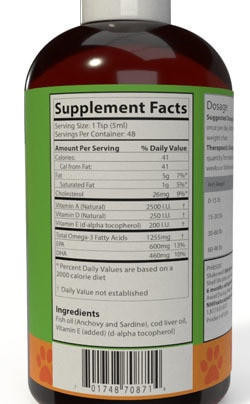
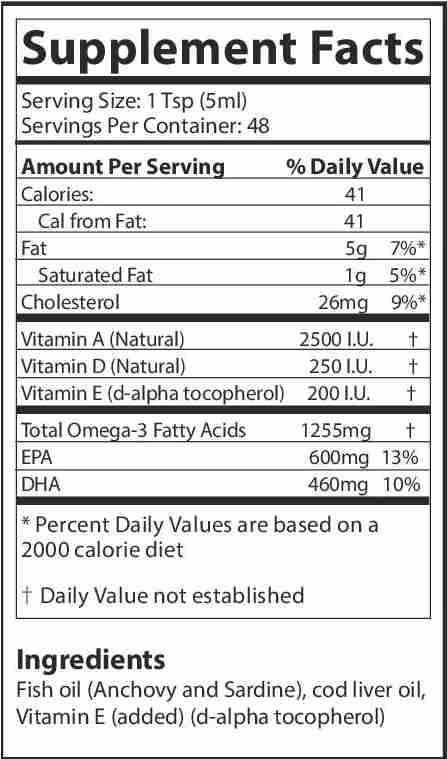
Our cat omega 3 supplement is naturally made from the oils of sardines, anchovies, and North Atlantic cod. It’s an excellent source of EPA (Eicosapentaenoic Acid 600mg) and DHA (Docosahexaenoic acid 460mg) essential omega 3 fatty acids. It’s molecularly distilled and cold-pressed to improve the bioavailability
Support your cat with human-grade quality omega 3 fish oil supplements. Many processed pet foods are deficient in this important nutrient. And according to the University of Maryland Medical Center, "It is very important to maintain a balance between omega-3 and omega-6 fatty acids in the diet. A proper balance helps maintain and even improve health."
It’s important for cats to get essential fatty acids through their diet. This omega 3 supplement for cats will help keep them healthy, and even finicky cats actually like to take it.
Benefits of Cat omega 3 supplements:
Suggested Dosage: To be taken once per day. Add to food based on weight chart.
Therapeutic Dosage: Double the quantity for maximum period of 4 weeks or follow veterinarian advise.
Pet’s Weight Dosage
0-15 lb = ¼ tsp
15-30 lb = ½ tsp
30-60 lb = 1 tsp
60-90 lb = 1 ½ tsp
How to Administer: Shake well before use. The easiest method is to add the dosage to your pets food. Some pets can be finicky, if this occurs consider hiding the appropriate amount in food most pet’s love such as fish, chicken, yogurt, or a favorite treat. If your pet only eats dry food then soak kibbles at feeding time.
For Best Results
Dietary supplements are beneficial to the health and well-being of your pet and are safe for long-term use. Every pet responds to natural supplements differently, therefore it is important to be consistent and administer the product daily. Supplements generally take two to four weeks to take effect, however this will vary from one animal to the next.
Product Storage
All NHV Natural Pet Products contain no artificial additives, preservatives or coloring. Shelf life after opening is 6 months and must be refrigerated after opening.
Cautions and Contraindications
Avoid During Pregnancy.
Our cat omega 3 supplement is naturally made from the oils of sardines, anchovies, and North Atlantic cod. It’s an excellent source of EPA (Eicosapentaenoic Acid 600mg) and DHA (Docosahexaenoic acid 460mg) essential omega 3 fatty acids. It’s molecularly distilled and cold-pressed to improve the bioavailability
Support your cat with human-grade quality omega 3 fish oil supplements. Many processed pet foods are deficient in this important nutrient. And according to the University of Maryland Medical Center, "It is very important to maintain a balance between omega-3 and omega-6 fatty acids in the diet. A proper balance helps maintain and even improve health."
It’s important for cats to get essential fatty acids through their diet. This omega 3 supplement for cats will help keep them healthy, and even finicky cats actually like to take it.
Benefits of Cat omega 3 supplements:
Suggested Dosage: To be taken once per day. Add to food based on weight chart.
Therapeutic Dosage: Double the quantity for maximum period of 4 weeks or follow veterinarian advise.
Pet’s Weight Dosage
0-15 lb = ¼ tsp
15-30 lb = ½ tsp
30-60 lb = 1 tsp
60-90 lb = 1 ½ tsp
How to Administer: Shake well before use. The easiest method is to add the dosage to your pets food. Some pets can be finicky, if this occurs consider hiding the appropriate amount in food most pet’s love such as fish, chicken, yogurt, or a favorite treat. If your pet only eats dry food then soak kibbles at feeding time.
For Best Results
Dietary supplements are beneficial to the health and well-being of your pet and are safe for long-term use. Every pet responds to natural supplements differently, therefore it is important to be consistent and administer the product daily. Supplements generally take two to four weeks to take effect, however this will vary from one animal to the next.
Product Storage
All NHV Natural Pet Products contain no artificial additives, preservatives or coloring. Shelf life after opening is 6 months and must be refrigerated after opening.
Cautions and Contraindications
Avoid During Pregnancy.
arthritis support
Support for Arthritis and Cancer
buy 2 and save $3
3 month supply for a small to medium size
What is it?
Turmeric is an herb that offers support for cardiovascular issues, skin health, liver and kidney disease, arthritis, and overall well-being.
How does it work?
Why trust it?
NHV Turmeric is vet-formulated and vet-approved.
What is it?
Turmeric is an herb that offers support for cardiovascular issues, skin health, liver and kidney disease, arthritis, and overall well-being.
How does it work?
Why trust it?
NHV Turmeric is vet-formulated and vet-approved.
From their tails to their whiskers, a cat’s body needs to be able to fight whatever comes their way - and not just the toys they like to chase, but health concerns too. NHV Turmeric for cats can be given to your furkiddos for a little extra TLC. It’s well-tolerated by our whiskered furkiddos, and can offer them many benefits!
What goes into your cat’s body every day will make a difference when it is time to fight a disease, or when they already have one. That’s why NHV supplements are designed to be given each and every day for things like:
It can even be used proactively before your furry friend becomes sick in the first place by giving them a regular boost of natural goodness!
Turmeric itself is a root with vibrant orange-golden flesh. It’s golden in the world of herbalism for pets with its many healing properties.
One of turmeric’s most well-recognized healing properties is its antioxidant content. Antioxidants can help scavenge for free radicals, which are unstable molecules that cause damage to the cells. The free radical scavenging properties of turmeric can support the body in processing and removing these molecules, minimizing the damage they can do.
At NHV, we are experts at harnessing the benefits of herbal ingredients specifically for your pets. When you choose NHV Turmeric, you’re choosing decades of holistic pet wellness experience from vets and herbalists. Our formula is:
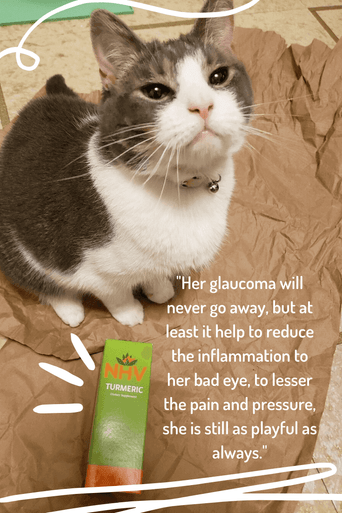
We are proud to have been a part of many cats’ success stories over the decades. Check out this feline friend of ours, Willow, who has used our Turmeric for cats formula for comfort and wellness.
Willow’s Story: “I have no doubt that the supplements from NHV have been a huge part in maintaining her health and staving off the cancer that was found in late 2021”
Holistic Veterinarian Approves of Using Turmeric for Cats
Dr. Hillary, a holistic vet, writes an in-depth overview of Turmeric and why she believes turmeric can play a beneficial role in pet health. Read Dr. Hillary’s Turmeric overview here.
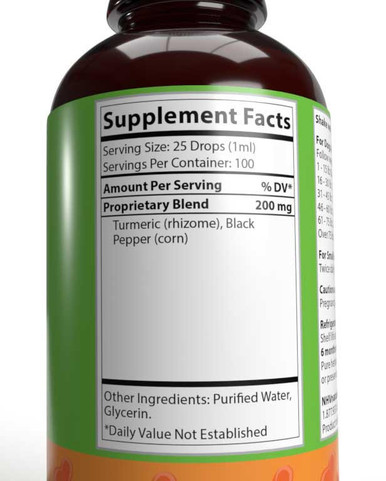
All NHV supplements are made with the finest quality organic or ethically harvested herbs. We use non-GMO vegetable glycerin as our base. NHV products are full-spectrum extracts.
Select your pet's weight to determine the correct dose.
To be taken twice daily. Determine your pet’s weight and then use the easy chart below to determine the correct dose. This is the minimum dosage.
Pet's Weight Dosage
0 - 15 lb = 0.5 ml
16 - 30 lb = 1.0 ml
31 - 45 lb = 1.5 ml
46 - 60 lb = 2.0 ml
61 - 75 lb = 2.5 ml
Over 75 lb = 3.0 ml
How to Administer
Shake well before use. The easiest method is to use the dropper provide and places the drops into your pet’s food or favorite treat. You can also use the dropper and squirt directly into the pet’s mouth.
Some pets can be finicky, if this occurs consider hiding the drops in foods most pet’s love such as fish, chicken or yogurt or a favourite treat. If your pet only eats dry food then soak a few kibbles at feeding time.
For Best Results
Herbal dietary supplements are beneficial to the health and wellbeing of your pet and are safe for long-term use. Every pet responds to natural herbal supplements differently, therefore it is important to be consistent and administer the product daily. Supplements generally take two to four weeks to take effect, however this will vary from one animal to the next.
Product Storage
All NHV Natural Pet Products are pure herbal extracts and contain no artificial additives, preservatives or coloring. Shelf life after opening is 6 months and must be refrigerated after opening.
Cautions and Contraindications: Do not use Turmeric in pregnant or nursing animals. Speak to your vet before using our products. A second visit is recommended if your pet’s condition does not improve, or deteriorates after continued use of the supplements.
From their tails to their whiskers, a cat’s body needs to be able to fight whatever comes their way - and not just the toys they like to chase, but health concerns too. NHV Turmeric for cats can be given to your furkiddos for a little extra TLC. It’s well-tolerated by our whiskered furkiddos, and can offer them many benefits!
What goes into your cat’s body every day will make a difference when it is time to fight a disease, or when they already have one. That’s why NHV supplements are designed to be given each and every day for things like:
It can even be used proactively before your furry friend becomes sick in the first place by giving them a regular boost of natural goodness!
Turmeric itself is a root with vibrant orange-golden flesh. It’s golden in the world of herbalism for pets with its many healing properties.
One of turmeric’s most well-recognized healing properties is its antioxidant content. Antioxidants can help scavenge for free radicals, which are unstable molecules that cause damage to the cells. The free radical scavenging properties of turmeric can support the body in processing and removing these molecules, minimizing the damage they can do.
At NHV, we are experts at harnessing the benefits of herbal ingredients specifically for your pets. When you choose NHV Turmeric, you’re choosing decades of holistic pet wellness experience from vets and herbalists. Our formula is:
We are proud to have been a part of many cats’ success stories over the decades. Check out this feline friend of ours, Willow, who has used our Turmeric for cats formula for comfort and wellness.
Willow’s Story: “I have no doubt that the supplements from NHV have been a huge part in maintaining her health and staving off the cancer that was found in late 2021”
Holistic Veterinarian Approves of Using Turmeric for Cats
Dr. Hillary, a holistic vet, writes an in-depth overview of Turmeric and why she believes turmeric can play a beneficial role in pet health. Read Dr. Hillary’s Turmeric overview here.
All NHV supplements are made with the finest quality organic or ethically harvested herbs. We use non-GMO vegetable glycerin as our base. NHV products are full-spectrum extracts.
Select your pet's weight to determine the correct dose.
To be taken twice daily. Determine your pet’s weight and then use the easy chart below to determine the correct dose. This is the minimum dosage.
Pet's Weight Dosage
0 - 15 lb = 0.5 ml
16 - 30 lb = 1.0 ml
31 - 45 lb = 1.5 ml
46 - 60 lb = 2.0 ml
61 - 75 lb = 2.5 ml
Over 75 lb = 3.0 ml
How to Administer
Shake well before use. The easiest method is to use the dropper provide and places the drops into your pet’s food or favorite treat. You can also use the dropper and squirt directly into the pet’s mouth.
Some pets can be finicky, if this occurs consider hiding the drops in foods most pet’s love such as fish, chicken or yogurt or a favourite treat. If your pet only eats dry food then soak a few kibbles at feeding time.
For Best Results
Herbal dietary supplements are beneficial to the health and wellbeing of your pet and are safe for long-term use. Every pet responds to natural herbal supplements differently, therefore it is important to be consistent and administer the product daily. Supplements generally take two to four weeks to take effect, however this will vary from one animal to the next.
Product Storage
All NHV Natural Pet Products are pure herbal extracts and contain no artificial additives, preservatives or coloring. Shelf life after opening is 6 months and must be refrigerated after opening.
Cautions and Contraindications: Do not use Turmeric in pregnant or nursing animals. Speak to your vet before using our products. A second visit is recommended if your pet’s condition does not improve, or deteriorates after continued use of the supplements.