digestive support
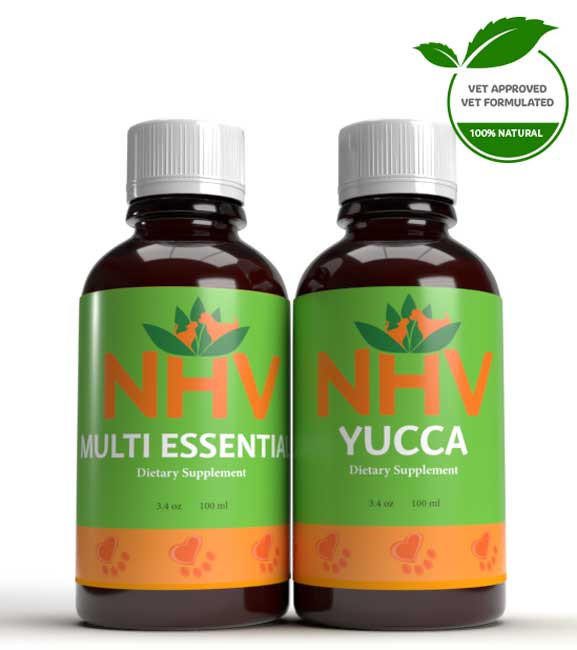
Digestion Kit
USD $101.95
free shipping over $100 (USA & Canada)
1-877-937-4372 the pet expert hotline

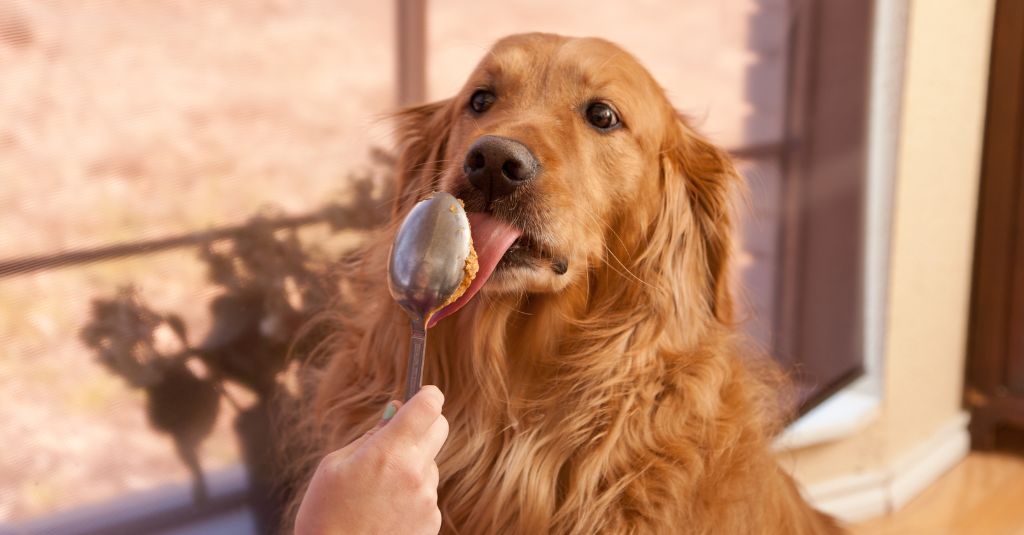
Your dog looks up at you mid-bite of your peanut butter, and starts to give you those “please share with me” eyes. It’s a tale as old as time. But now you’re asking yourself: can dogs eat peanut butter? Let’s dig into the facts for when you can – and can’t – treat your pup to the good stuff.
Not all peanut butter is created equally
In short, yes, dogs can eat small amounts of peanut butter, but not all peanut butter is created equally. The answer depends on the ingredients and how much you offer. Peanut butter is a favorite for hiding pills, stuffing toys, and making homemade dog treats. However, it’s crucial to choose the right type and serve it in moderation.
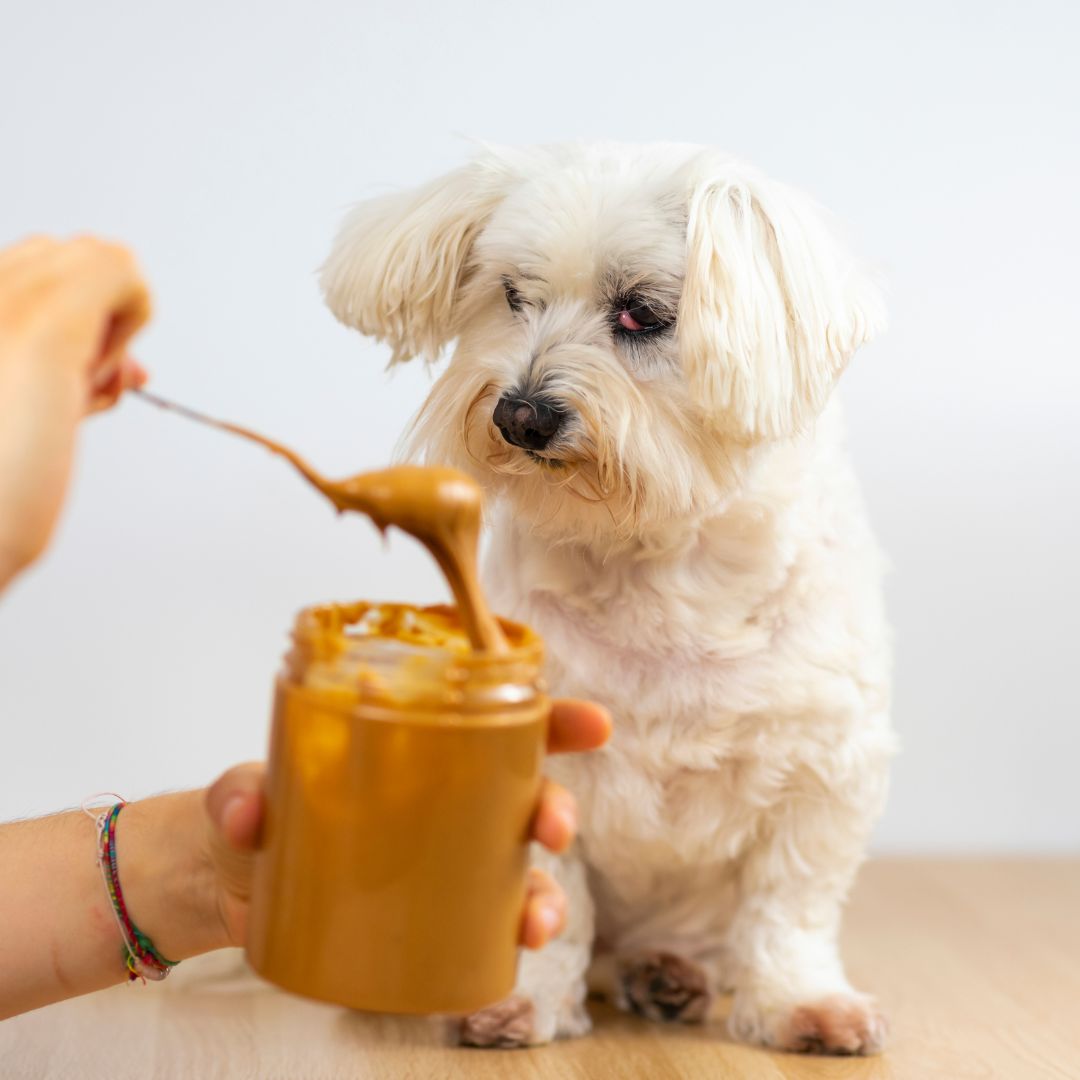
Dogs can eat crunchy peanut butter as long as it’s free from harmful additives like xylitol, excess salt, and sugar. For very small dogs or those prone to choking, smooth peanut butter may be safer.
Always opt for unsalted, xylitol-free, and natural peanut butter. Dog-specific peanut butter products are often the safest choice.
Peanut butter, when chosen wisely, offers several benefits for dogs:
But isn’t peanut butter unhealthy for dogs? Not inherently, but overfeeding or choosing the wrong type can lead to health issues like obesity or pancreatitis due to high fat content.
Xylitol is a sugar substitute found in some peanut butters and many sugar-free products. Even a small amount can cause a rapid insulin release in dogs, leading to hypoglycemia (dangerously low blood sugar), seizures, liver failure, or death.
While healthy fats are beneficial in moderation, too much fat can cause digestive upset or trigger pancreatitis—a painful inflammation of the pancreas, especially in dogs prone to this condition.
Too much sugar and salt can negatively affect our pets’ bodies, just like humans.
Always check the ingredient label before sharing peanut butter with your dog. Avoid any product containing xylitol, excess salt, or added sugar.
When choosing peanut butter for your dog, keep these guidelines in mind:
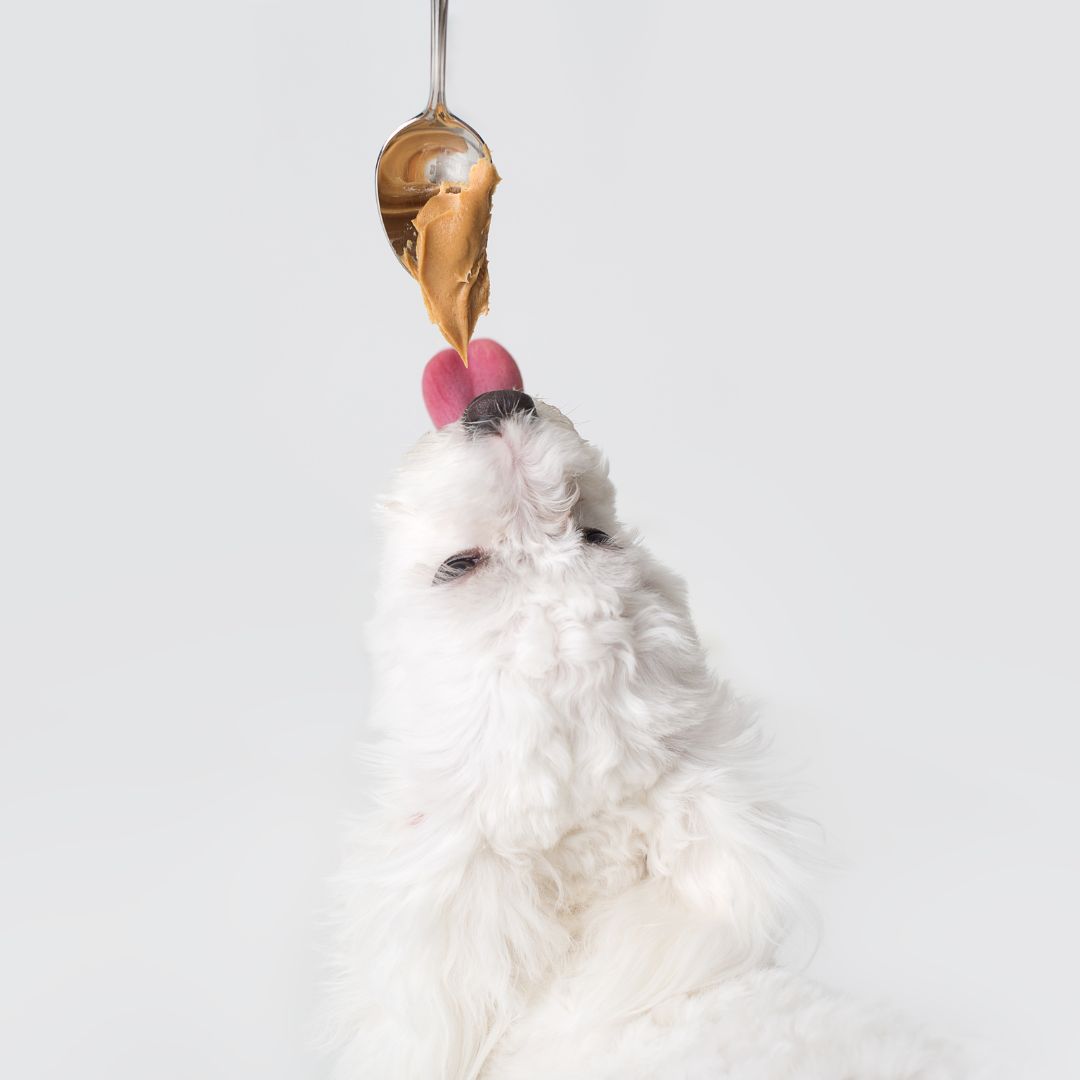
Treats, including peanut butter, should make up no more than 10% of your dog’s daily calories.
Can dogs eat apples with peanut butter? Yes! Apples (with seeds and core removed) paired with xylitol-free peanut butter make a healthy, occasional treat.
Dogs can enjoy peanut butter cookies if they’re made with dog-safe ingredients. Natural versions are best, as you control what goes in, no xylitol, low sugar, and minimal salt.
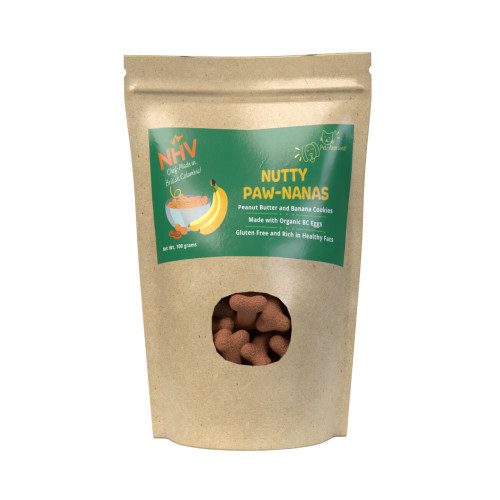
Nutty Paw-Nanas from NHV Natural Pet Products is a vet-formulated, grain-free treat made with real peanut butter and banana. Here’s why it’s a smart choice for your pup:

Like all NHV treats, they are made by a professional chef. Try Nutty Paw-Nanas for a wholesome, safe peanut butter treat.
Store-bought cookies may be more convenient, so always read labels carefully.
If your dog can’t have peanut butter, try Woof U Be Mine treats by NHV. These are made from rescued fruits and vegetables like beets, raspberries, apples, eggs, and chickpea flour. They’re:
If your dog accidentally eats peanut butter containing xylitol, chocolate, or any questionable ingredient, contact your veterinarian or an emergency animal poison control center immediately. Symptoms of toxicity can include vomiting, weakness, tremors, or seizures.
When in doubt, always consult your veterinarian before introducing new foods or treats to your dog.
Yes, dogs can eat peanut butter, but only the right kind, in the right amount. To be absolutely safe, skip peanut butter for humans and opt for dog-specific, natural treats like Nutty Pawnana or Woof U Be Mine. Your pup will thank you with a wagging tail and a happy, healthy tummy!
Always check with your veterinarian before giving your dog any new food or treat, especially if your pet has health concerns or dietary restrictions.
digestive support
Yucca & Multi Essentials
bundle and save with pet expert kits
3 month supply for a small to medium size pet.
What is it?
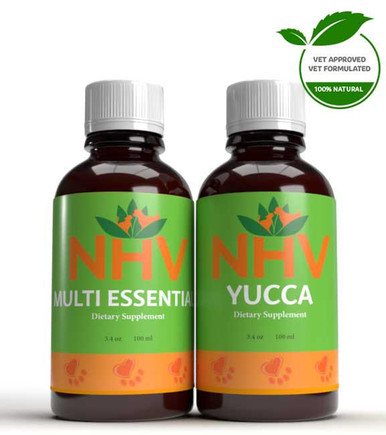
NHV’s Digestion Kit is a comprehensive bundle that helps to soothe inflammation, encourage better absorption, and stimulate metabolism.
How Does it Work?
Why Should I Trust It?
Made with the finest, organically grown, or ethically harvested herbs.

What is it?
NHV’s Digestion Kit is a comprehensive bundle that helps to soothe inflammation, encourage better absorption, and stimulate metabolism.
How Does it Work?
Why Should I Trust It?
Made with the finest, organically grown, or ethically harvested herbs.
Regardless of your furkiddo’s age, it’s never easy to see them slowing down and having difficulties with their health. If your furry friend is having a tough time with their digestion, then they may not be able to break down and absorb all of the nutrients necessary for maintaining healthy skin, fur and overall health. Our Digestion Kit is formulated to help fill nutritional voids, improve absorption and overall gastrointestinal health.
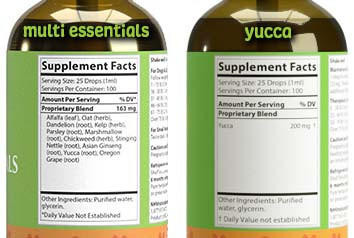
Just like humans, as our pets age, they may be a little less energetic. That's totally normal! We all require different levels of support at different stages in our lives. Our Digestion Kit contains Yucca, and Multi Essentials, which is a supplement bundle designed to help our pets better absorb nutrients and trigger metabolism. Yucca contains a high level of antioxidant properties that are beneficial for promoting healthy appetite and improving absorption. When it comes to cat sensitive stomach and gastrointestinal dog care, the herbs in Multi Essentials provide many key vitamins and minerals for building and maintaining healthy GI tract health, promoting healthy metabolism, and helping to reduce fatigue. Ingredients like chickweed and dandelion are effective digestive tonics that may help to enhance absorption while herbs like Oregon grape help to reduce indigestion and malabsorption.
It’s great to know that there are ways to support your furkiddo’s digestion naturally! Other than adding natural supports to their daily meals, if you’re wondering about options for gastrointestinal dog care and cat care, a personalized diet for your pet, created by Dr. Amanda, is another great way to support your furry friend!
Made with the finest, organically grown, or ethically harvested herbs. Made specifically for pets, vet-formulated, and vet approved.
Multi Essentials
Select your pet's weight to determine the correct dose.
To be taken twice daily. Determine your pet’s weight and then use the easy chart below to determine the correct dose. This is the minimum dosage.
Pet's Weight Dosage
0 - 15 lb = 0.5 ml
16 - 30 lb = 1.0 ml
31 - 45 lb = 1.5 ml
46 - 60 lb = 2.0 ml
61 - 75 lb = 2.5 ml
Over 75 lb = 3.0 ml
How to Administer
Shake well before use. The easiest method is to use the dropper provided and place the drops into your pet’s food or favorite treat. You can also use the dropper and squirt directly into the pet’s mouth. Some pets can be finicky, if this occurs consider hiding the drops in foods most pet’s love such as fish, chicken or yogurt or a favorite treat. If your pet only eats dry food then soak a few kibbles at feeding time.
For Best Results
Herbal dietary supplements are beneficial to the health and well-being of your pet and are safe for long-term use. Every pet responds to natural herbal supplements differently, therefore it is important to be consistent and administer the product daily. Supplements generally take two to four weeks to take effect, however this will vary from one animal to the next.
Product Storage
All NHV Natural Pet Products are pure herbal extracts and contain no artificial additives, preservatives or coloring. Shelf life after opening is 6 months and must be refrigerated after opening.
All information provided by NHV Natural Pet Products is for educational purposes only.
Regardless of your furkiddo’s age, it’s never easy to see them slowing down and having difficulties with their health. If your furry friend is having a tough time with their digestion, then they may not be able to break down and absorb all of the nutrients necessary for maintaining healthy skin, fur and overall health. Our Digestion Kit is formulated to help fill nutritional voids, improve absorption and overall gastrointestinal health.
Just like humans, as our pets age, they may be a little less energetic. That's totally normal! We all require different levels of support at different stages in our lives. Our Digestion Kit contains Yucca, and Multi Essentials, which is a supplement bundle designed to help our pets better absorb nutrients and trigger metabolism. Yucca contains a high level of antioxidant properties that are beneficial for promoting healthy appetite and improving absorption. When it comes to cat sensitive stomach and gastrointestinal dog care, the herbs in Multi Essentials provide many key vitamins and minerals for building and maintaining healthy GI tract health, promoting healthy metabolism, and helping to reduce fatigue. Ingredients like chickweed and dandelion are effective digestive tonics that may help to enhance absorption while herbs like Oregon grape help to reduce indigestion and malabsorption.
It’s great to know that there are ways to support your furkiddo’s digestion naturally! Other than adding natural supports to their daily meals, if you’re wondering about options for gastrointestinal dog care and cat care, a personalized diet for your pet, created by Dr. Amanda, is another great way to support your furry friend!
Made with the finest, organically grown, or ethically harvested herbs. Made specifically for pets, vet-formulated, and vet approved.
Multi Essentials
Select your pet's weight to determine the correct dose.
To be taken twice daily. Determine your pet’s weight and then use the easy chart below to determine the correct dose. This is the minimum dosage.
Pet's Weight Dosage
0 - 15 lb = 0.5 ml
16 - 30 lb = 1.0 ml
31 - 45 lb = 1.5 ml
46 - 60 lb = 2.0 ml
61 - 75 lb = 2.5 ml
Over 75 lb = 3.0 ml
How to Administer
Shake well before use. The easiest method is to use the dropper provided and place the drops into your pet’s food or favorite treat. You can also use the dropper and squirt directly into the pet’s mouth. Some pets can be finicky, if this occurs consider hiding the drops in foods most pet’s love such as fish, chicken or yogurt or a favorite treat. If your pet only eats dry food then soak a few kibbles at feeding time.
For Best Results
Herbal dietary supplements are beneficial to the health and well-being of your pet and are safe for long-term use. Every pet responds to natural herbal supplements differently, therefore it is important to be consistent and administer the product daily. Supplements generally take two to four weeks to take effect, however this will vary from one animal to the next.
Product Storage
All NHV Natural Pet Products are pure herbal extracts and contain no artificial additives, preservatives or coloring. Shelf life after opening is 6 months and must be refrigerated after opening.
All information provided by NHV Natural Pet Products is for educational purposes only.
Sweet Potato Chips
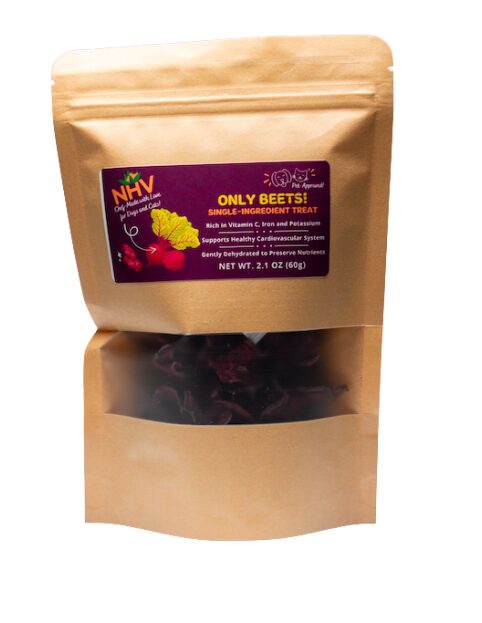
100% Beet - Packed with Fiber and Antioxidant
buy 2 and save $3
Give your fur baby 2-3 pieces per day as a treat
What Is It?
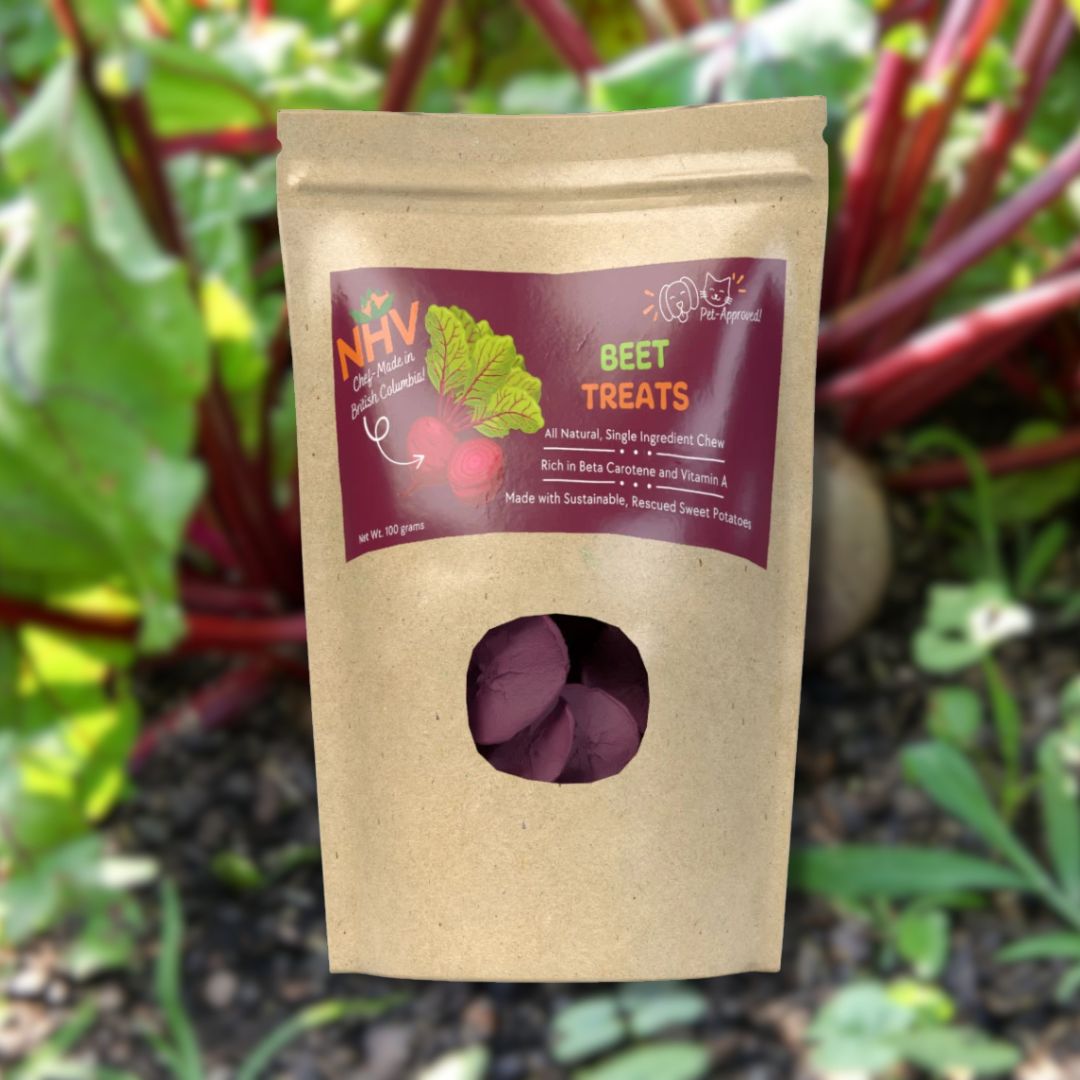
Our Dehydrated Beet Treats are a simple, nutritious way to spoil your dog while supporting their health.
What Makes It Great?
Why Should I Trust It?
Made with love in small batches by a professional chef.
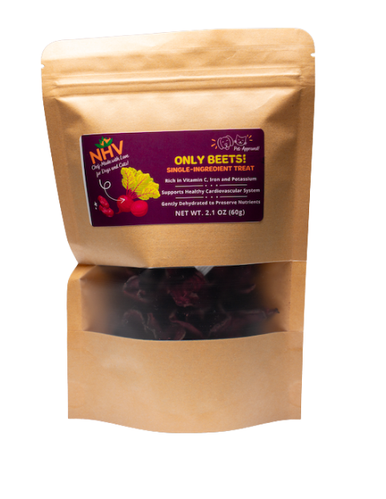
What Is It?
Our Dehydrated Beet Treats are a simple, nutritious way to spoil your dog while supporting their health.
What Makes It Great?
Why Should I Trust It?
Made with love in small batches by a professional chef.
Who knew veggies could be so paw-sitively delicious?
Watching your fur kiddo enjoy a treat is adorable fun, but knowing what they eat makes it even better!
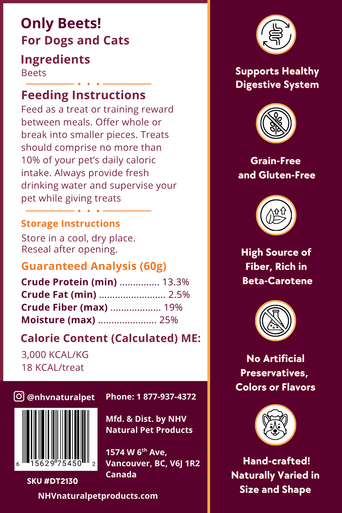
Our 100% natural Dehydrated Beet Treats make excellent natural dog treats because they offer tasty flavor and health benefits with a satisfying crunch pets love. And with no artificial colors, flavors, or preservatives, you’ll love it just as much as a healthier alternative to processed treats.
Beets have long been recognized as a health food for humans, but are beets good for dogs too? Yes! Beets offer vitamins, minerals, and other benefits!
Beets have a wide variety of naturally occurring vitamins and minerals, like a natural multivitamin. They contain vitamin C, potassium, folate, magnesium, manganese, calcium, and iron to name a few!
They’re a rich source of antioxidants and fiber. Antioxidants may help to scavenge free radicals in the body, and fiber promotes healthy gut flora.
Beets are also beneficial for cardiovascular health because they are a natural source of nitrate, which can help improve blood flow - making it an excellent treat for pets who exercise!
Our Dehydrated Beet Treats are made with love! A professional chef expertly crafts these chop-smacking treats in small batches for quality, nutrition, and taste. Your fur kiddo will want to pay their compliments to our in-house chef after taking a taste!
100% Beets: Naturally preserved through dehydration - No artificial flavors, preservatives, colors, or additives
Treats should comprise no more than 10% of your pet’s daily caloric intake. Always provide fresh water, and supervise your pet while giving treats. Store in a cool dry place.
Who knew veggies could be so paw-sitively delicious?
Watching your fur kiddo enjoy a treat is adorable fun, but knowing what they eat makes it even better!
Our 100% natural Dehydrated Beet Treats make excellent natural dog treats because they offer tasty flavor and health benefits with a satisfying crunch pets love. And with no artificial colors, flavors, or preservatives, you’ll love it just as much as a healthier alternative to processed treats.
Beets have long been recognized as a health food for humans, but are beets good for dogs too? Yes! Beets offer vitamins, minerals, and other benefits!
Beets have a wide variety of naturally occurring vitamins and minerals, like a natural multivitamin. They contain vitamin C, potassium, folate, magnesium, manganese, calcium, and iron to name a few!
They’re a rich source of antioxidants and fiber. Antioxidants may help to scavenge free radicals in the body, and fiber promotes healthy gut flora.
Beets are also beneficial for cardiovascular health because they are a natural source of nitrate, which can help improve blood flow - making it an excellent treat for pets who exercise!
Our Dehydrated Beet Treats are made with love! A professional chef expertly crafts these chop-smacking treats in small batches for quality, nutrition, and taste. Your fur kiddo will want to pay their compliments to our in-house chef after taking a taste!
100% Beets: Naturally preserved through dehydration - No artificial flavors, preservatives, colors, or additives
Treats should comprise no more than 10% of your pet’s daily caloric intake. Always provide fresh water, and supervise your pet while giving treats. Store in a cool dry place.
Anxiety and Stress support
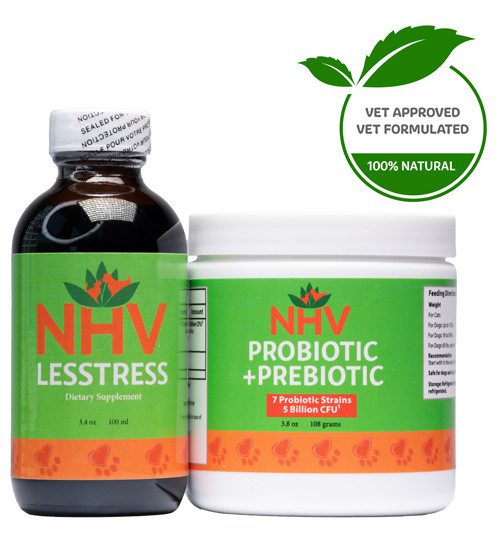
Lesstress & Probiotic + Prebiotic
bundle and save with pet expert kits
3 month supply for a small to medium size pet
What is it?
The NHV Anxiety and Stress in Dogs kit was created to simultaneously address both gut health and anxiety, providing fur kiddos with a more comprehensive stress management plan.
How Does it Work?
Why Should I Trust It?
Natural supplements carefully formulated by vets.
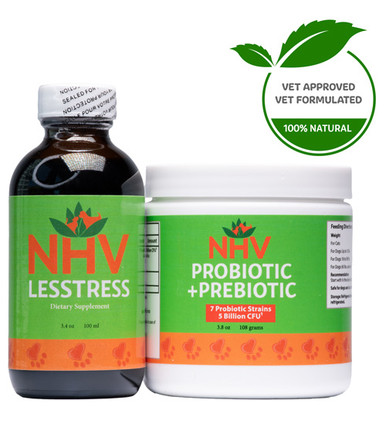
What is it?
The NHV Anxiety and Stress in Dogs kit was created to simultaneously address both gut health and anxiety, providing fur kiddos with a more comprehensive stress management plan.
How Does it Work?
Why Should I Trust It?
Natural supplements carefully formulated by vets.
Our poor pups can easily get worried by loud noises or uncertain situations. When that fear becomes a trigger, it can lead to anxiety and chronic stress. Some common symptoms of stress and anxiety in dogs are:
As it turns out, the brain and gut are constantly communicating and influencing one another in a relationship known as the “gut-brain axis.”
Over time, chronic anxiety in dogs may even lead to consequences for their physical health. This includes consequences like a weakened immune system, inflammation, and digestive upset (including diarrhea).
To help your pet cope with stress, natural supplements may play a supportive role in their daily wellness routine to help them in each of these areas.
Natural supplements may offer additional support for your dog experiencing stress and anxiety. When taken daily, herbal formulas like NHV Lesstress may promote feelings of calmness.
In a calm state, a pet’s body can better repair the harms of stress, like inflammation and damage to the gut microbiome. Therefore, the importance of helping to keep your pet calm and happy is not just important for their mental well-being, it’s important for their physical well-being too.
Lesstress also contains ingredients that may support the immune system, such as Reishi, Eleuthero, and Echinacea Angustifolia.
Probiotics may help reduce stress in dogs by promoting a healthy gut, which is linked to improved mood and emotional stability. Some research even suggests that a healthy microbiome may reduce anxiety by influencing neurotransmitter production, such as serotonin.
NHV Probiotic + Prebiotic offers 7 strains of healthy bacteria. For example, Bacillus coagulans LBSC, which may soothe constipation, diarrhea, gas, indigestion, and IBS, or Lactobacillus acidophilus 033AE, which may help with immune functioning.
By addressing both the gut microbiome and the symptoms of anxiety, your fur kiddo may get better results than addressing one factor alone. It’s all part of the holistic care strategy: one where we look at all aspects of health at the same time, rather than one at a time.
Need help with your pet’s stress care plan, or have any questions about our supplements? You can reach out to our friendly Pet Experts on the NHV Contact Us page.
All NHV supplements are made with the finest quality organic or ethically harvested herbs. We use non-GMO vegetable glycerin as our base. NHV products are full-spectrum extracts.
Made with the finest, organically grown, or ethically harvested herbs. Made specifically for pets, vet-formulated and vet approved.
Select your pet's weight to determine the correct dose.
DOSAGE FOR Probiotic + Prebiotic For dogs by weight
0 - 15 lb = ½ scoop per day (FOUR months supply)
16 - 59 lb = 1 scoop per day (TWO months supply)
60 lb & over = 2 scoops per day (ONE month supply)
How to Administer
Sprinkle over food. It is recommended to start with HALF the dose for 2 days to allow your little one to acclimate to the probiotic.
DOSAGE FOR Lesstress: To be taken twice daily. Determine your pet’s weight and then use the easy chart below to determine the correct dose. This is the minimum dosage.
Pet's Weight Dosage
0 - 15 lb = 0.5 ml
16 - 30 lb = 1.0 ml
31 - 45 lb = 1.5 ml
46 - 60 lb = 2.0 ml
61 - 75 lb = 2.5 ml
Over 75 lb = 3.0 ml
How to Administer
Shake well before use. The easiest method is to use the dropper provided and place the drops into your pet’s food or favorite treat. You can also use the dropper and squirt directly into the pet’s mouth. Some pets can be finicky, if this occurs consider hiding the drops in foods most pet’s love such as fish, chicken or yogurt or a favorite treat. If your pet only eats dry food then soak a few kibbles at feeding time.
For Best Results
Herbal dietary supplements are beneficial to the health and well-being of your pet and are safe for long-term use. Every pet responds to natural herbal supplements differently, therefore it is important to be consistent and administer the product daily. Supplements generally take two to four weeks to take effect, however this will vary from one animal to the next.
Product Storage
All NHV Natural Pet Products are pure herbal extracts and contain no artificial additives, preservatives or coloring. Shelf life after opening is 6 months and must be refrigerated after opening.
Cautions and Contraindications
Do not use in pregnant or nursing animals.
All information provided by NHV Natural Pet Products is for educational purposes only.
Our poor pups can easily get worried by loud noises or uncertain situations. When that fear becomes a trigger, it can lead to anxiety and chronic stress. Some common symptoms of stress and anxiety in dogs are:
As it turns out, the brain and gut are constantly communicating and influencing one another in a relationship known as the “gut-brain axis.”
Over time, chronic anxiety in dogs may even lead to consequences for their physical health. This includes consequences like a weakened immune system, inflammation, and digestive upset (including diarrhea).
To help your pet cope with stress, natural supplements may play a supportive role in their daily wellness routine to help them in each of these areas.
Natural supplements may offer additional support for your dog experiencing stress and anxiety. When taken daily, herbal formulas like NHV Lesstress may promote feelings of calmness.
In a calm state, a pet’s body can better repair the harms of stress, like inflammation and damage to the gut microbiome. Therefore, the importance of helping to keep your pet calm and happy is not just important for their mental well-being, it’s important for their physical well-being too.
Lesstress also contains ingredients that may support the immune system, such as Reishi, Eleuthero, and Echinacea Angustifolia.
Probiotics may help reduce stress in dogs by promoting a healthy gut, which is linked to improved mood and emotional stability. Some research even suggests that a healthy microbiome may reduce anxiety by influencing neurotransmitter production, such as serotonin.
NHV Probiotic + Prebiotic offers 7 strains of healthy bacteria. For example, Bacillus coagulans LBSC, which may soothe constipation, diarrhea, gas, indigestion, and IBS, or Lactobacillus acidophilus 033AE, which may help with immune functioning.
By addressing both the gut microbiome and the symptoms of anxiety, your fur kiddo may get better results than addressing one factor alone. It’s all part of the holistic care strategy: one where we look at all aspects of health at the same time, rather than one at a time.
Need help with your pet’s stress care plan, or have any questions about our supplements? You can reach out to our friendly Pet Experts on the NHV Contact Us page.
All NHV supplements are made with the finest quality organic or ethically harvested herbs. We use non-GMO vegetable glycerin as our base. NHV products are full-spectrum extracts.
Made with the finest, organically grown, or ethically harvested herbs. Made specifically for pets, vet-formulated and vet approved.
Select your pet's weight to determine the correct dose.
DOSAGE FOR Probiotic + Prebiotic For dogs by weight
0 - 15 lb = ½ scoop per day (FOUR months supply)
16 - 59 lb = 1 scoop per day (TWO months supply)
60 lb & over = 2 scoops per day (ONE month supply)
How to Administer
Sprinkle over food. It is recommended to start with HALF the dose for 2 days to allow your little one to acclimate to the probiotic.
DOSAGE FOR Lesstress: To be taken twice daily. Determine your pet’s weight and then use the easy chart below to determine the correct dose. This is the minimum dosage.
Pet's Weight Dosage
0 - 15 lb = 0.5 ml
16 - 30 lb = 1.0 ml
31 - 45 lb = 1.5 ml
46 - 60 lb = 2.0 ml
61 - 75 lb = 2.5 ml
Over 75 lb = 3.0 ml
How to Administer
Shake well before use. The easiest method is to use the dropper provided and place the drops into your pet’s food or favorite treat. You can also use the dropper and squirt directly into the pet’s mouth. Some pets can be finicky, if this occurs consider hiding the drops in foods most pet’s love such as fish, chicken or yogurt or a favorite treat. If your pet only eats dry food then soak a few kibbles at feeding time.
For Best Results
Herbal dietary supplements are beneficial to the health and well-being of your pet and are safe for long-term use. Every pet responds to natural herbal supplements differently, therefore it is important to be consistent and administer the product daily. Supplements generally take two to four weeks to take effect, however this will vary from one animal to the next.
Product Storage
All NHV Natural Pet Products are pure herbal extracts and contain no artificial additives, preservatives or coloring. Shelf life after opening is 6 months and must be refrigerated after opening.
Cautions and Contraindications
Do not use in pregnant or nursing animals.
All information provided by NHV Natural Pet Products is for educational purposes only.
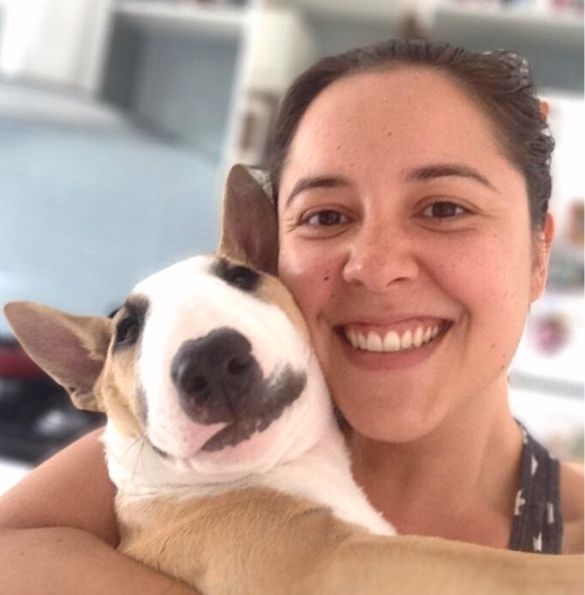
Dr. Barbara is a veterinarian from Brazil with a specialty in pet nutrition. She completed her Bachelor’s degree in Veterinary Medicine in 2006 from the University of Uberaba. In 2010, Dr. Barbara received her Master’s of Science in Pet Nutrition from the Federal University of Minas Gerais. She has over 15 years of experience in research and development in the pet food industry. When Barbara isn’t helping pet parents, you can find her spending time with her family, including her senior dog, Caze.
Published: April 29, 2026
Peanut Butter and Banana Cookies
Wholesome Dog Treats
Give your fur baby 1-6 pieces per day as a treat
What Is It?
NHV's Nutty Paw-Nanas Cookies are tasty treats for dogs made from 100% natural ingredients.
What Makes It Great?
Why Should I Trust It?
Vet-formulated and expertly crafted for quality, nutrition, and taste.

What Is It?
NHV's Nutty Paw-Nanas Cookies are tasty treats for dogs made from 100% natural ingredients.
What Makes It Great?
Why Should I Trust It?
Vet-formulated and expertly crafted for quality, nutrition, and taste.
Looking for a treat that’s as pure and wholesome as your pet? You’ve found it! Nutty Paw-Nanas are made from 100% natural ingredients. Your dog will go bananas over the taste, and you’ll go nuts over their health benefits.
Fillers, artificial flavors, chemicals with names too long to pronounce - going down the dog treat aisle was driving us crazy! Where are the wholesome dog treats?
Our solution? Nutty Paw-Nanas. Made with only natural ingredients, these gluten-free bites of joy have ingredients that are not only healthy - you can even pronounce their names!
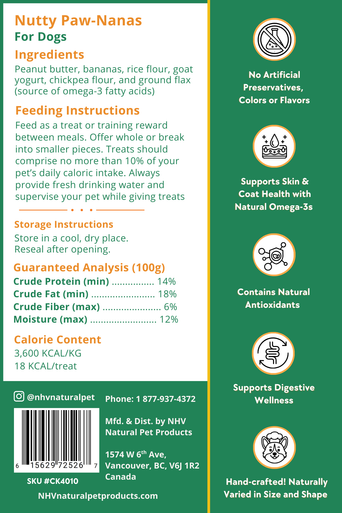
Peanut butter, goat yogurt, banana, rice flour, ground flax, and chickpea flour. No, these aren’t just our grocery list for the health food store; they’re the ingredients of Nutty Paw-Nanas!
Peanut butter, goat yogurt, and chickpea flour offer excellent protein for pups, helping to build muscles and keep them strong. Peanut butter also offers healthy fats for energy and skin and coat health, while goat yogurt offers a probiotic boost for digestion.
For gut health, chickpea flour, banana, and ground flax offer fiber, helping to keep tummies happy and gut flora fed.
With ground flax also providing a boost of Omega-3s for skin and coat health, each ingredient is packed with nutrients and healthy energy! This makes it an excellent treat for active pups, young or old, who need vitamins and minerals for bone, skin and coat, and digestive wellness.
What are rescued fruits and vegetables? We save imperfect-looking fruits that are rejected by grocery stores due to their strict visual standards. Despite being just as nutritious, this means that lots of fruit and vegetables will go to waste. Giving these fruit and veg new life, we created Nutty Paw-Nanas, a treat that’s good for the Earth and your pup.
Each batch of our Nutty Paw-Nanas are made with love by an expert chef. Each piece is expertly crafted for quality, nutrition, and taste you can trust. This treat will make your beloved pup sit, shake, and beg for more!
Ground Flax: Boosts skin, coat, and joint health for long-term wellness.
Bananas: Rich in potassium, good for promoting heart health, and fiber for aiding digestion.
Rice Flour: A gentle, gluten-free energy source for sensitive tummies.
Goat Yogurt: Provides a healthy source of protein for building and maintaining muscles.
Chickpea Flour: A nutritious, gluten-free option made from whole chickpeas. Contains fiber for healthy digestion and protein for building muscles.
Peanut Butter: A tasty, healthy treat full of healthy fats and vitamins that dogs love.
Contains no artificial flavors, preservatives, colors, or additives
Treats should comprise no more than 10% of your pet’s daily caloric intake. Always provide fresh water, and supervise your pet while giving treats. Store in a cool dry place.
Looking for a treat that’s as pure and wholesome as your pet? You’ve found it! Nutty Paw-Nanas are made from 100% natural ingredients. Your dog will go bananas over the taste, and you’ll go nuts over their health benefits.
Fillers, artificial flavors, chemicals with names too long to pronounce - going down the dog treat aisle was driving us crazy! Where are the wholesome dog treats?
Our solution? Nutty Paw-Nanas. Made with only natural ingredients, these gluten-free bites of joy have ingredients that are not only healthy - you can even pronounce their names!
Peanut butter, goat yogurt, banana, rice flour, ground flax, and chickpea flour. No, these aren’t just our grocery list for the health food store; they’re the ingredients of Nutty Paw-Nanas!
Peanut butter, goat yogurt, and chickpea flour offer excellent protein for pups, helping to build muscles and keep them strong. Peanut butter also offers healthy fats for energy and skin and coat health, while goat yogurt offers a probiotic boost for digestion.
For gut health, chickpea flour, banana, and ground flax offer fiber, helping to keep tummies happy and gut flora fed.
With ground flax also providing a boost of Omega-3s for skin and coat health, each ingredient is packed with nutrients and healthy energy! This makes it an excellent treat for active pups, young or old, who need vitamins and minerals for bone, skin and coat, and digestive wellness.
What are rescued fruits and vegetables? We save imperfect-looking fruits that are rejected by grocery stores due to their strict visual standards. Despite being just as nutritious, this means that lots of fruit and vegetables will go to waste. Giving these fruit and veg new life, we created Nutty Paw-Nanas, a treat that’s good for the Earth and your pup.
Each batch of our Nutty Paw-Nanas are made with love by an expert chef. Each piece is expertly crafted for quality, nutrition, and taste you can trust. This treat will make your beloved pup sit, shake, and beg for more!
Ground Flax: Boosts skin, coat, and joint health for long-term wellness.
Bananas: Rich in potassium, good for promoting heart health, and fiber for aiding digestion.
Rice Flour: A gentle, gluten-free energy source for sensitive tummies.
Goat Yogurt: Provides a healthy source of protein for building and maintaining muscles.
Chickpea Flour: A nutritious, gluten-free option made from whole chickpeas. Contains fiber for healthy digestion and protein for building muscles.
Peanut Butter: A tasty, healthy treat full of healthy fats and vitamins that dogs love.
Contains no artificial flavors, preservatives, colors, or additives
Treats should comprise no more than 10% of your pet’s daily caloric intake. Always provide fresh water, and supervise your pet while giving treats. Store in a cool dry place.