cancer support
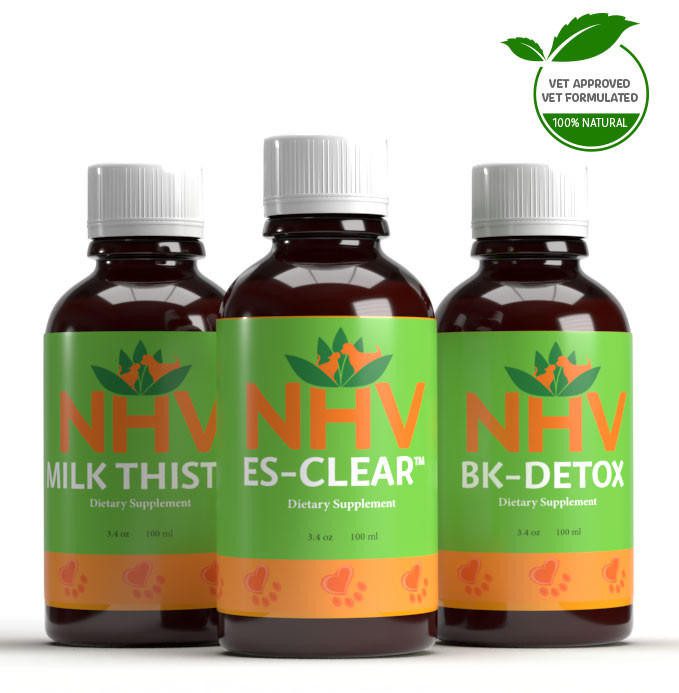
Mammary Tumor Detox Kit
USD $138.95
free shipping over $100 (USA & Canada)
1-877-937-4372 the pet expert hotline


Mammary tumors in dogs are one of the most common tumors found in intact females. These tumors can be benign or malignant. Approximately half are reported to be malignant, but the proportion can vary among studies and populations.
Thus, understanding the difference between a mammary mass and mammary cancer, recognizing warning signs, and looking for veterinary evaluation early may help pet parents make informed decisions along with their veterinarians.
Extending from the chest to the groin, your dog typically has four to five pairs of mammary glands. A mammary tumor can develop when cells in this tissue grow abnormally, forming a mass.
Benign tumors typically remain localized, while malignant tumors (cancers) can invade surrounding tissues and, in some cases, spread or metastasize to other areas of the body.
There is no known specific cause of mammary cancer. However, several factors may influence risk.
Ovarian hormone exposure is one of the well-known risk factors for this type of tumor. Female dogs that are not spayed and/or exposed to ovarian hormones for longer periods have a higher risk of developing mammary tumors. But it is important to note that the decisions about when to spay should be individualized and based on breed, age, and overall health.
Mammary tumors are not common in young dogs and are more commonly seen in middle-aged and older female dogs. However, genetics, breed, reproductive history, and other biological or environmental factors may also play a role.
One of the most common signs is a lump or mass on one or more mammary glands. Other signs may include one or more firm nodules around the nipples or mammary glands, a lump that increases in size, irregular or fixed masses, redness, swelling, warmth, discomfort, skin changes over the mass, ulceration or bleeding, enlarged nearby lymph nodes, etc.
Some dogs with more localized mammary tumors may appear completely healthy, particularly during the earlier stages of the development of the tumor.
Therefore, if you observe any new mammary lump, a veterinary evaluation is very important, even when it is very small.
In the modified TNM staging system, tumor size is one factor associated with prognosis and is categorized as:
However, it is important to emphasize that size alone does not determine prognosis. Tumor type and grade, lymphatic/vascular invasion, lymph-node involvement, and metastasis are also important factors to be considered.
Thus, finding a mammary mass while it is still small may provide more options for surgical management and treatment.
Not every swollen or painful mammary gland is cancer. For instance, mastitis is inflammation of the mammary gland, usually associated with bacterial infection and commonly seen during lactation. The gland may become swollen, warm, red, and painful. Some mammary cancers can also cause similar signs, such as inflammatory mammary carcinoma, an aggressive form of mammary cancer that may cause diffuse redness, swelling, warmth, and pain. Therefore, persistent mammary inflammation, particularly in a female dog that is not breastfeeding, should be evaluated as soon as possible by a veterinarian.
Diagnosis begins with a physical examination by your veterinarian that will assess the number, size, location, and characteristics of the masses and may also evaluate the nearby lymph nodes.
A fine-needle aspirate (FNA) may also be performed. FNA collects cells from the mass for microscopic evaluation. However, for a precise diagnosis, histopathology is needed. It occurs after surgical removal, and a veterinary pathologist examines the tumor and can determine if it is benign or malignant, tumor type and grade, cellular characteristics, mitotic activity, lymphatic or/and vascular invasion, and the surgical margins. This information is important for understanding how the tumor is likely to behave and determining if more treatment is needed.
If mammary cancer is confirmed, your veterinarian may recommend staging to determine whether it has spread using, for example, the TNM system, which evaluates:
Staging can also include bloodwork, urinalysis, lymph-node assessment, chest radiographs, and additional imaging when needed, as the lungs and lymph nodes are important metastatic sites for canine mammary cancer.
For some benign tumors, they can be effectively managed with surgery, and some localized, low-grade malignant tumors may have favorable outcomes after complete surgical removal. However, other mammary cancers can behave clinically aggressive and metastasize.
Once the pathology and staging results are available, your veterinarian or veterinary oncologist can provide a more meaningful prognosis.
Supporting a dog with cancer involves more than treating the tumor itself. Good nutrition, maintaining gastrointestinal health, comfort, activity, and quality of life are also important.
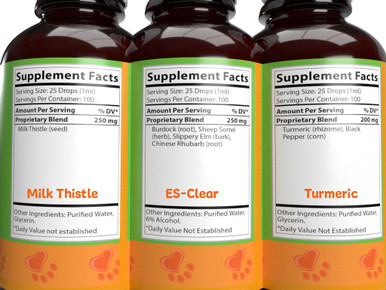
NHV’s Mammary Tumor Super Support Kit, containing ES-Clear, Milk Thistle, and Turmeric, may provide complementary support during cancer care. Turmeric contains curcumin and other curcuminoids that have been widely studied for their anti-inflammatory, antioxidant, and potential anticancer properties, including effects on cellular pathways involved in cancer development and progression. Milk Thistle contains silymarin, which has antioxidant and hepatoprotective properties and may help support liver health, particularly when dogs are receiving medications. ES-Clear combines botanical ingredients traditionally used to support immune function, antioxidant defenses, and overall vitality.
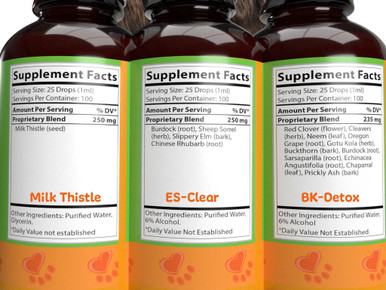
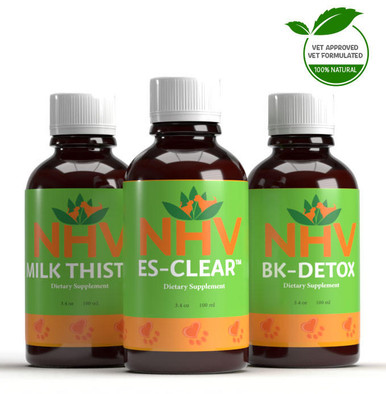
The Mammary Tumor Detox Kit, containing ES-Clear, Milk Thistle, and BK-Detox, focuses additionally on supporting normal liver and kidney function and the body’s natural elimination processes. Maintaining organ function, controlling excessive inflammatory and oxidative stress, and supporting overall wellness can be valuable components of integrative care and may help dogs feel their best during cancer treatment.
Although several botanical compounds in these formulations have been investigated for anti-inflammatory, antioxidant, immunomodulatory, and anticancer biological activities, these findings do not mean that the supplements themselves have been proven to treat or cure mammary cancer. They should be used as complementary support alongside veterinary oncology care.
A mammary lump does not automatically mean that your female dog has cancer; however, it should never be ignored. Canine mammary tumors range from benign to aggressive, and histopathology is important in determining exactly what type of tumor and how it is likely to behave. Also, it is important to note that early veterinary examination, appropriate staging, individualized treatment, and a supportive care plan give pet parents the information needed to make the best decisions for their pets.
cancer support
ES Clear, Milk Thistle & BK Detox
bundle and save with pet expert kits
3 month supply for a small to medium size pet
What is it?
Our Mammary Tumor Detox Kit is formulated to be used alongside cancer treatments or surgery to help address symptoms and encourage healthy immune function.
How does it work?
Why trust it?
NHV supplements are vet-formulated and vet-approved.

What is it?
Our Mammary Tumor Detox Kit is formulated to be used alongside cancer treatments or surgery to help address symptoms and encourage healthy immune function.
How does it work?
Why trust it?
NHV supplements are vet-formulated and vet-approved.
Mammary cancer is the equivalent of breast cancer in humans. Two common types of cancer growth that often affect mammary tissue are sarcomas (bone and connective tissue) and carcinomas (skin).
Mammary Cancer may be a serious diagnosis but it is far from the end of the road! If caught in its early stages, and with a lot of patience and care, your pet can still have lots of life ahead of them! Our Mammary Tumor Detox Kit which contains ES-Clear, Milk Thistle, and BK-Detox can be used for proactive pet care as well as be helpful for mammary tumors in dogs and cats. NHV supplements are formulated to be used alongside chemotherapy and other cancer medications to help flush harmful toxins from vital organs and support the immune system.
Our Mammary Tumor Detox Kit is formulated to address the areas of the body affected by mammary tumors and cancerous growth. This bundle contains ES-Clear, Milk Thistle, and BK-Detox.
Additional Info: While there is a lot of awareness about this type of cancer in humans, many pet parents don't know that mammary cancer and mammary tumors in dogs and cats is even more common! 1 in 4 unspayed female dogs is affected and in cats, it is the 3rd most common type of cancer. While in humans, roughly 1 in every 8 or 9 women are affected. A tumor in mammary tissue may feel like a pebble or dried pea. Surgery is often recommended to try and remove all of the cancerous cells. If left alone, mammary tumors may grow, harden, and break through the skin as pus-filled lumps. Spaying or neutering your pet may decrease their risk of developing mammary tumors but more research still needs to be done about this correlation.
NHV supplements are formulated by a holistic veterinarian and master herbalist to be gentle, effective remedies that complement vet care plans. But it should never replace professional advice from your veterinarian. If your furkiddo is battling cancer, know that you don't have to face it alone. We are here with our team of pet experts to help you every step of the way!
Made with the finest, organically grown, or ethically harvested herbs. Made specifically for pets, vet-formulated and vet approved
ES Clear
Milk Thistle
BK Detox
Select your pet's weight to determine the correct dose.
To be taken twice daily. Determine your pet’s weight and then use the easy chart below to determine the correct dose. This is the minimum dosage.
Pet's Weight Dosage
0 - 15 lb = 0.5 ml
16 - 30 lb = 1.0 ml
31 - 45 lb = 1.5 ml
46 - 60 lb = 2.0 ml
61 - 75 lb = 2.5 ml
Over 75 lb = 3.0 ml
For small animals (rabbits, ferrets), avians and reptiles use 1 drop for every 2 lb of body weight.
How to Administer
Shake well before use. The easiest method is to use the dropper provided and place the drops into your pet’s food or favorite treat. You can also use the dropper and squirt directly into the pet’s mouth. Some pets can be finicky, if this occurs consider hiding the drops in foods most pet’s love such as fish, chicken or yogurt or a favorite treat. If your pet only eats dry food then soak a few kibbles at feeding time.
For Best Results
Herbal dietary supplements are beneficial to the health and well-being of your pet and are safe for long-term use. Every pet responds to natural herbal supplements differently, therefore it is important to be consistent and administer the product daily. Supplements generally take two to four weeks to take effect, however this will vary from one animal to the next.
Product Storage
All NHV Natural Pet Products are pure herbal extracts and contain no artificial additives, preservatives or coloring. Shelf life after opening is 6 months and must be refrigerated after opening.
Cautions and Contraindications
Do not use in pregnant or nursing animals.
All information provided by NHV Natural Pet Products is for educational purposes only.
Mammary cancer is the equivalent of breast cancer in humans. Two common types of cancer growth that often affect mammary tissue are sarcomas (bone and connective tissue) and carcinomas (skin).
Mammary Cancer may be a serious diagnosis but it is far from the end of the road! If caught in its early stages, and with a lot of patience and care, your pet can still have lots of life ahead of them! Our Mammary Tumor Detox Kit which contains ES-Clear, Milk Thistle, and BK-Detox can be used for proactive pet care as well as be helpful for mammary tumors in dogs and cats. NHV supplements are formulated to be used alongside chemotherapy and other cancer medications to help flush harmful toxins from vital organs and support the immune system.
Our Mammary Tumor Detox Kit is formulated to address the areas of the body affected by mammary tumors and cancerous growth. This bundle contains ES-Clear, Milk Thistle, and BK-Detox.
Additional Info: While there is a lot of awareness about this type of cancer in humans, many pet parents don't know that mammary cancer and mammary tumors in dogs and cats is even more common! 1 in 4 unspayed female dogs is affected and in cats, it is the 3rd most common type of cancer. While in humans, roughly 1 in every 8 or 9 women are affected. A tumor in mammary tissue may feel like a pebble or dried pea. Surgery is often recommended to try and remove all of the cancerous cells. If left alone, mammary tumors may grow, harden, and break through the skin as pus-filled lumps. Spaying or neutering your pet may decrease their risk of developing mammary tumors but more research still needs to be done about this correlation.
NHV supplements are formulated by a holistic veterinarian and master herbalist to be gentle, effective remedies that complement vet care plans. But it should never replace professional advice from your veterinarian. If your furkiddo is battling cancer, know that you don't have to face it alone. We are here with our team of pet experts to help you every step of the way!
Made with the finest, organically grown, or ethically harvested herbs. Made specifically for pets, vet-formulated and vet approved
ES Clear
Milk Thistle
BK Detox
Select your pet's weight to determine the correct dose.
To be taken twice daily. Determine your pet’s weight and then use the easy chart below to determine the correct dose. This is the minimum dosage.
Pet's Weight Dosage
0 - 15 lb = 0.5 ml
16 - 30 lb = 1.0 ml
31 - 45 lb = 1.5 ml
46 - 60 lb = 2.0 ml
61 - 75 lb = 2.5 ml
Over 75 lb = 3.0 ml
For small animals (rabbits, ferrets), avians and reptiles use 1 drop for every 2 lb of body weight.
How to Administer
Shake well before use. The easiest method is to use the dropper provided and place the drops into your pet’s food or favorite treat. You can also use the dropper and squirt directly into the pet’s mouth. Some pets can be finicky, if this occurs consider hiding the drops in foods most pet’s love such as fish, chicken or yogurt or a favorite treat. If your pet only eats dry food then soak a few kibbles at feeding time.
For Best Results
Herbal dietary supplements are beneficial to the health and well-being of your pet and are safe for long-term use. Every pet responds to natural herbal supplements differently, therefore it is important to be consistent and administer the product daily. Supplements generally take two to four weeks to take effect, however this will vary from one animal to the next.
Product Storage
All NHV Natural Pet Products are pure herbal extracts and contain no artificial additives, preservatives or coloring. Shelf life after opening is 6 months and must be refrigerated after opening.
Cautions and Contraindications
Do not use in pregnant or nursing animals.
All information provided by NHV Natural Pet Products is for educational purposes only.
cancer support
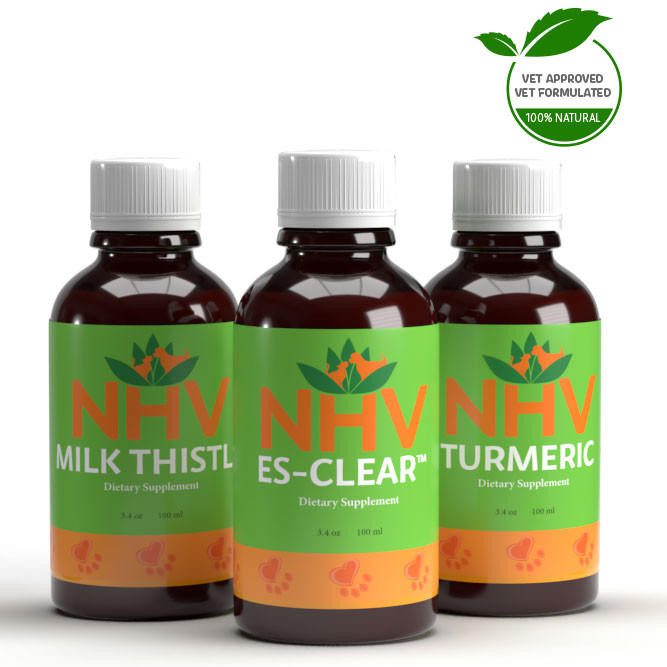
ES-Clear, Milk Thistle & Turmeric
bundle and save with pet expert kits
3 month supply for a small to medium size pet
What is it?
Our Mammary Tumor Super Support Kit is formulated to be used alongside chemotherapy and other cancer treatments to help address symptoms and encourage healthy immune function.
How does it work?
Why trust it?
NHV supplements use only human-grade natural ingredients, free from artificial additives.

What is it?
Our Mammary Tumor Super Support Kit is formulated to be used alongside chemotherapy and other cancer treatments to help address symptoms and encourage healthy immune function.
How does it work?
Why trust it?
NHV supplements use only human-grade natural ingredients, free from artificial additives.
No one wants to hear that their furkiddo has mammary cancer but with the right care and support, your pet can still live many happy days ahead!
Mammary cancer is the equivalent of breast cancer in humans. While there is ongoing research and multiple awareness campaigns for this type of cancer in humans, many pet parents don't know that the incidence of mammary tumors in dogs and cats is much higher. One in eight or nine women develops this type of cancer, whereas in dogs, for example, 1 in 4 unspayed female dogs is affected. And mammary cancer in cats is the 3rd most common type of cancer.
If a tumor is detected, it may feel like a pebble or dried pea. Surgery is often recommended to try and remove it altogether. If left alone, mammary tumors may grow, harden, and break through the skin as pus-filled lumps.
Cancer can be a scary diagnosis but it isn't necessarily a death sentence. If caught early, and with a lot of love and care, your pet may be able to get on top of their symptoms and still maintain a good quality of life! Our Mammary Tumor Super Support Kit which contains ES-Clear, Milk Thistle, and Turmeric, can be used for proactive pet care as well as be helpful for more serious conditions like mammary cancer. NHV supplements are formulated to be used alongside conventional veterinary treatments and chemotherapy to support gentle detoxification, help to shield the body against free radical damage and help support immune function before or after surgery.
When your pet is diagnosed with mammary cancer, surgery is typically the treatment recommended. After surgery, your vet may recommend chemotherapy to help prevent tumor growth so your furkiddo’s liver, kidneys and immune system may become weakened and need extra support. Our Mammary Tumor Super Support Kit is formulated to help support areas affected by cancerous tumors and degenerative disease. This bundle contains ES-Clear, Milk Thistle, and Turmeric.
Your pet’s health and wellness means everything to us. We have worked with a holistic veterinarian and a master herbalist to formulate gentle yet effective remedies to focus on the areas of the body most affected by breast cancer in dogs and cats. For any questions or concerns about your little one’s cancer or immune health, don’t hesitate to reach out to an NHV Pet Expert - we are here to help!
Made with the finest, organically grown, or ethically harvested herbs. Made specifically for pets, vet-formulated and vet approved.
ES Clear
Milk Thistle
Turmeric
Select your pet's weight to determine the correct dose.
To be taken twice daily. Determine your pet’s weight and then use the easy chart below to determine the correct dose. This is the minimum dosage.
Pet's Weight Dosage
0 - 15 lb = 0.5 ml
16 - 30 lb = 1.0 ml
31 - 45 lb = 1.5 ml
46 - 60 lb = 2.0 ml
61 - 75 lb = 2.5 ml
Over 75 lb = 3.0 ml
For small animals (rabbits, ferrets), avians and reptiles use 1 drop for every 2 lb of body weight.
How to Administer
Shake well before use. The easiest method is to use the dropper provided and place the drops into your pet’s food or favorite treat. You can also use the dropper and squirt directly into the pet’s mouth. Some pets can be finicky, if this occurs consider hiding the drops in foods most pet’s love such as fish, chicken or yogurt or a favorite treat. If your pet only eats dry food then soak a few kibbles at feeding time.
For Best Results
Herbal dietary supplements are beneficial to the health and well-being of your pet and are safe for long-term use. Every pet responds to natural herbal supplements differently, therefore it is important to be consistent and administer the product daily. Supplements generally take two to four weeks to take effect, however this will vary from one animal to the next.
Product Storage
All NHV Natural Pet Products are pure herbal extracts and contain no artificial additives, preservatives or coloring. Shelf life after opening is 6 months and must be refrigerated after opening.
Cautions and Contraindications
Do not use in pregnant or nursing animals.
All information provided by NHV Natural Pet Products is for educational purposes only.
No one wants to hear that their furkiddo has mammary cancer but with the right care and support, your pet can still live many happy days ahead!
Mammary cancer is the equivalent of breast cancer in humans. While there is ongoing research and multiple awareness campaigns for this type of cancer in humans, many pet parents don't know that the incidence of mammary tumors in dogs and cats is much higher. One in eight or nine women develops this type of cancer, whereas in dogs, for example, 1 in 4 unspayed female dogs is affected. And mammary cancer in cats is the 3rd most common type of cancer.
If a tumor is detected, it may feel like a pebble or dried pea. Surgery is often recommended to try and remove it altogether. If left alone, mammary tumors may grow, harden, and break through the skin as pus-filled lumps.
Cancer can be a scary diagnosis but it isn't necessarily a death sentence. If caught early, and with a lot of love and care, your pet may be able to get on top of their symptoms and still maintain a good quality of life! Our Mammary Tumor Super Support Kit which contains ES-Clear, Milk Thistle, and Turmeric, can be used for proactive pet care as well as be helpful for more serious conditions like mammary cancer. NHV supplements are formulated to be used alongside conventional veterinary treatments and chemotherapy to support gentle detoxification, help to shield the body against free radical damage and help support immune function before or after surgery.
When your pet is diagnosed with mammary cancer, surgery is typically the treatment recommended. After surgery, your vet may recommend chemotherapy to help prevent tumor growth so your furkiddo’s liver, kidneys and immune system may become weakened and need extra support. Our Mammary Tumor Super Support Kit is formulated to help support areas affected by cancerous tumors and degenerative disease. This bundle contains ES-Clear, Milk Thistle, and Turmeric.
Your pet’s health and wellness means everything to us. We have worked with a holistic veterinarian and a master herbalist to formulate gentle yet effective remedies to focus on the areas of the body most affected by breast cancer in dogs and cats. For any questions or concerns about your little one’s cancer or immune health, don’t hesitate to reach out to an NHV Pet Expert - we are here to help!
Made with the finest, organically grown, or ethically harvested herbs. Made specifically for pets, vet-formulated and vet approved.
ES Clear
Milk Thistle
Turmeric
Select your pet's weight to determine the correct dose.
To be taken twice daily. Determine your pet’s weight and then use the easy chart below to determine the correct dose. This is the minimum dosage.
Pet's Weight Dosage
0 - 15 lb = 0.5 ml
16 - 30 lb = 1.0 ml
31 - 45 lb = 1.5 ml
46 - 60 lb = 2.0 ml
61 - 75 lb = 2.5 ml
Over 75 lb = 3.0 ml
For small animals (rabbits, ferrets), avians and reptiles use 1 drop for every 2 lb of body weight.
How to Administer
Shake well before use. The easiest method is to use the dropper provided and place the drops into your pet’s food or favorite treat. You can also use the dropper and squirt directly into the pet’s mouth. Some pets can be finicky, if this occurs consider hiding the drops in foods most pet’s love such as fish, chicken or yogurt or a favorite treat. If your pet only eats dry food then soak a few kibbles at feeding time.
For Best Results
Herbal dietary supplements are beneficial to the health and well-being of your pet and are safe for long-term use. Every pet responds to natural herbal supplements differently, therefore it is important to be consistent and administer the product daily. Supplements generally take two to four weeks to take effect, however this will vary from one animal to the next.
Product Storage
All NHV Natural Pet Products are pure herbal extracts and contain no artificial additives, preservatives or coloring. Shelf life after opening is 6 months and must be refrigerated after opening.
Cautions and Contraindications
Do not use in pregnant or nursing animals.
All information provided by NHV Natural Pet Products is for educational purposes only.
cancer support
Herbal Cancer (Dog Skin Cancer ) Support
buy 2 and save $3
3 month supply for a small to medium size pet.
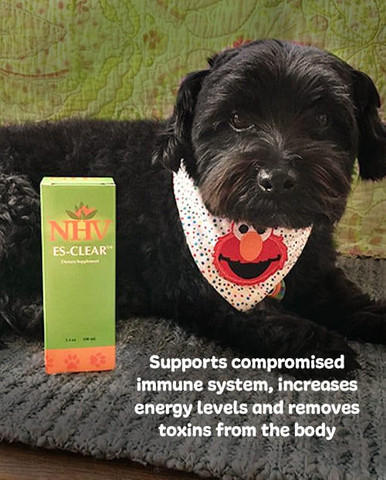
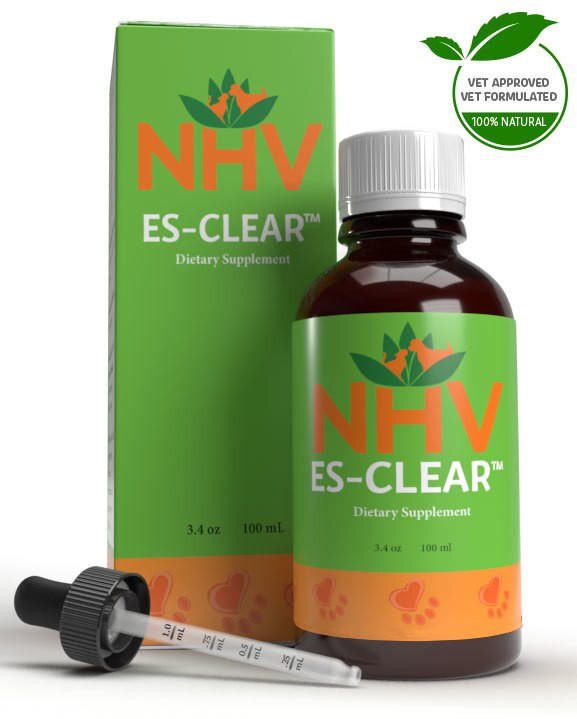
ES Clear is a gentle, natural supplement for dogs with cancer in liquid herbal formula, offering supportive care for dogs facing cancer or experiencing the side effects of treatment. It helps your pup stay comfortable, maintain strength, and support appetite, weight, and energy during challenging times.
ES Clear is vet-formulated and vet-approved, made with human-grade, full-spectrum herbal extracts that preserve the plants’ natural beneficial properties. With over 25 years of experience crafting plant-based remedies and a global community of pet parents and professionals who rely on NHV, you can feel confident you’re giving your dog safe, meaningful support during their cancer journey.
ES Clear is a gentle, natural supplement for dogs with cancer in liquid herbal formula, offering supportive care for dogs facing cancer or experiencing the side effects of treatment. It helps your pup stay comfortable, maintain strength, and support appetite, weight, and energy during challenging times.
ES Clear is vet-formulated and vet-approved, made with human-grade, full-spectrum herbal extracts that preserve the plants’ natural beneficial properties. With over 25 years of experience crafting plant-based remedies and a global community of pet parents and professionals who rely on NHV, you can feel confident you’re giving your dog safe, meaningful support during their cancer journey.
Our furkiddos hold a special place in our hearts, seeing them suffer is heartbreaking. During this difficult time, it's important to remember that you're not alone on this journey. We are here to help too! With treatment, proper care, supplement support, and diet changes, you can navigate the path ahead while providing the love and comfort your little one needs.
ES Clear and all our other products are formulated by a holistic veterinarian and master herbalist with over 50+ years of experience. They are safe for long-term use and can be used alongside traditional cancer treatment as additional support.
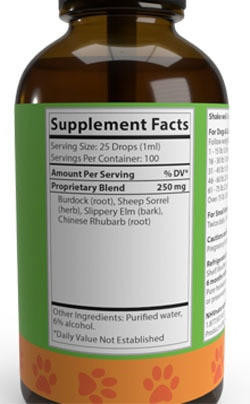
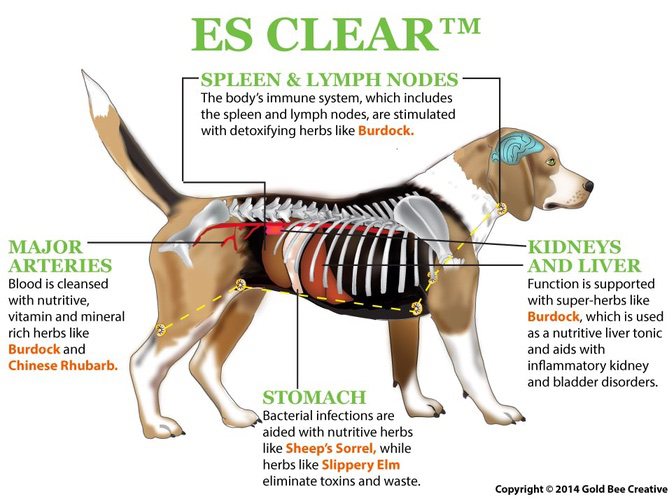
The blend of herbs in this formula - Burdock, Sheep's Sorrel, Slippery Elm, and Chinese Rhubarb - has powerful anti-tumor properties and is highly nutritious. They serve as proactive cancer support, and even if your little one does get diagnosed, they help them stay nourished despite losing their appetite.
Battling cancer and continuous chemotherapy can be very draining for your little one. ES Clear not only helps increase the energy level but also helps eliminate accumulated toxins in the system. Herbs like Burdock and Sheep's Sorrel are known to help treat cancer, and they all help remove toxins and cleanse your pup's blood. Additionally, Burdock has free-radical scavenging properties, while Sheep’s Sorrel helps support the immune system.
Chinese Rhubarb helps with appetite, increases salivary and gastric flow and is beneficial in helping the body eliminate toxins by cleansing the intestines and removing waste from the bowels. It is especially helpful for dogs with intestinal cancer.
Of course, different types of pet cancer would have a set of distinct symptoms. However, here are some general signs you may notice/find in your little one with cancer:
Note that these symptoms do not guarantee that your pup must have cancer. A vet visit is still needed to have a correct diagnosis.
NHV is a Canada-based company, and all our products are made here. However, they are used by furkiddos from all around the world! We ship globally! Feel free to reach out to us if you have any questions or concerns. We are always here to help.
Coping with cancer is very challenging. Help support your pup by ordering our ES Clear for dogs.
In addition to herbal supplements, a balanced and nutritious pet diet is also vital to their recovery. NHV’s in-house vet, Dr. Amanda, can help design a personalized nutritional plan for your furkiddo! Or you can learn more here about what foods to choose for dogs with cancer.
Read our blog to find out what to do when your little one has cancer, or learn more information about how to care for cancer in pets . Cooper and Milo’s inspiring story in fighting cancer may offer your furmily some hope too.
All NHV supplements are made with the finest quality organic or ethically harvested herbs.
We use non-GMO vegetable glycerin as our base. NHV products are full-spectrum extracts.
Select your pet's weight to determine the correct dose.
To be taken twice daily. Determine your pet’s weight and then use the easy chart below to determine the correct dose. This is the minimum dosage.
Pet's Weight Dosage
0 - 15 lb = 0.5 ml
16 - 30 lb = 1.0 ml
31 - 45 lb = 1.5 ml
46 - 60 lb = 2.0 ml
61 - 75 lb = 2.5 ml
Over 75 lb = 3.0 ml
How to Administer
Shake well before use. The easiest method is to use the dropper provided and place the drops into your pet’s food or favorite treat. You can also use the dropper and squirt directly into the pet’s mouth. Some pets can be finicky, if this occurs consider hiding the drops in foods most pet’s love such as fish, chicken, yogurt, or a favorite treat. If your pet only eats dry food then soak a few kibbles at feeding time.
For Best Results
Herbal dietary supplements are beneficial to the health and well-being of your pet and are safe for long-term use. Every pet responds to natural herbal supplements differently, therefore it is important to be consistent and administer the product daily. Supplements generally take two to four weeks to take effect, however this will vary from one animal to the next.
Product Storage
All NHV Natural Pet Products are pure herbal extracts and contain no artificial additives, preservatives or coloring. Shelf life after opening is 6 months and must be refrigerated after opening.
Cautions and Contraindications
Do not use ES Clear in pregnant or nursing animals. Speak to your vet before using our products. A second visit is recommended if your pet’s condition does not improve, or deteriorates after continued use of the supplements.
All information provided by NHV Natural Pet Products is for educational purposes only.
Our furkiddos hold a special place in our hearts, seeing them suffer is heartbreaking. During this difficult time, it's important to remember that you're not alone on this journey. We are here to help too! With treatment, proper care, supplement support, and diet changes, you can navigate the path ahead while providing the love and comfort your little one needs.
ES Clear and all our other products are formulated by a holistic veterinarian and master herbalist with over 50+ years of experience. They are safe for long-term use and can be used alongside traditional cancer treatment as additional support.
The blend of herbs in this formula - Burdock, Sheep's Sorrel, Slippery Elm, and Chinese Rhubarb - has powerful anti-tumor properties and is highly nutritious. They serve as proactive cancer support, and even if your little one does get diagnosed, they help them stay nourished despite losing their appetite.
Battling cancer and continuous chemotherapy can be very draining for your little one. ES Clear not only helps increase the energy level but also helps eliminate accumulated toxins in the system. Herbs like Burdock and Sheep's Sorrel are known to help treat cancer, and they all help remove toxins and cleanse your pup's blood. Additionally, Burdock has free-radical scavenging properties, while Sheep’s Sorrel helps support the immune system.
Chinese Rhubarb helps with appetite, increases salivary and gastric flow and is beneficial in helping the body eliminate toxins by cleansing the intestines and removing waste from the bowels. It is especially helpful for dogs with intestinal cancer.
Of course, different types of pet cancer would have a set of distinct symptoms. However, here are some general signs you may notice/find in your little one with cancer:
Note that these symptoms do not guarantee that your pup must have cancer. A vet visit is still needed to have a correct diagnosis.
NHV is a Canada-based company, and all our products are made here. However, they are used by furkiddos from all around the world! We ship globally! Feel free to reach out to us if you have any questions or concerns. We are always here to help.
Coping with cancer is very challenging. Help support your pup by ordering our ES Clear for dogs.
In addition to herbal supplements, a balanced and nutritious pet diet is also vital to their recovery. NHV’s in-house vet, Dr. Amanda, can help design a personalized nutritional plan for your furkiddo! Or you can learn more here about what foods to choose for dogs with cancer.
Read our blog to find out what to do when your little one has cancer, or learn more information about how to care for cancer in pets . Cooper and Milo’s inspiring story in fighting cancer may offer your furmily some hope too.
All NHV supplements are made with the finest quality organic or ethically harvested herbs.
We use non-GMO vegetable glycerin as our base. NHV products are full-spectrum extracts.
Select your pet's weight to determine the correct dose.
To be taken twice daily. Determine your pet’s weight and then use the easy chart below to determine the correct dose. This is the minimum dosage.
Pet's Weight Dosage
0 - 15 lb = 0.5 ml
16 - 30 lb = 1.0 ml
31 - 45 lb = 1.5 ml
46 - 60 lb = 2.0 ml
61 - 75 lb = 2.5 ml
Over 75 lb = 3.0 ml
How to Administer
Shake well before use. The easiest method is to use the dropper provided and place the drops into your pet’s food or favorite treat. You can also use the dropper and squirt directly into the pet’s mouth. Some pets can be finicky, if this occurs consider hiding the drops in foods most pet’s love such as fish, chicken, yogurt, or a favorite treat. If your pet only eats dry food then soak a few kibbles at feeding time.
For Best Results
Herbal dietary supplements are beneficial to the health and well-being of your pet and are safe for long-term use. Every pet responds to natural herbal supplements differently, therefore it is important to be consistent and administer the product daily. Supplements generally take two to four weeks to take effect, however this will vary from one animal to the next.
Product Storage
All NHV Natural Pet Products are pure herbal extracts and contain no artificial additives, preservatives or coloring. Shelf life after opening is 6 months and must be refrigerated after opening.
Cautions and Contraindications
Do not use ES Clear in pregnant or nursing animals. Speak to your vet before using our products. A second visit is recommended if your pet’s condition does not improve, or deteriorates after continued use of the supplements.
All information provided by NHV Natural Pet Products is for educational purposes only.