skin & anti-inflammatory support
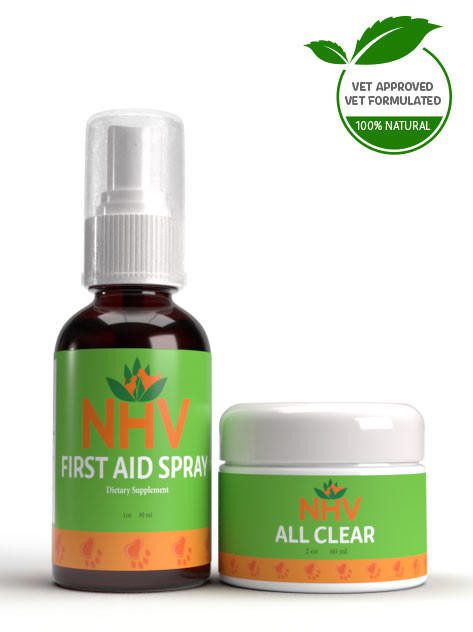
Cut & Wound Care Kit
USD $58.95
free shipping over $100 (USA & Canada)
1-877-937-4372 the pet expert hotline


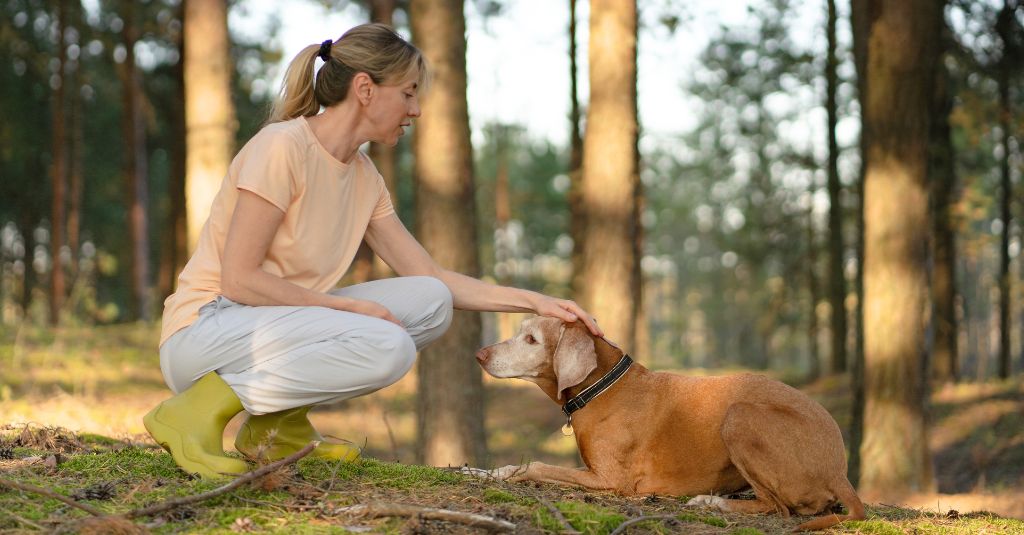
Kelly, a Pet Expert from the NHV team, shares something that she learned from her father: feed the animals before you feed yourself.
Her beloved childhood mutt Patches was her number one priority as soon as I got home from school. This sweet little dog with freckles on her face always ran to meet her at the bridge and walk me home, and she would be sure to feed the pup before dinnertime. She followed Kelly closely, sniffing her shoes to see where she had been, wagging her tail and watching expectantly while Kelly cleaned and refreshed her water bowl, fluffed up her dog bed, and chatted with her before filling up the food bowl.
The same rules have applied all her life
Only once Patches was secure and comfortable, Kelly would begin to take care of herself. The same rules have applied all her life with horses, hamsters, fish tanks, and litter boxes.
“Take care of the little ones first,” her Dad told her, “Because they are counting on you for everything.”
Being a responsible pet owner is more than simply meeting basic needs. It’s about noticing the little things that make your pet unique and building a special relationship with your furry friend, and it happens in the small, everyday choices that pet parents make.
Time spent taking care of a dog or cat or bird or rabbit isn’t a chore; it’s a chance to appreciate the special relationship we create as caretakers. Mealtime with animals is special, and it’s very rewarding to see how much they enjoy it. They’ve been waiting; they’re so excited, and you are the source of valuable, delicious, and satisfying nourishment.
Ensure your furry friend has places to eat and drink in peace, and a comfy, quiet place to rest without being disturbed. Look out for household hazards and put together a first aid kit for minor pet emergencies. Keep microchip details up to date and provide safe reflective collars with identity tags if your pet goes outdoors
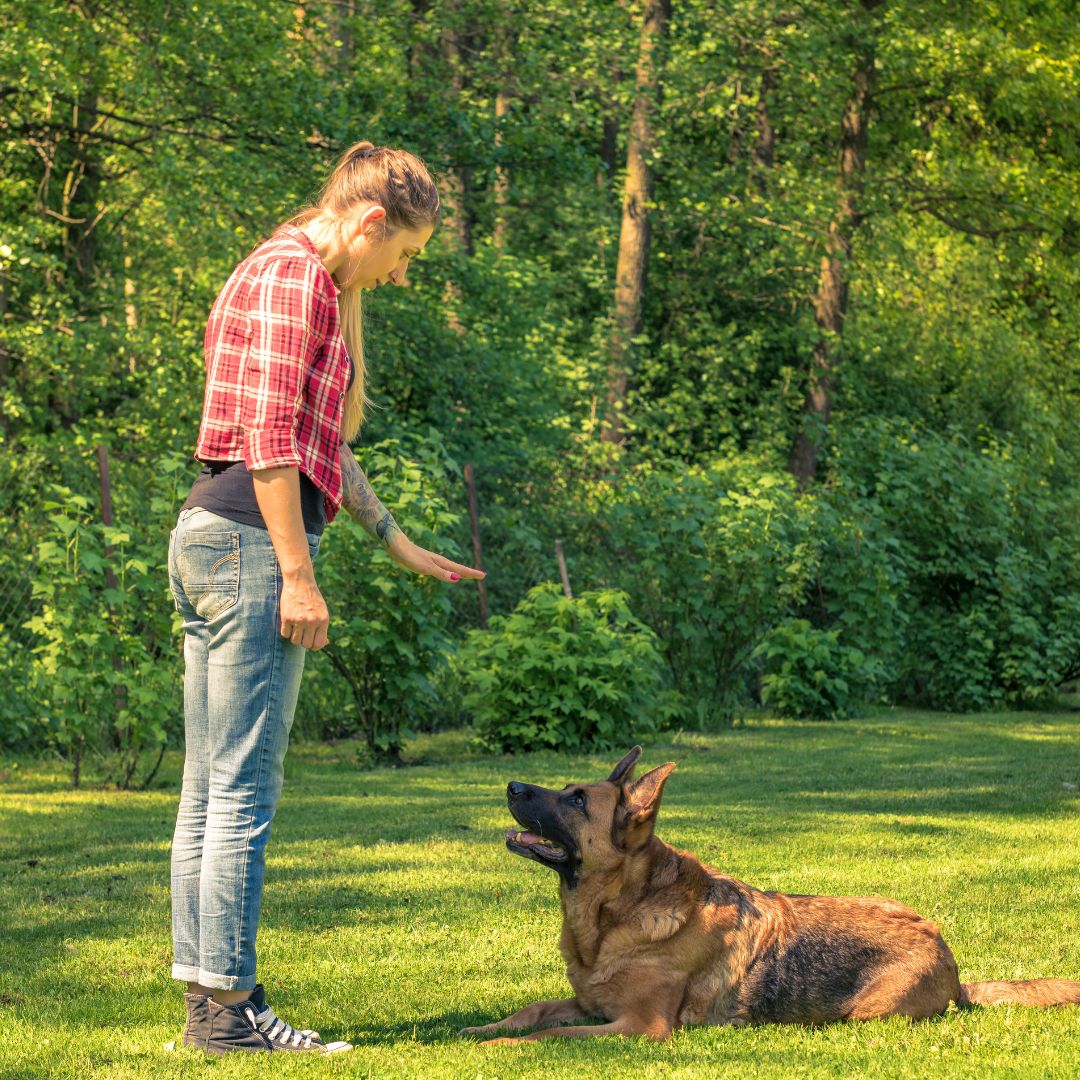
For dog owners, it’s very important to understand community rules and local pet laws. Teach basic commands to build good behavior and trust. Learn to introduce your pet safely to new people, animals, and places. Clean up pet waste immediately. Obey leash laws and respect yard boundaries, gardens, and community spaces.
Spay and Neuter to reduce health risks and reduce pet overpopulation. Budget for health care, pet insurance, and extra costs like dental care and grooming. Get microchips and ID tags for safety and renew pet licenses on time.
Being reliable is an important part of consistent pet care. Your kitty is counting on you to put those human thumbs to good use and open that food can on time for dinner! Knowing you’ll be there for them provides a sense of security and safety.
Be sure to provide some structure for meals and snacks, daily exercise and playtime, grooming, and quality bonding time. Everyone in the furmily can help with the pet care routine and learn more about being a good caretaker and a responsible pet owner.
For busy pet parents, a good pet care routine can help things run smoothly, and remember, just being together is a happy time for your little one. They look forward to your presence, the sound of your voice, and your loving touch when you’ve been away, and there are so many ways to enjoy their company and companionship. It’s wonderful to come home to pets who love you, so enjoy your time together.
Let’s look at an example Daily Pet Care Routine
The Canadian Veterinary Medical Association (CVMA) calls owning a pet “a privilege that requires commitment, investment, and preparedness.” Accepting a pet in your life means making a promise that you’ll be there when they need you.
Responsible pet ownership means that pet parents meet the physical, emotional, and social responsibility needs of their furkiddo from day one. It’s important to be prepared for daily care as well as vet visits, which will incur some costs. Insurance options are available for pets, so it’s possible to start coverage while they are young and use the benefits over their lifetime. Having a dedicated “pet care” fund is another great way to set aside money for emergencies or everyday needs.
For first-time pet owners, knowing how to take care of a dog or cat may not come naturally. Pet care tips from friends or the internet may be helpful, but until you’ve seen your pet in action for a while, understanding what is “normal” and what is “concerning” might be hard to determine at first.
Paying attention to a pet’s appetite, water intake, bathroom habits, mobility, energy, weight, skin and coat, and behaviour is an important part of understanding and assessing wellness. Everyday interaction gives pet parents opportunities to notice subtle changes.
Being mindful of your pet’s weight can have long-term health benefits. Keep your pet active with daily walks and play, and provide a healthy diet. Pets that do not carry extra weight tend to have fewer mobility issues as they age and may stay healthier during their lifetime.
When a pet parent knows what is typical for their furkiddo, unusual changes become easier to recognize. So how can we determine what’s normal for a cat or dog?
Establishing daily routines is a perfect opportunity to be observant and bond with your pet. Every time you interact with your furry friend, you have a chance to understand your little one’s preferences, habits, and quirks.
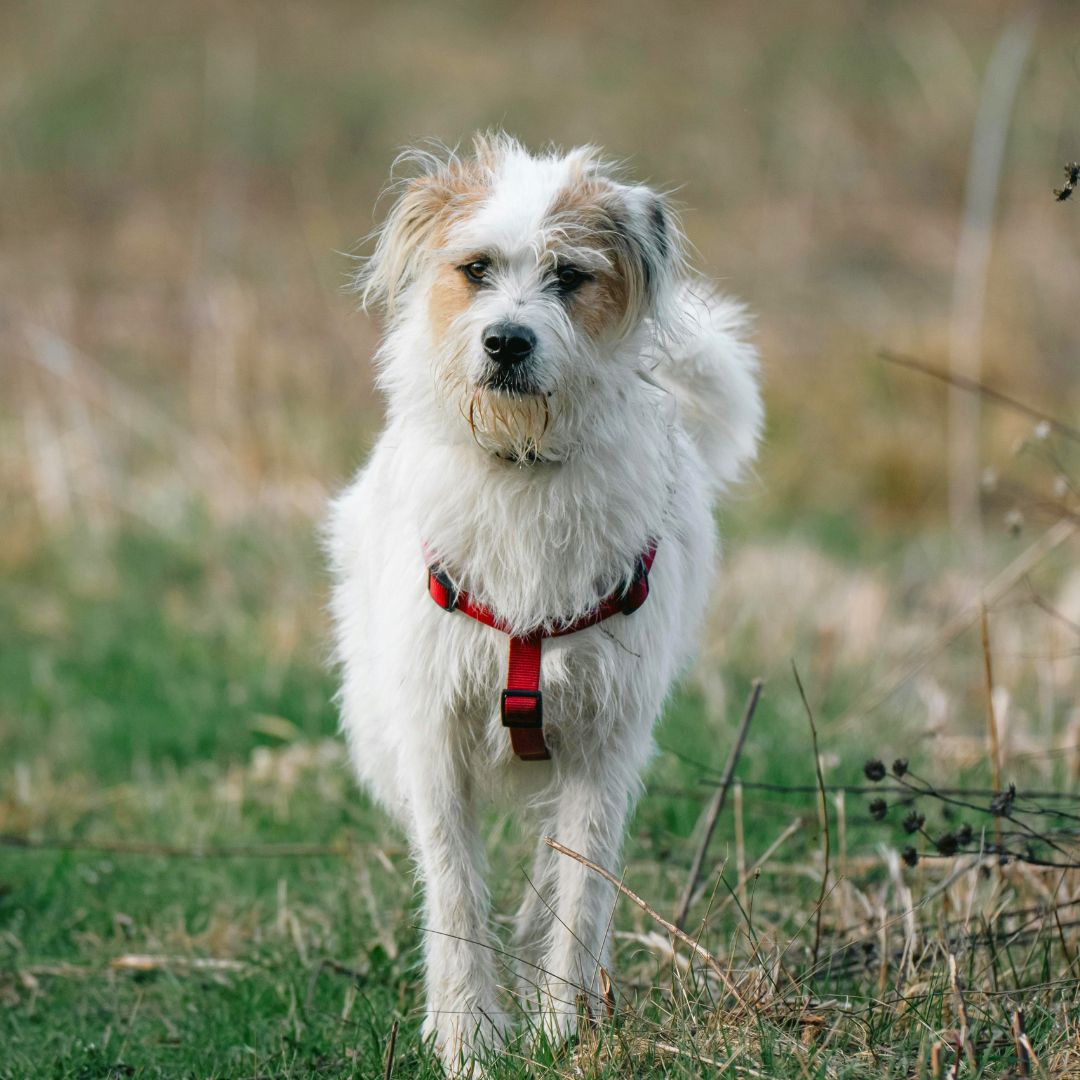
Let’s take a look at an example for a 5-year-old terrier mix named Bernie:
Keeping a journal or logbook of your pet’s daily care is a great way to monitor habits, symptoms, and individual preferences. Having a record to share with your vet is helpful to illustrate significant changes or progress as well as keep track of medications, supplements, and other useful information.
Whether you have a dog, cat, or other furry friend, their age, lifestyle, health, and individual needs are a big part of what makes them unique. Responsible ownership means adapting care to the way these needs change throughout the pet’s life.
Hamsters don’t need a license or a leash, but your new puppy does! The kind of pet you have will initially determine some aspects of being a responsible pet owner. All species need appropriate veterinary care, and some may require very specific types of food or shelter.
Responsible cat ownership may look quite different, since cats tend to be more independent, may stay completely indoors or have freedom to roam, and have different needs and preferences as a species for their comfort and care. Cats need places to perch and hide, places to sharpen their claws, and an indoor bathroom (i.e., litter box) that suits them. As cat owners know, felines can be incredibly picky and fickle in their preferences.
Dog owners may be subject to licensing laws or vaccination requirements that other types of pets may not need. Dog owners must also be more aware of their pet’s behavior, especially in shared spaces like dog parks, and are encouraged to train their dogs for basic commands to help their beloved canine be a good citizen.
Understanding behavior for any pet is very important for picking up cues like anxiety and fear in order to better manage your pet and prevent potential conflicts. A responsible dog owner needs situational awareness to watch out for their pet’s safety as well as the safety of others.
Responsible Dog Ownership Day is a great opportunity to encourage pet parents to reflect on their everyday care routines. It is celebrated annually on the third Saturday of September. The American Kennel Club (AKC) started this observance to educate communities and strengthen the bond between owners and their dogs.
Here are a few dog care tips to make the day special:
Remember, responsible pet ownership isn’t one big action. It is the combination of small things pet parents consistently do every day. Regular daily interactions with your pet offer opportunities to check in on their health and well-being. Not only can you make sure they get their medications and supplements, but you can also observe if they are eating well and eliminating normally, and look for any signs of discomfort or illness.
The better you know your own pet, the quicker you may pick up on signs they need support
Knowing your furkiddo’s habits and preferences well makes it easier to tell when something seems off. Maybe they are slowing down a bit as they age, for example, and it shows in little ways, like having a hard time with stairs or jumping up to their favorite resting place. The better you know your own pet, the quicker you may pick up on signs they need support.
Would you like to receive monthly pet health tips and be the first to find out about upcoming sales and promotions? Be sure to subscribe to the NHV Newsletter.
skin & anti-inflammatory support
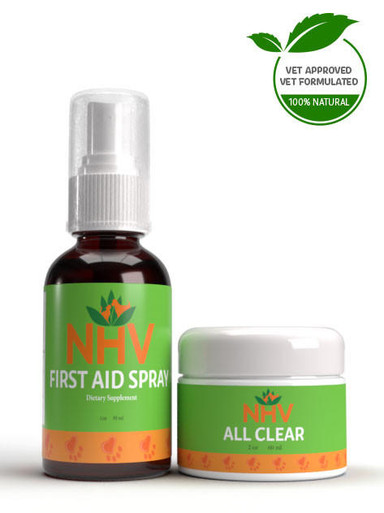
All Clear Ointment & First Aid Spray. Helps eliminate infection and speed healing. Recommended for minor cuts and wounds.
bundle and save with pet expert kits
What is it?
Used together, NHV All Clear Ointment and NHV First Aid Spray help speed healing and help prevent infection to keep your pet healthy and happy!
How Does it Work?
Why Should I Trust It?
Vet-formulated and vet-approved natural pet remedies.

What is it?
Used together, NHV All Clear Ointment and NHV First Aid Spray help speed healing and help prevent infection to keep your pet healthy and happy!
How Does it Work?
Why Should I Trust It?
Vet-formulated and vet-approved natural pet remedies.
Your dog, cat, or other pet is bound to experience wounds, cuts, or scrapes in their lives. As a pet parent, it is important to keep your pet’s wounds as clean as possible to help speed and prevent infection. Use the NHV First Aid Spray plus NHV All Clear Ointment as a natural and holistic way to help heal your pet’s wounds or skin infections quickly.
Use the NHV First Aid Spray for dogs or for cats as a natural antiseptic for dogs and cats first. Then gently apply the NHV All Clear Ointment to soothe inflamed skin for dogs or for cats, and eliminate any bacterial and fungal infections from your pet’s wounds.
Keep your cat, dog, or other pet warm and dry as their wounds begin to heal. Cold weather may make wounds weaker and result in longer healing times for your pet.
Some conditions, like anemia and malnutrition may cause problems in healing. See NHV’s anemia kit if your pet suffers from anemia.
For serious trauma and open wounds that require medical attention, please see your veterinarian immediately, so they may begin to treat and stabilize your cat, dog, or other pet. After any serious trauma, your pet may still be in a state of shock. You may want to consider adding NHV Matricalm for cats to their daily healing routine to help calm and soothe their nerves or Lesstress for dogs.
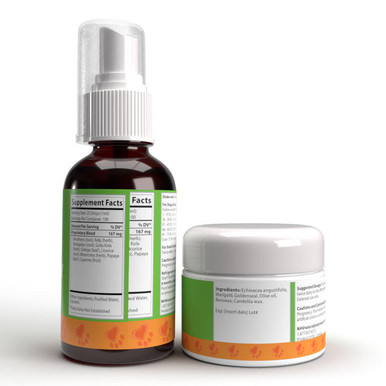
A natural, botanical ointment to help your pet heal faster from wounds, cuts, scrapes, skin disease, and fungal or bacterial infections. Contains powerful natural herbs that will soothe and disinfect your pet’s wounds while reducing inflammation.
A Natural antiseptic for insect bites, hot spots and natural disinfectant to give soothing relief.
NHV All Clear Ointment
Calendula: is part of the sunflower family and is native to North and South America. It can help against microorganisms and contains antioxidant properties to help clear infections and promote skin healing.
Echinacea: contains a range of healing compounds like polysaccharides, essential oils, and polyacetylenes that have immune-stimulating properties.
Rosemary Leaf: contains Rosmarinus acid, which contains anti-inflammatory and antiseptic properties to help heal skin and help to recover fur loss (from hot spots).
First Aid Spray
Neem: Contains antibacterial antiviral properties that speed healing.
Marigold: Contains essential oils and various other compounds that speed cell reproduction and prevent bacteria and fungi from infecting a cut.
Aloe Vera: A topical skin dressing that softens and soothes the skin and promotes speedy healing of minor wounds.
Usnea: An antibacterial agent that prevents infection in cuts.
California Poppy: Helps relieve discomfort and prevent infection associated with cuts and scratches.
Tea Tree Oil: An effective antiseptic useful in the treatment of wounds and cuts.
Begin by spraying the NHV First Aid Spray. It may be necessary to first shave or trim your pet’s hair. Do not spray near or into eyes or nose. May initially sting slightly on an open cut.
Next apply the NHV All Clear Ointment topically. Do not apply on open or bleeding wounds.
Use 3-4 times a day.
Cover the affected area with gauze dressing.
Be sure to give your cat or dog a treat after their daily healing routine to keep the experience positive. Since you will be doing this routine multiple times a day, we suggest a low calorie and healthy cat treat and a healthy dog treat as a reward.
For more information on wound management see the “Description” tab.
Cautions and Contraindications:
All Clear Ointment: Pregnancy and lactation. Do not apply to open or bleeding wounds.
Rescue Spray: Do not spray near or into eyes or nose.
Your dog, cat, or other pet is bound to experience wounds, cuts, or scrapes in their lives. As a pet parent, it is important to keep your pet’s wounds as clean as possible to help speed and prevent infection. Use the NHV First Aid Spray plus NHV All Clear Ointment as a natural and holistic way to help heal your pet’s wounds or skin infections quickly.
Use the NHV First Aid Spray for dogs or for cats as a natural antiseptic for dogs and cats first. Then gently apply the NHV All Clear Ointment to soothe inflamed skin for dogs or for cats, and eliminate any bacterial and fungal infections from your pet’s wounds.
Keep your cat, dog, or other pet warm and dry as their wounds begin to heal. Cold weather may make wounds weaker and result in longer healing times for your pet.
Some conditions, like anemia and malnutrition may cause problems in healing. See NHV’s anemia kit if your pet suffers from anemia.
For serious trauma and open wounds that require medical attention, please see your veterinarian immediately, so they may begin to treat and stabilize your cat, dog, or other pet. After any serious trauma, your pet may still be in a state of shock. You may want to consider adding NHV Matricalm for cats to their daily healing routine to help calm and soothe their nerves or Lesstress for dogs.
A natural, botanical ointment to help your pet heal faster from wounds, cuts, scrapes, skin disease, and fungal or bacterial infections. Contains powerful natural herbs that will soothe and disinfect your pet’s wounds while reducing inflammation.
A Natural antiseptic for insect bites, hot spots and natural disinfectant to give soothing relief.
NHV All Clear Ointment
Calendula: is part of the sunflower family and is native to North and South America. It can help against microorganisms and contains antioxidant properties to help clear infections and promote skin healing.
Echinacea: contains a range of healing compounds like polysaccharides, essential oils, and polyacetylenes that have immune-stimulating properties.
Rosemary Leaf: contains Rosmarinus acid, which contains anti-inflammatory and antiseptic properties to help heal skin and help to recover fur loss (from hot spots).
First Aid Spray
Neem: Contains antibacterial antiviral properties that speed healing.
Marigold: Contains essential oils and various other compounds that speed cell reproduction and prevent bacteria and fungi from infecting a cut.
Aloe Vera: A topical skin dressing that softens and soothes the skin and promotes speedy healing of minor wounds.
Usnea: An antibacterial agent that prevents infection in cuts.
California Poppy: Helps relieve discomfort and prevent infection associated with cuts and scratches.
Tea Tree Oil: An effective antiseptic useful in the treatment of wounds and cuts.
Begin by spraying the NHV First Aid Spray. It may be necessary to first shave or trim your pet’s hair. Do not spray near or into eyes or nose. May initially sting slightly on an open cut.
Next apply the NHV All Clear Ointment topically. Do not apply on open or bleeding wounds.
Use 3-4 times a day.
Cover the affected area with gauze dressing.
Be sure to give your cat or dog a treat after their daily healing routine to keep the experience positive. Since you will be doing this routine multiple times a day, we suggest a low calorie and healthy cat treat and a healthy dog treat as a reward.
For more information on wound management see the “Description” tab.
Cautions and Contraindications:
All Clear Ointment: Pregnancy and lactation. Do not apply to open or bleeding wounds.
Rescue Spray: Do not spray near or into eyes or nose.
Anxiety and Stress support
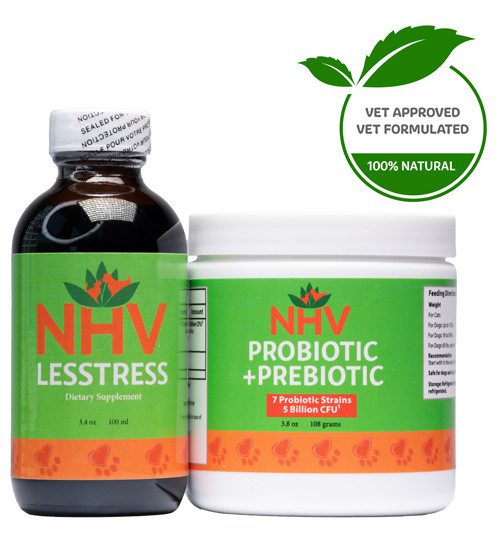
Lesstress & Probiotic + Prebiotic
bundle and save with pet expert kits
3 month supply for a small to medium size pet
What is it?
The NHV Anxiety and Stress in Dogs kit was created to simultaneously address both gut health and anxiety, providing fur kiddos with a more comprehensive stress management plan.
How Does it Work?
Why Should I Trust It?
Natural supplements carefully formulated by vets.
What is it?
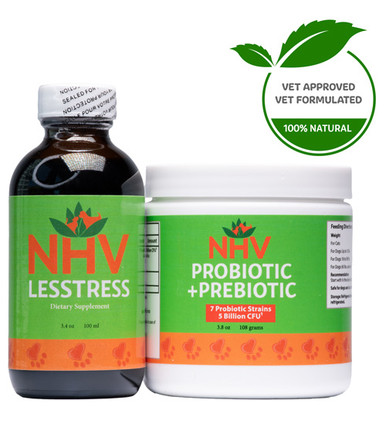
The NHV Anxiety and Stress in Dogs kit was created to simultaneously address both gut health and anxiety, providing fur kiddos with a more comprehensive stress management plan.
How Does it Work?
Why Should I Trust It?
Natural supplements carefully formulated by vets.
Our poor pups can easily get worried by loud noises or uncertain situations. When that fear becomes a trigger, it can lead to anxiety and chronic stress. Some common symptoms of stress and anxiety in dogs are:
As it turns out, the brain and gut are constantly communicating and influencing one another in a relationship known as the “gut-brain axis.”
Over time, chronic anxiety in dogs may even lead to consequences for their physical health. This includes consequences like a weakened immune system, inflammation, and digestive upset (including diarrhea).
To help your pet cope with stress, natural supplements may play a supportive role in their daily wellness routine to help them in each of these areas.
Natural supplements may offer additional support for your dog experiencing stress and anxiety. When taken daily, herbal formulas like NHV Lesstress may promote feelings of calmness.
In a calm state, a pet’s body can better repair the harms of stress, like inflammation and damage to the gut microbiome. Therefore, the importance of helping to keep your pet calm and happy is not just important for their mental well-being, it’s important for their physical well-being too.
Lesstress also contains ingredients that may support the immune system, such as Reishi, Eleuthero, and Echinacea Angustifolia.
Probiotics may help reduce stress in dogs by promoting a healthy gut, which is linked to improved mood and emotional stability. Some research even suggests that a healthy microbiome may reduce anxiety by influencing neurotransmitter production, such as serotonin.
NHV Probiotic + Prebiotic offers 7 strains of healthy bacteria. For example, Bacillus coagulans LBSC, which may soothe constipation, diarrhea, gas, indigestion, and IBS, or Lactobacillus acidophilus 033AE, which may help with immune functioning.
By addressing both the gut microbiome and the symptoms of anxiety, your fur kiddo may get better results than addressing one factor alone. It’s all part of the holistic care strategy: one where we look at all aspects of health at the same time, rather than one at a time.
Need help with your pet’s stress care plan, or have any questions about our supplements? You can reach out to our friendly Pet Experts on the NHV Contact Us page.
All NHV supplements are made with the finest quality organic or ethically harvested herbs. We use non-GMO vegetable glycerin as our base. NHV products are full-spectrum extracts.
Made with the finest, organically grown, or ethically harvested herbs. Made specifically for pets, vet-formulated and vet approved.
Select your pet's weight to determine the correct dose.
DOSAGE FOR Probiotic + Prebiotic For dogs by weight
0 - 15 lb = ½ scoop per day (FOUR months supply)
16 - 59 lb = 1 scoop per day (TWO months supply)
60 lb & over = 2 scoops per day (ONE month supply)
How to Administer
Sprinkle over food. It is recommended to start with HALF the dose for 2 days to allow your little one to acclimate to the probiotic.
DOSAGE FOR Lesstress: To be taken twice daily. Determine your pet’s weight and then use the easy chart below to determine the correct dose. This is the minimum dosage.
Pet's Weight Dosage
0 - 15 lb = 0.5 ml
16 - 30 lb = 1.0 ml
31 - 45 lb = 1.5 ml
46 - 60 lb = 2.0 ml
61 - 75 lb = 2.5 ml
Over 75 lb = 3.0 ml
How to Administer
Shake well before use. The easiest method is to use the dropper provided and place the drops into your pet’s food or favorite treat. You can also use the dropper and squirt directly into the pet’s mouth. Some pets can be finicky, if this occurs consider hiding the drops in foods most pet’s love such as fish, chicken or yogurt or a favorite treat. If your pet only eats dry food then soak a few kibbles at feeding time.
For Best Results
Herbal dietary supplements are beneficial to the health and well-being of your pet and are safe for long-term use. Every pet responds to natural herbal supplements differently, therefore it is important to be consistent and administer the product daily. Supplements generally take two to four weeks to take effect, however this will vary from one animal to the next.
Product Storage
All NHV Natural Pet Products are pure herbal extracts and contain no artificial additives, preservatives or coloring. Shelf life after opening is 6 months and must be refrigerated after opening.
Cautions and Contraindications
Do not use in pregnant or nursing animals.
All information provided by NHV Natural Pet Products is for educational purposes only.
Our poor pups can easily get worried by loud noises or uncertain situations. When that fear becomes a trigger, it can lead to anxiety and chronic stress. Some common symptoms of stress and anxiety in dogs are:
As it turns out, the brain and gut are constantly communicating and influencing one another in a relationship known as the “gut-brain axis.”
Over time, chronic anxiety in dogs may even lead to consequences for their physical health. This includes consequences like a weakened immune system, inflammation, and digestive upset (including diarrhea).
To help your pet cope with stress, natural supplements may play a supportive role in their daily wellness routine to help them in each of these areas.
Natural supplements may offer additional support for your dog experiencing stress and anxiety. When taken daily, herbal formulas like NHV Lesstress may promote feelings of calmness.
In a calm state, a pet’s body can better repair the harms of stress, like inflammation and damage to the gut microbiome. Therefore, the importance of helping to keep your pet calm and happy is not just important for their mental well-being, it’s important for their physical well-being too.
Lesstress also contains ingredients that may support the immune system, such as Reishi, Eleuthero, and Echinacea Angustifolia.
Probiotics may help reduce stress in dogs by promoting a healthy gut, which is linked to improved mood and emotional stability. Some research even suggests that a healthy microbiome may reduce anxiety by influencing neurotransmitter production, such as serotonin.
NHV Probiotic + Prebiotic offers 7 strains of healthy bacteria. For example, Bacillus coagulans LBSC, which may soothe constipation, diarrhea, gas, indigestion, and IBS, or Lactobacillus acidophilus 033AE, which may help with immune functioning.
By addressing both the gut microbiome and the symptoms of anxiety, your fur kiddo may get better results than addressing one factor alone. It’s all part of the holistic care strategy: one where we look at all aspects of health at the same time, rather than one at a time.
Need help with your pet’s stress care plan, or have any questions about our supplements? You can reach out to our friendly Pet Experts on the NHV Contact Us page.
All NHV supplements are made with the finest quality organic or ethically harvested herbs. We use non-GMO vegetable glycerin as our base. NHV products are full-spectrum extracts.
Made with the finest, organically grown, or ethically harvested herbs. Made specifically for pets, vet-formulated and vet approved.
Select your pet's weight to determine the correct dose.
DOSAGE FOR Probiotic + Prebiotic For dogs by weight
0 - 15 lb = ½ scoop per day (FOUR months supply)
16 - 59 lb = 1 scoop per day (TWO months supply)
60 lb & over = 2 scoops per day (ONE month supply)
How to Administer
Sprinkle over food. It is recommended to start with HALF the dose for 2 days to allow your little one to acclimate to the probiotic.
DOSAGE FOR Lesstress: To be taken twice daily. Determine your pet’s weight and then use the easy chart below to determine the correct dose. This is the minimum dosage.
Pet's Weight Dosage
0 - 15 lb = 0.5 ml
16 - 30 lb = 1.0 ml
31 - 45 lb = 1.5 ml
46 - 60 lb = 2.0 ml
61 - 75 lb = 2.5 ml
Over 75 lb = 3.0 ml
How to Administer
Shake well before use. The easiest method is to use the dropper provided and place the drops into your pet’s food or favorite treat. You can also use the dropper and squirt directly into the pet’s mouth. Some pets can be finicky, if this occurs consider hiding the drops in foods most pet’s love such as fish, chicken or yogurt or a favorite treat. If your pet only eats dry food then soak a few kibbles at feeding time.
For Best Results
Herbal dietary supplements are beneficial to the health and well-being of your pet and are safe for long-term use. Every pet responds to natural herbal supplements differently, therefore it is important to be consistent and administer the product daily. Supplements generally take two to four weeks to take effect, however this will vary from one animal to the next.
Product Storage
All NHV Natural Pet Products are pure herbal extracts and contain no artificial additives, preservatives or coloring. Shelf life after opening is 6 months and must be refrigerated after opening.
Cautions and Contraindications
Do not use in pregnant or nursing animals.
All information provided by NHV Natural Pet Products is for educational purposes only.
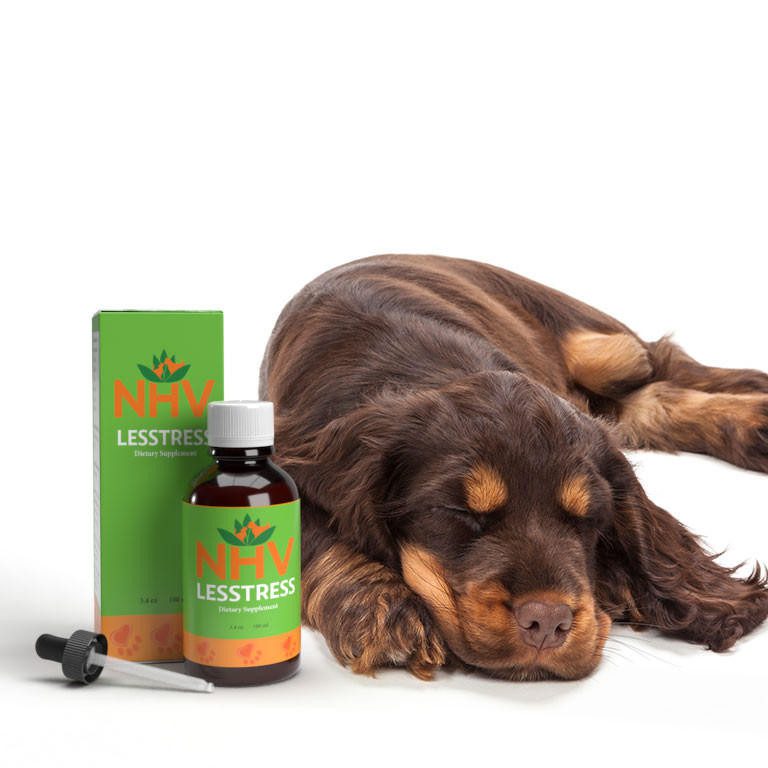
Lesstress - Helps support pets suffering from stress and anxiety.

Lesstress - Helps support pets suffering from stress and anxiety.
We have a dedicated group of pet expert professionals, including veterinarians, vet techs, and other pet professionals to guide you through any questions. We’re committed to your pet’s wellness and can offer additional tips, resources, nutritional advice, and more.
Published: September 14, 2026
Sweet Potato Chips
100% Pumpkin
buy 2 and save $3
Give your fur baby 2-3 pieces per day as a treat
What Is It?
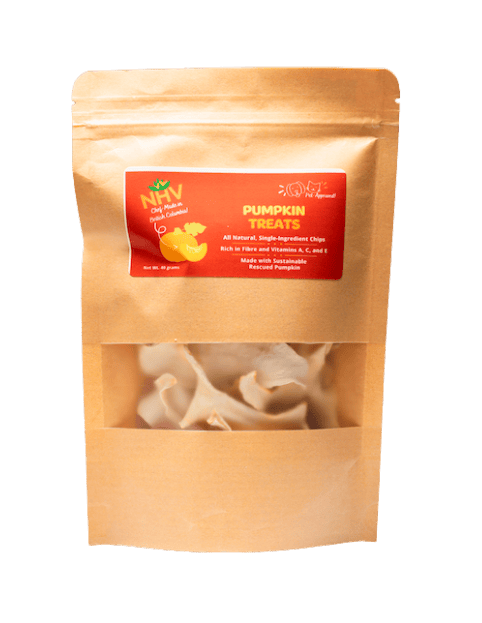
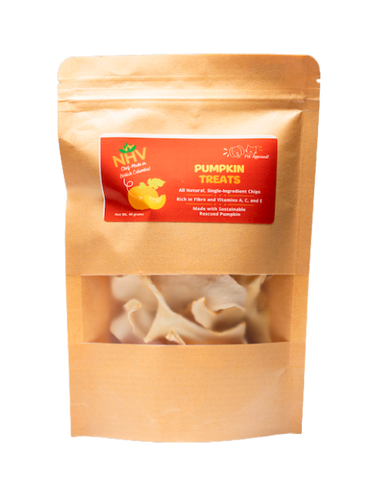
100% natural, single-ingredient Pumpkin treats for dogs.
What Makes It Great?
Why Should I Trust It?
Chef-made in small batches with no artificial preservatives, flavors, or colors.
What Is It?
100% natural, single-ingredient Pumpkin treats for dogs.
What Makes It Great?
Why Should I Trust It?
Chef-made in small batches with no artificial preservatives, flavors, or colors.
Your fur kiddo’s treats should be as pure as their love for you! With NHV’s chef-made pumpkin treats, you can pamper your pet with a wholesome treat that’s good for them too. But only for a limited time! We only made a limited quantity while pumpkin is in season, so be sure to stock up while they’re here. Pet-approved and 100% natural.
Imagine your little one running around a pumpkin patch and having the time of their lives hiding in the leaves or climbing a great big orange pumpkin.
With this single-ingredient pet treat, we’re bringing the pumpkin patch right to your door with no artificial preservatives, flavors, or colors - just flavor, fun, and nutrients!
Can dogs eat pumpkin as a treat? Pumpkin for dogs and cats offers loads of wellness benefits, especially in comparison to overly processed pet treats!
It’s low in calories but high in fiber, making it an excellent addition for pets who need to lose weight or for maintaining a healthy range. Pumpkin is rich in vitamins - such as vitamins A, C, and E - which help balance and maintain the immune system. It also contains traces of iron and potassium for overall wellness, whether they’re healthy or coping with a health condition.
Perfect-looking pumpkins often get picked first while their counterparts get left to rot, even though they are just as nutritious. To help reduce carbon and water waste, we’ve partnered with our suppliers to transform imperfect pumpkins into wholesome and tasty single-ingredient treats made from pumpkin for dogs, cats, and other critters to enjoy.
NHV Pumpkin Treats are lovingly made in small batches by a professional chef in Canada, meaning each and every piece is carefully inspected and prepared for quality and flavor.
These treats are only available for a short time while pumpkin is in season, so grab them while you can!
100% Pumpkin: Naturally preserved through dehydration - No artificial flavors, preservatives, colors, or additives
Treats should comprise no more than 10% of your pet’s daily caloric intake. Always provide fresh water, and supervise your pet while giving treats. Store in a cool dry place.
Your fur kiddo’s treats should be as pure as their love for you! With NHV’s chef-made pumpkin treats, you can pamper your pet with a wholesome treat that’s good for them too. But only for a limited time! We only made a limited quantity while pumpkin is in season, so be sure to stock up while they’re here. Pet-approved and 100% natural.
Imagine your little one running around a pumpkin patch and having the time of their lives hiding in the leaves or climbing a great big orange pumpkin.
With this single-ingredient pet treat, we’re bringing the pumpkin patch right to your door with no artificial preservatives, flavors, or colors - just flavor, fun, and nutrients!
Can dogs eat pumpkin as a treat? Pumpkin for dogs and cats offers loads of wellness benefits, especially in comparison to overly processed pet treats!
It’s low in calories but high in fiber, making it an excellent addition for pets who need to lose weight or for maintaining a healthy range. Pumpkin is rich in vitamins - such as vitamins A, C, and E - which help balance and maintain the immune system. It also contains traces of iron and potassium for overall wellness, whether they’re healthy or coping with a health condition.
Perfect-looking pumpkins often get picked first while their counterparts get left to rot, even though they are just as nutritious. To help reduce carbon and water waste, we’ve partnered with our suppliers to transform imperfect pumpkins into wholesome and tasty single-ingredient treats made from pumpkin for dogs, cats, and other critters to enjoy.
NHV Pumpkin Treats are lovingly made in small batches by a professional chef in Canada, meaning each and every piece is carefully inspected and prepared for quality and flavor.
These treats are only available for a short time while pumpkin is in season, so grab them while you can!
100% Pumpkin: Naturally preserved through dehydration - No artificial flavors, preservatives, colors, or additives
Treats should comprise no more than 10% of your pet’s daily caloric intake. Always provide fresh water, and supervise your pet while giving treats. Store in a cool dry place.