Pet Nutrition
Nutritional Essentials Plus Kit
USD $159.95
free shipping over $100 (USA & Canada)
1-877-937-4372 the pet expert hotline


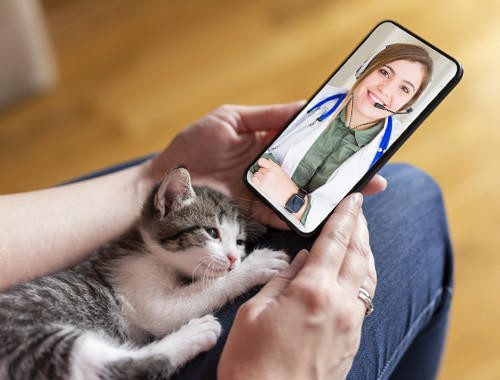
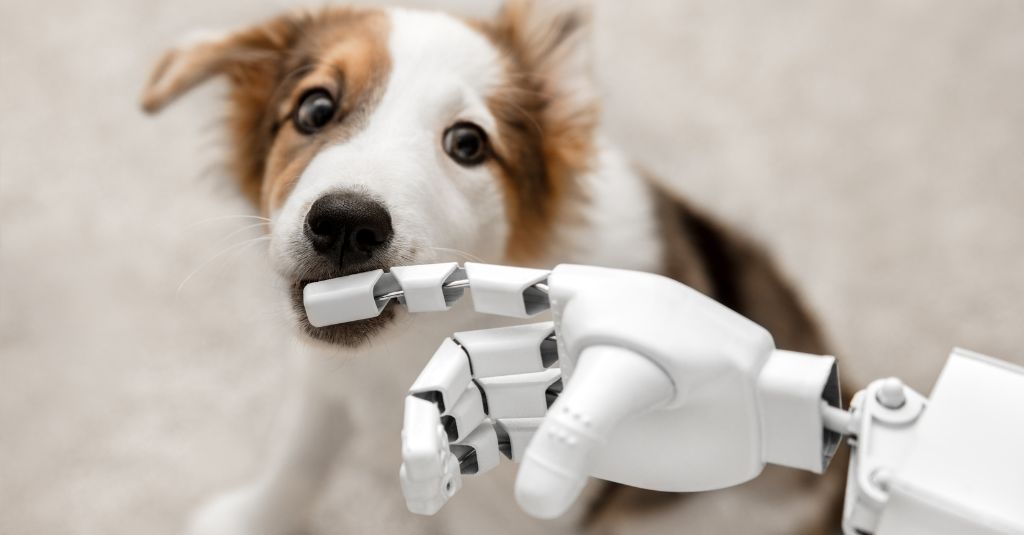
These days, many of us turn to AI or good ol’ internet when we have a question. Whether it’s looking up a recipe, troubleshooting a computer problem, or asking about our health, answers are just a few clicks away. It’s no surprise that pet parents are doing the same when it comes to their furry companions; as soon as their furkiddo starts coughing, scratching, or simply acting weird, we hit the search bar in search of quick answers. After all, AI can provide quick answers, explain unfamiliar medical terms, and even help you prepare questions, right? But can AI actually diagnose your pet?
Can AI actually diagnose your pet?
AI can be an excellent educational resource and a helpful starting point for learning about your pet’s health. However, it cannot replace the expertise, experience, and hands-on care that a veterinarian provides. Every pet is unique, and similar symptoms can have very different underlying causes.
Artificial Intelligence (AI) has made great advances in recent years, and many AI tools can provide surprisingly detailed information about common diseases, medications, nutrition, and pet care. When used responsibly, AI can be a valuable educational companion for pet parents.
As a tool, AI is excellent at gathering and organizing information. The American Animal Hospital Association (AAHA) tells us that, used the right way, it can build bridges between you, your pet, and your vet: it could help you ask better questions, track your pet’s condition, and even enhance communication. In short, AI could help you:
Despite all its impressive capabilities, AI has important limitations. It cannot perform the hands-on assessment that’s often necessary to accurately diagnose a medical condition. So, in short, AI cannot:
And perhaps the most important point, AI cannot distinguish between conditions that share similar symptoms.
For example, a dog that is vomiting may simply have an upset stomach after overeating or eating something unusual. However, it could also be associated with liver disease, toxin exposure, pancreatitis, hormonal disorders, kidney disease, or even certain cancers. Without a physical examination and proper diagnostic testing, it’s impossible to determine the underlying cause based on symptoms alone.
The internet has made pet health advice more accessible than ever before. A quick search can result in thousands of articles, videos, social media posts, and AI-generated answers in just a matter of seconds. While having so much information at our fingertips can be empowering, it can also be overwhelming, and sometimes even misleading.
The truth is that not all online pet health information is created equal. Some websites are written or reviewed by licensed veterinarians who are backed up by current scientific research. Others may be based on personal opinions, outdated recommendations, or anecdotal experiences that don’t apply to your pet’s unique situation.
Some tips the VCA gives us to know what online information to trust is to always look for accredited veterinary organizations, visit veterinary college websites (or your own vet clinic’s website), visit websites that contain content written by veterinarians, and avoid sites that are heavily weighted with personal opinions. Just remember, it’s okay to look for online information resources, just as long as you also take the time to visit your pet’s trusted veterinarian.
Technology continues to transform veterinary medicine, but it cannot replace the knowledge, experience, and clinical judgment that veterinarians bring to every patient. Every pet is unique, with their own medical history, lifestyle, personality, and individual health needs. Two dogs or cats showing the exact same symptom may have completely different underlying conditions, requiring very different diagnostic tests and treatment plans. That’s why visiting a veterinarian remains one of the most important steps you can take when your pet is unwell.
Rather than focusing solely on a diagnosis, integrative care looks at the whole pet, something an AI cannot do. Factors such as nutrition, stress, mobility, immune health, digestive function, and quality of life all contribute to your pet’s overall well-being. This holistic perspective allows veterinarians to develop personalized care plans that support your pet’s individual needs while working alongside conventional treatments whenever necessary.
So, while technology can provide valuable educational support, individualized veterinary care remains the gold standard for protecting your pet’s health and helping them live their happiest, healthiest life. No AI tool or online article can fully understand what makes your pet unique. Your veterinarian knows your pet’s health history and lifestyle, and their personalized approach helps ensure that every decision is made with your pet’s specific needs in mind.
Sometimes mild symptoms can be monitored at home under your vet’s guidance. However, if your pet continues to feel unwell, develops new symptoms, or doesn’t improve as expected, it’s important to schedule an examination.
As a general rule, use AI to learn, but rely on a veterinarian to diagnose and treat. If your pet is experiencing any of the following, contact your veterinarian or an emergency veterinary hospital immediately:
These situations require prompt medical attention and should never be managed based solely on information found online.
At NHV, we’re committed to helping pet parents make informed decisions about their furry family members. In addition to our educational resources, we offer several services designed to provide individual support:
These services are intended to work alongside your primary veterinarian, not replace them. Our goal is to empower pet parents with reliable information and supportive wellness options.
Artificial Intelligence (AI) has transformed the way we access information, making it easier than ever before for pet parents to learn about their furkiddo’s health. When used responsibly, AI can be an excellent educational resource, helping you better understand medical terminology, explore wellness topics, and prepare thoughtful questions before visiting your vet.
Every pet is unique
However, no technology can replace the value of individualized veterinary care. Diagnosing a medical condition requires far more than matching symptoms to a list of possibilities; it involves a thorough physical examination, diagnostic testing, medical history, and clinical expertise. Because every pet is unique, the same symptoms can have very different underlying causes.
The best approach is to use AI and online resources as tools for learning. By combining reliable information with expert guidance, you’ll be better equipped to make confident decisions that support your pet’s long-term health and happiness.
Pet Nutrition
Natural Pet Nutrition Supplements for Cats and Dogs
bundle and save with pet expert kits
3 month supply for a small to medium size pet
What Is It?
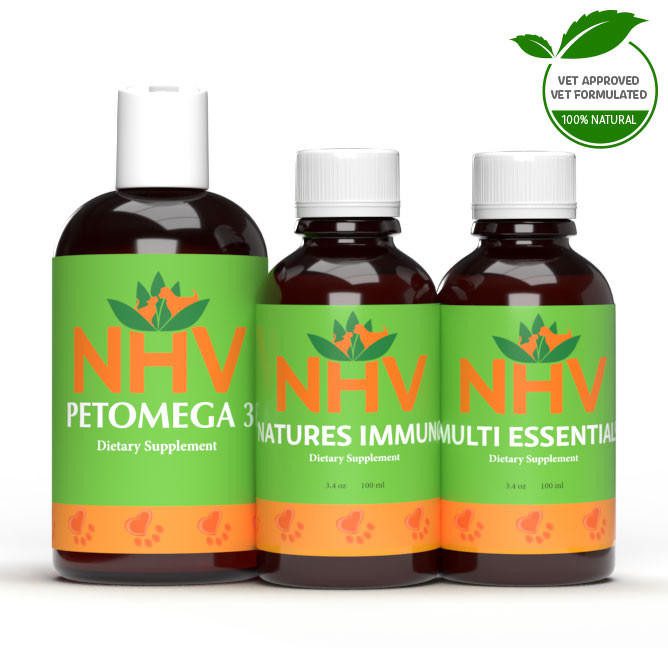
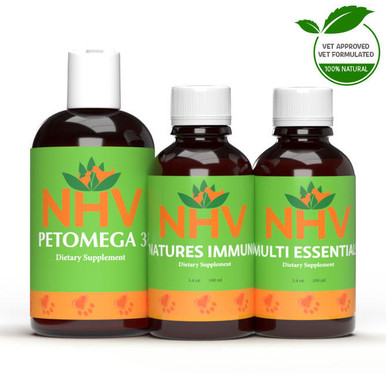
NHV Nutritional Essentials Plus Kit is formulated to fill nutritional voids, soothe inflammation and offer a beneficial aid for rebalancing immune health.
How Does it Work?
Why Should I Trust It?
Formulated by veterinarians specifically for pets.

What Is It?
NHV Nutritional Essentials Plus Kit is formulated to fill nutritional voids, soothe inflammation and offer a beneficial aid for rebalancing immune health.
How Does it Work?
Why Should I Trust It?
Formulated by veterinarians specifically for pets.
All pet pawrents want their furkiddos to live a long and healthy life. Good health begins with adequate nutrition. So for all those pets out there who want a little nutritional support or may be battling a serious illness, Our Pet Nutrition Supplement Bundle offers comprehensive support for many body processes, including rebalancing immune health and relieving inflammation. All of our supplements are made with full-spectrum plant extracts that are formulated specifically for pets. Full-spectrum means that all of the vitamins, minerals and trace elements are kept intact during the extraction process to make it absorbable for your little one's body.
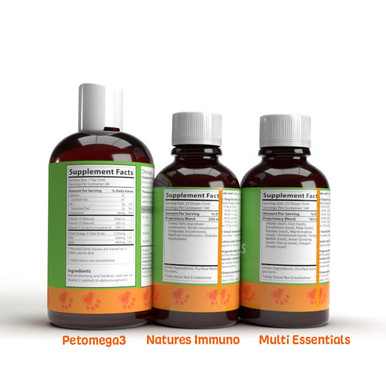
NHV Multi Essentials is full of vitamins and minerals to help improve digestion and absorption and fill nutritional voids due to poor diet or illness. The omega 3 fatty acids in PetOmega 3 work to relieve inflammation in the GI tract, promote healthy digestion and balance appetite. Natures Immuno's mushroom blend is formulated with anti-inflammatory properties that gently rebalance the immune system (without overstimulating it) and offers cardiovascular, liver, kidney, diabetic, and endocrine health support.
MULTI ESSENTIALS
PETOMEGA 3
NATURES IMMUNO
Help your Pet Live Their Best Life With NHV Supplements
For optimal health, it’s a great idea to supplement your furkiddo’s daily meals with nutrients and immune-boosting ingredients. All of our products are 100% natural and their liquid formulation makes it easy to hide in food. If you need an extra hand (or paw) to improve your pet’s health, get in touch with one of our in-house pet experts. We’re always happy to help!
Made with the finest, organically grown, or ethically harvested herbs. Made specifically for pets, vet-formulated and vet approved.
Multi Essentials
PetOmega 3
Natures Immuno
Select your pet's weight to determine the correct dose.
PETOMEGA 3 : Pet’s Weight Dosage to be taken once a day.
0-15 lb = ¼ tsp
15-30 lb = ½ tsp
30-60 lb = 1 tsp
60-90 lb = 1 ½ tsp
MULTI ESSENTIALS, NATURES IMMUNO : To be taken twice daily. Determine your pet’s weight and then use the easy chart below to determine the correct dose. This is the minimum dosage.
Pet's Weight Dosage
0 - 15 lb = 0.5 ml
16 - 30 lb = 1.0 ml
31 - 45 lb = 1.5 ml
46 - 60 lb = 2.0 ml
61 - 75 lb = 2.5 ml
Over 75 lb = 3.0 ml
How to Administer
Shake well before use. The easiest method is to use the dropper provided and place the drops into your pet’s food or favorite treat. You can also use the dropper and squirt directly into the pet’s mouth. Some pets can be finicky, if this occurs consider hiding the drops in foods most pet’s love such as fish, chicken or yogurt or a favorite treat. If your pet only eats dry food then soak a few kibbles at feeding time.
For Best Results
Herbal dietary supplements are beneficial to the health and well-being of your pet and are safe for long-term use. Every pet responds to natural herbal supplements differently, therefore it is important to be consistent and administer the product daily. Supplements generally take two to four weeks to take effect, however this will vary from one animal to the next.
Product Storage
All NHV Natural Pet Products are pure herbal extracts and contain no artificial additives, preservatives or coloring. Shelf life after opening is 6 months and must be refrigerated after opening.
Cautions and Contraindications
Do not use in pregnant or nursing animals.
All information provided by NHV Natural Pet Products is for educational purposes only.
All information provided by NHV Natural Pet Products is for educational purposes only.
All pet pawrents want their furkiddos to live a long and healthy life. Good health begins with adequate nutrition. So for all those pets out there who want a little nutritional support or may be battling a serious illness, Our Pet Nutrition Supplement Bundle offers comprehensive support for many body processes, including rebalancing immune health and relieving inflammation. All of our supplements are made with full-spectrum plant extracts that are formulated specifically for pets. Full-spectrum means that all of the vitamins, minerals and trace elements are kept intact during the extraction process to make it absorbable for your little one's body.
NHV Multi Essentials is full of vitamins and minerals to help improve digestion and absorption and fill nutritional voids due to poor diet or illness. The omega 3 fatty acids in PetOmega 3 work to relieve inflammation in the GI tract, promote healthy digestion and balance appetite. Natures Immuno's mushroom blend is formulated with anti-inflammatory properties that gently rebalance the immune system (without overstimulating it) and offers cardiovascular, liver, kidney, diabetic, and endocrine health support.
MULTI ESSENTIALS
PETOMEGA 3
NATURES IMMUNO
Help your Pet Live Their Best Life With NHV Supplements
For optimal health, it’s a great idea to supplement your furkiddo’s daily meals with nutrients and immune-boosting ingredients. All of our products are 100% natural and their liquid formulation makes it easy to hide in food. If you need an extra hand (or paw) to improve your pet’s health, get in touch with one of our in-house pet experts. We’re always happy to help!
Made with the finest, organically grown, or ethically harvested herbs. Made specifically for pets, vet-formulated and vet approved.
Multi Essentials
PetOmega 3
Natures Immuno
Select your pet's weight to determine the correct dose.
PETOMEGA 3 : Pet’s Weight Dosage to be taken once a day.
0-15 lb = ¼ tsp
15-30 lb = ½ tsp
30-60 lb = 1 tsp
60-90 lb = 1 ½ tsp
MULTI ESSENTIALS, NATURES IMMUNO : To be taken twice daily. Determine your pet’s weight and then use the easy chart below to determine the correct dose. This is the minimum dosage.
Pet's Weight Dosage
0 - 15 lb = 0.5 ml
16 - 30 lb = 1.0 ml
31 - 45 lb = 1.5 ml
46 - 60 lb = 2.0 ml
61 - 75 lb = 2.5 ml
Over 75 lb = 3.0 ml
How to Administer
Shake well before use. The easiest method is to use the dropper provided and place the drops into your pet’s food or favorite treat. You can also use the dropper and squirt directly into the pet’s mouth. Some pets can be finicky, if this occurs consider hiding the drops in foods most pet’s love such as fish, chicken or yogurt or a favorite treat. If your pet only eats dry food then soak a few kibbles at feeding time.
For Best Results
Herbal dietary supplements are beneficial to the health and well-being of your pet and are safe for long-term use. Every pet responds to natural herbal supplements differently, therefore it is important to be consistent and administer the product daily. Supplements generally take two to four weeks to take effect, however this will vary from one animal to the next.
Product Storage
All NHV Natural Pet Products are pure herbal extracts and contain no artificial additives, preservatives or coloring. Shelf life after opening is 6 months and must be refrigerated after opening.
Cautions and Contraindications
Do not use in pregnant or nursing animals.
All information provided by NHV Natural Pet Products is for educational purposes only.
All information provided by NHV Natural Pet Products is for educational purposes only.
Beef Liver Jerky Dog Treats
100% Beef Liver
Give your fur baby 1-5 pieces per day as a treat
What Is It?
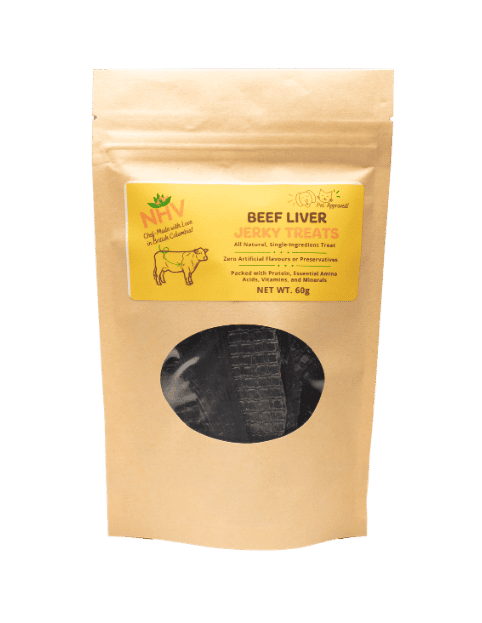
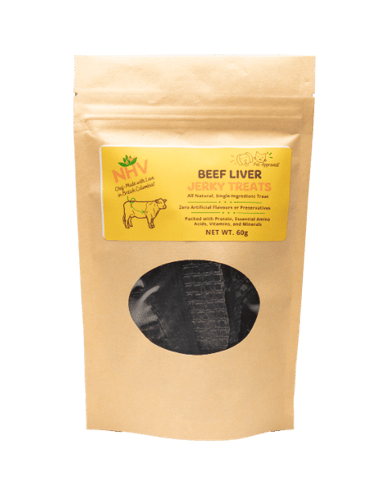
Our chef-made beef liver for dogs and cats naturally contains protein, essential amino acids, vitamins, and minerals.
What Makes It Great?
Why Should I Trust It?
We use only human-grade beef, raised without the use of artificial flavors, colors, or additives.
What Is It?
Our chef-made beef liver for dogs and cats naturally contains protein, essential amino acids, vitamins, and minerals.
What Makes It Great?
Why Should I Trust It?
We use only human-grade beef, raised without the use of artificial flavors, colors, or additives.
Your fur baby might just want something tasty, but as a pet parent, you want it to be healthy, too!
Enter NHV Beef Liver Jerky Treats. This all-natural beef liver for dogs and cats isn’t just irresistibly tasty; it’s got vitamins, minerals, and essential amino acids to fuel their bodies and support their immune system.
Beef liver has many benefits for pets, thanks to its diverse profile of vitamins, minerals, and essential amino acids.
Because of beef liver’s high vitamin and mineral content, it is best used in a treat format like NHV Beef Liver Jerky Treats, comprising about 10% of your pet’s caloric intake.
Our pets’ bodies are just as complex as ours. So why settle for anything less than pure ingredients? That’s why we only use human-grade beef liver in NHV Beef Liver Jerky Treats.
And what we use in these treats is just as important as what we don’t. With no artificial flavors or colors, the natural goodness of pure beef liver shines - without the worry.
There aren’t any artificial preservatives either. Instead, these treats are dehydrated to concentrate flavor, preserve nutrients, and give a hearty chew that pets love.
NHV Beef Liver Jerky Treats are lovingly made in small batches by a professional chef. Each piece is carefully prepared for quality and flavor, as we believe in the best for our furry friends. Get yours today to show them some love!
100% Beef Liver
Naturally preserved through dehydration - No artificial flavors, preservatives, colors, or additives
Treats should comprise no more than 10% of your pet’s daily caloric intake. Always provide fresh water, and supervise your pet while giving treats. Store in a cool dry place.
Your fur baby might just want something tasty, but as a pet parent, you want it to be healthy, too!
Enter NHV Beef Liver Jerky Treats. This all-natural beef liver for dogs and cats isn’t just irresistibly tasty; it’s got vitamins, minerals, and essential amino acids to fuel their bodies and support their immune system.
Beef liver has many benefits for pets, thanks to its diverse profile of vitamins, minerals, and essential amino acids.
Because of beef liver’s high vitamin and mineral content, it is best used in a treat format like NHV Beef Liver Jerky Treats, comprising about 10% of your pet’s caloric intake.
Our pets’ bodies are just as complex as ours. So why settle for anything less than pure ingredients? That’s why we only use human-grade beef liver in NHV Beef Liver Jerky Treats.
And what we use in these treats is just as important as what we don’t. With no artificial flavors or colors, the natural goodness of pure beef liver shines - without the worry.
There aren’t any artificial preservatives either. Instead, these treats are dehydrated to concentrate flavor, preserve nutrients, and give a hearty chew that pets love.
NHV Beef Liver Jerky Treats are lovingly made in small batches by a professional chef. Each piece is carefully prepared for quality and flavor, as we believe in the best for our furry friends. Get yours today to show them some love!
100% Beef Liver
Naturally preserved through dehydration - No artificial flavors, preservatives, colors, or additives
Treats should comprise no more than 10% of your pet’s daily caloric intake. Always provide fresh water, and supervise your pet while giving treats. Store in a cool dry place.
kidney & bladder support
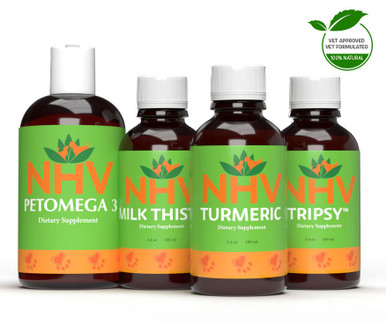
Tripsy, Milk Thistle, Turmeric & PetOmega 3
bundle and save with pet expert kits
What is it?
Support your pet through kidney disease or kidney failure with all-natural supplements formulated to support organ function and help with symptoms.
How does it work?
Why trust it?
NHV supplements are vet-formulated and vet-approved.
What is it?
Support your pet through kidney disease or kidney failure with all-natural supplements formulated to support organ function and help with symptoms.
How does it work?
Why trust it?
NHV supplements are vet-formulated and vet-approved.
Powerful Support for Your Dog or Cat
Kidney issues can be really hard on pets and pet parents. The signs that your cat or dog is suffering from kidney disease or kidney failure include lethargy, weight loss, dehydration, frequent urination, and vomiting. Supporting your pet’s kidneys with gentle all-natural supplements can help them with symptoms of kidney disease and help improve their quality of life.
How NHV Remedies Provide Kidney Support for Cats and Dogs
NHV’s Kidney Support Kit for dogs and cats is used to help pets with moderate to severe chronic kidney disease and kidney failure by flushing the kidneys of impurities and improving kidney function.
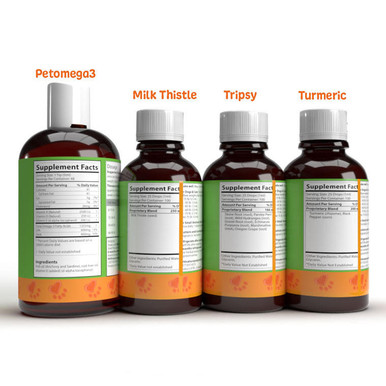
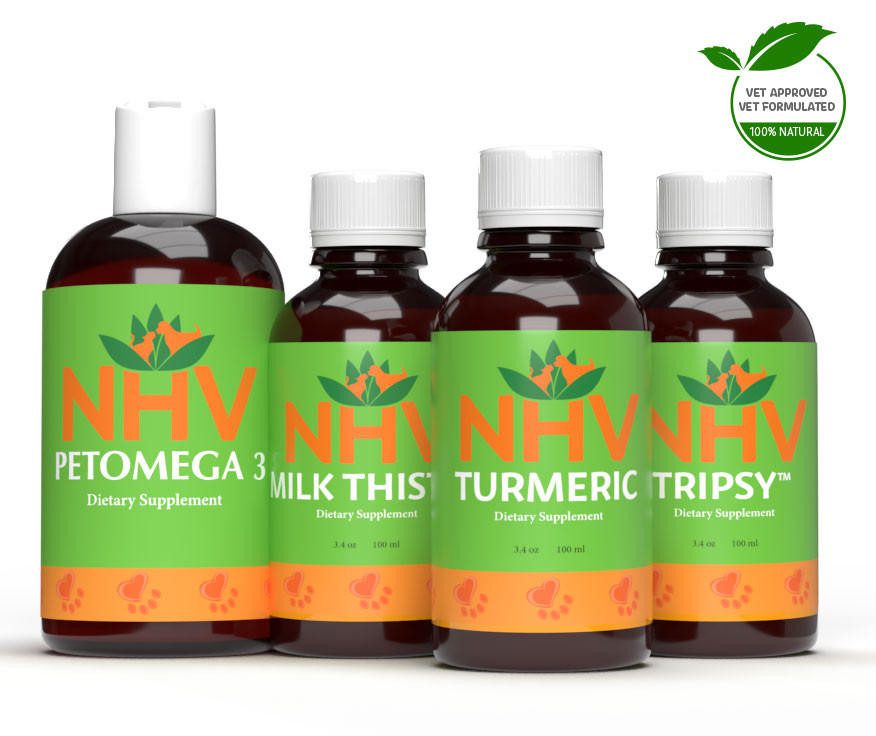
The four supplements in this comprehensive kit support the kidneys in several important ways. The Omega 3 fish oils in PetOmega 3 have excellent anti-inflammatory properties, specifically for the kidneys. Omega 3 fatty acids may also help reduce proteinuria (protein lost from the kidneys expelled through the urine).
Milk Thistle has strong antioxidant and detoxifying properties that may help promote cellular regeneration, repair the liver, and offer extra support to the kidneys.
Turmeric has an outstanding list of helpful benefits as an anti-inflammatory, antioxidant, antifungal, antibacterial, antiseptic, and astringent.
Tripsy™ is NHV’s main kidney support supplement. It has been studied at the University of Georgia for its potential benefits for pet health. It contains even more beneficial herbal ingredients, including Stone Root, Parsley Piert, and Gravel Root that help prevent the formation of kidney stones (kidney calculi).
Powerful Comprehensive Benefits
Order the NHV Kidney Support Kit for Dogs and Cats to provide comprehensive support in addition to their vet-recommended treatment.
PETOMEGA 3 - Omega 3 Fatty Acids are beneficial to the kidneys. This medical-grade fish oil is derived from sardine, anchovy, and North Atlantic cod liver oil. It is molecularly distilled and cold-pressed to improve the bioavailability.
MILK THISTLE - Organic Milk Thistle Seed to naturally detoxify, strengthen, and rejuvenate the liver and kidneys.
TURMERIC - An extract with natural anti-inflammatory, antioxidant, antibacterial, and antiseptic properties to support healthy kidneys.
Select your pet's weight to determine the correct dose.
PETOMEGA 3 DOSAGE : Pet’s Weight Dosage
0-15 lb = ¼ tsp
15-30 lb = ½ tsp
30-60 lb = 1 tsp
60-90 lb = 1 ½ tsp
TRIPSY, TURMERIC, MILK THISTLE DOSAGE : To be taken twice daily. Determine your pet’s weight and then use the easy chart below to determine the correct dose. This is the minimum dosage.
Pet's Weight Dosage
0 - 15 lb = 0.5 ml
16 - 30 lb = 1.0 ml
31 - 45 lb = 1.5 ml
46 - 60 lb = 2.0 ml
61 - 75 lb = 2.5 ml
Over 75 lb = 3.0 ml
For small animals (rabbits, ferrets), avians and reptiles use 1 drop for every 2 lb of body weight.
How to Administer
Shake well before use. The easiest method is to use the dropper provided and place the drops into your pet’s food or favorite treat. You can also use the dropper and squirt directly into the pet’s mouth. Some pets can be finicky, if this occurs consider hiding the drops in foods most pet’s love such as fish, chicken or yogurt or a favorite treat. If your pet only eats dry food then soak a few kibbles at feeding time.
For Best Results
Herbal dietary supplements are beneficial to the health and well-being of your pet and are safe for long-term use. Every pet responds to natural herbal supplements differently, therefore it is important to be consistent and administer the product daily. Supplements generally take two to four weeks to take effect, however this will vary from one animal to the next.
Product Storage
All NHV Natural Pet Products are pure herbal extracts and contain no artificial additives, preservatives or coloring. Shelf life after opening is 6 months and must be refrigerated after opening.
Cautions and Contraindications
Do not use in pregnant or nursing animals.
All information provided by NHV Natural Pet Products is for educational purposes only.
Powerful Support for Your Dog or Cat
Kidney issues can be really hard on pets and pet parents. The signs that your cat or dog is suffering from kidney disease or kidney failure include lethargy, weight loss, dehydration, frequent urination, and vomiting. Supporting your pet’s kidneys with gentle all-natural supplements can help them with symptoms of kidney disease and help improve their quality of life.
How NHV Remedies Provide Kidney Support for Cats and Dogs
NHV’s Kidney Support Kit for dogs and cats is used to help pets with moderate to severe chronic kidney disease and kidney failure by flushing the kidneys of impurities and improving kidney function.
The four supplements in this comprehensive kit support the kidneys in several important ways. The Omega 3 fish oils in PetOmega 3 have excellent anti-inflammatory properties, specifically for the kidneys. Omega 3 fatty acids may also help reduce proteinuria (protein lost from the kidneys expelled through the urine).
Milk Thistle has strong antioxidant and detoxifying properties that may help promote cellular regeneration, repair the liver, and offer extra support to the kidneys.
Turmeric has an outstanding list of helpful benefits as an anti-inflammatory, antioxidant, antifungal, antibacterial, antiseptic, and astringent.
Tripsy™ is NHV’s main kidney support supplement. It has been studied at the University of Georgia for its potential benefits for pet health. It contains even more beneficial herbal ingredients, including Stone Root, Parsley Piert, and Gravel Root that help prevent the formation of kidney stones (kidney calculi).
Powerful Comprehensive Benefits
Order the NHV Kidney Support Kit for Dogs and Cats to provide comprehensive support in addition to their vet-recommended treatment.
PETOMEGA 3 - Omega 3 Fatty Acids are beneficial to the kidneys. This medical-grade fish oil is derived from sardine, anchovy, and North Atlantic cod liver oil. It is molecularly distilled and cold-pressed to improve the bioavailability.
MILK THISTLE - Organic Milk Thistle Seed to naturally detoxify, strengthen, and rejuvenate the liver and kidneys.
TURMERIC - An extract with natural anti-inflammatory, antioxidant, antibacterial, and antiseptic properties to support healthy kidneys.
Select your pet's weight to determine the correct dose.
PETOMEGA 3 DOSAGE : Pet’s Weight Dosage
0-15 lb = ¼ tsp
15-30 lb = ½ tsp
30-60 lb = 1 tsp
60-90 lb = 1 ½ tsp
TRIPSY, TURMERIC, MILK THISTLE DOSAGE : To be taken twice daily. Determine your pet’s weight and then use the easy chart below to determine the correct dose. This is the minimum dosage.
Pet's Weight Dosage
0 - 15 lb = 0.5 ml
16 - 30 lb = 1.0 ml
31 - 45 lb = 1.5 ml
46 - 60 lb = 2.0 ml
61 - 75 lb = 2.5 ml
Over 75 lb = 3.0 ml
For small animals (rabbits, ferrets), avians and reptiles use 1 drop for every 2 lb of body weight.
How to Administer
Shake well before use. The easiest method is to use the dropper provided and place the drops into your pet’s food or favorite treat. You can also use the dropper and squirt directly into the pet’s mouth. Some pets can be finicky, if this occurs consider hiding the drops in foods most pet’s love such as fish, chicken or yogurt or a favorite treat. If your pet only eats dry food then soak a few kibbles at feeding time.
For Best Results
Herbal dietary supplements are beneficial to the health and well-being of your pet and are safe for long-term use. Every pet responds to natural herbal supplements differently, therefore it is important to be consistent and administer the product daily. Supplements generally take two to four weeks to take effect, however this will vary from one animal to the next.
Product Storage
All NHV Natural Pet Products are pure herbal extracts and contain no artificial additives, preservatives or coloring. Shelf life after opening is 6 months and must be refrigerated after opening.
Cautions and Contraindications
Do not use in pregnant or nursing animals.
All information provided by NHV Natural Pet Products is for educational purposes only.
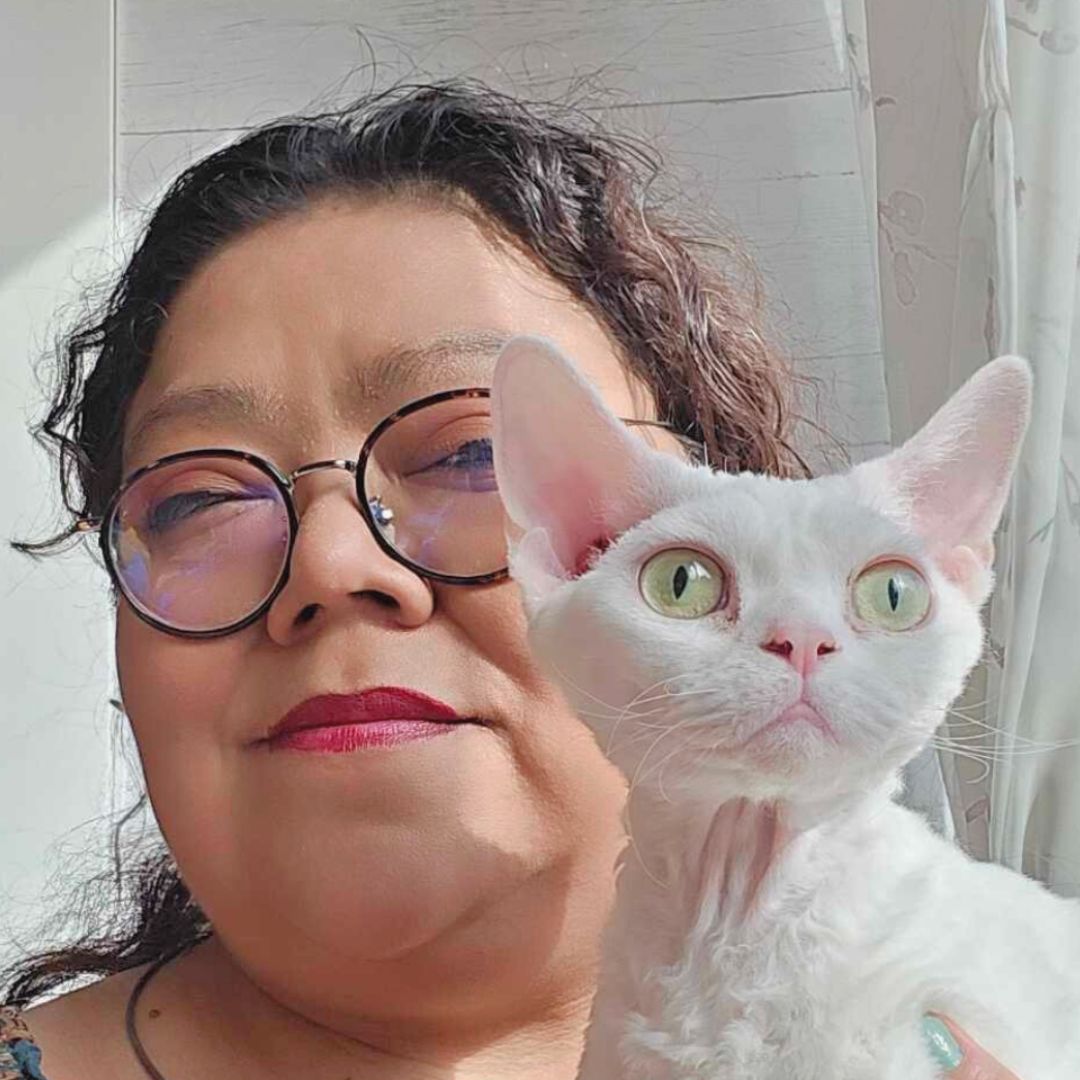
Dr. Yuvia Hernandez graduated from the Universidad Autonoma de Ciudad Juarez (Mexico) with a degree in Veterinary Medicine and Animal Husbandry, and later got her Master’s Degree in Educational Strategies from the Universidad Regional del Norte. She has taken several courses throughout her career to train in the veterinary field, such as emergency veterinary care, animal nutrition, and holistic veterinary care. Dr. Hernandez shares her home with two adorable cats as she continues to learn about animal welfare and care.
Published: July 30, 2026
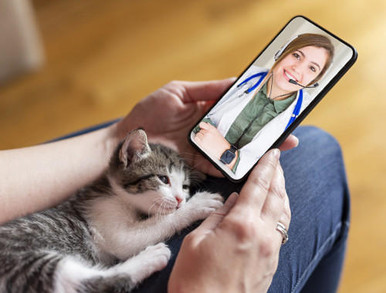
FREE 15-MINUTE ONLINE VIDEO CHATS
Our pet experts are here to help and we are temporarily offering Free Online Video Chats for customers around the world. You will be able to schedule a 15-minute video chat with one of our pet experts to talk about your concerns regarding your pet.
This is not intended to be a diagnostic video consult, nor can we prescribe medication, but we will be able to see your pet and hear your concerns to try to help give you the support you need in case you can’t go out and physically see your vet for an appointment. There are lots of holistic ways to help keep your pet healthy, until you get to see your regular vet, and that’s what our pet experts are here for!
FREE 15-MINUTE ONLINE VIDEO CHATS
Our pet experts are here to help and we are temporarily offering Free Online Video Chats for customers around the world. You will be able to schedule a 15-minute video chat with one of our pet experts to talk about your concerns regarding your pet.
This is not intended to be a diagnostic video consult, nor can we prescribe medication, but we will be able to see your pet and hear your concerns to try to help give you the support you need in case you can’t go out and physically see your vet for an appointment. There are lots of holistic ways to help keep your pet healthy, until you get to see your regular vet, and that’s what our pet experts are here for!