multivitamin support
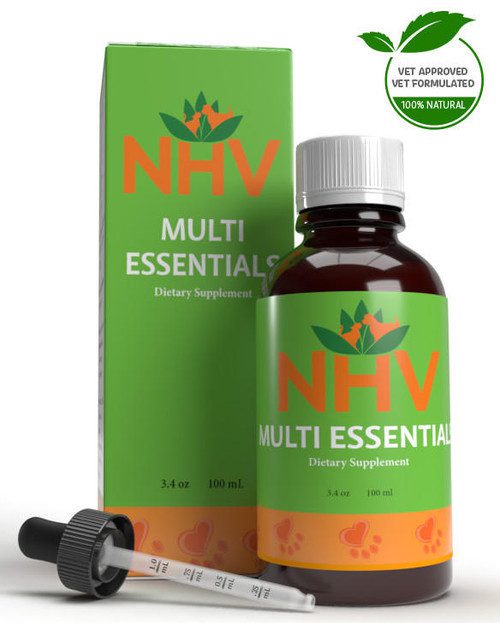
Multi Essentials for Pocket Pets
USD $53.95
free shipping over $100 (USA & Canada)
1-877-937-4372 the pet expert hotline
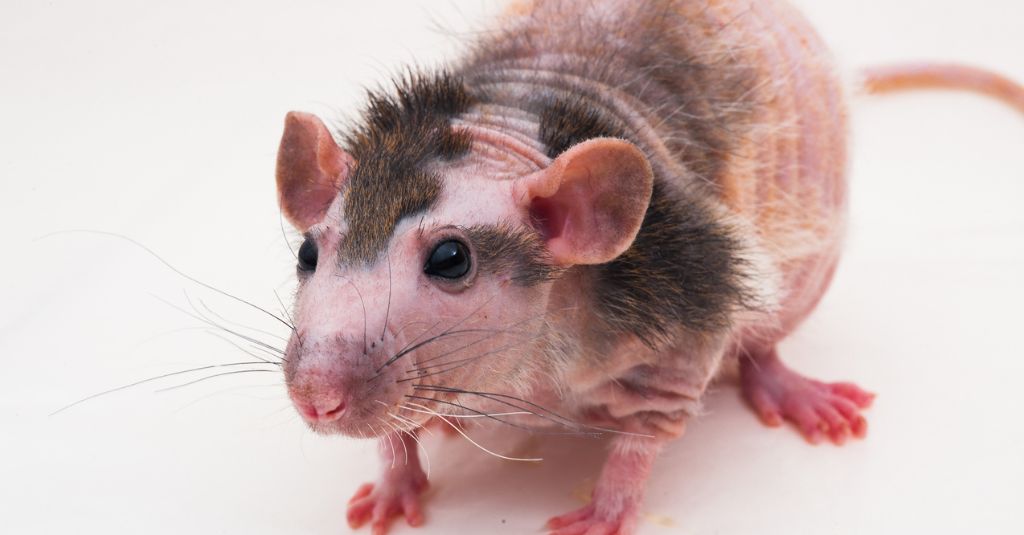
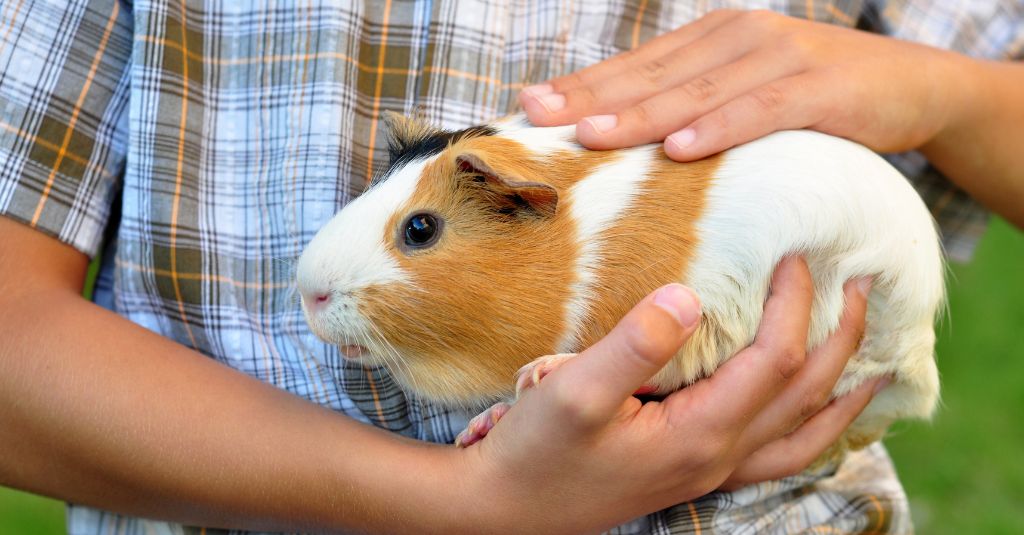
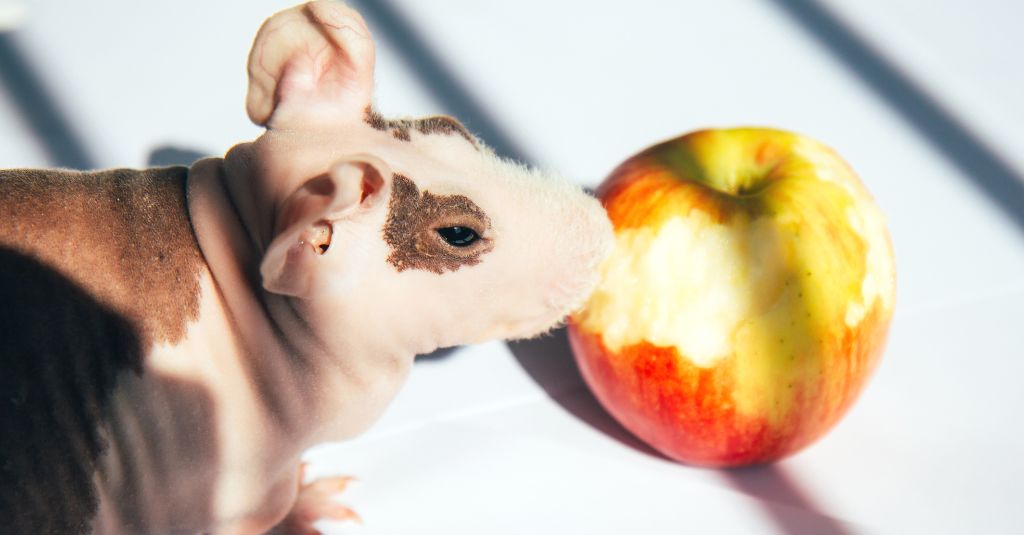
When caring for small pets such as guinea pigs, rabbits, or hamsters, noticing bald patches or thinning fur can be concerning. This condition, known as alopecia, refers to partial or complete hair loss. While sometimes cosmetic, alopecia in small pets often signals an underlying health or environmental issue that needs attention. Understanding the causes, recognizing early symptoms, and pursuing timely treatment of alopecia in guinea pigs and other small pets can make a significant difference in your pet’s comfort and well-being.
Hair loss in guinea pigs, rabbits, and hamsters can appear in several ways:
In some cases, alopecia may be accompanied by weight loss, lethargy, or other systemic signs depending on the underlying cause.
Since alopecia can stem from multiple causes, a proper veterinary diagnosis is crucial. Common diagnostic steps include:
A thorough history of diet, cage environment, and behavior also helps guide the diagnosis.
The right treatment depends on the underlying cause:
Supportive care, such as maintaining proper cage hygiene and preventing secondary infections, is equally important.
Alongside veterinary care, natural supplements may help improve skin health, reduce inflammation, and support overall immunity in small pets experiencing alopecia. NHV provides veterinarian-formulated supplements that are gentle, safe, and human-grade.
Natural supplements such as these are not substitutes for veterinary treatment but can be valuable supportive therapies to enhance recovery and long-term wellness.
Alopecia in guinea pigs, rabbits, and hamsters should never be overlooked. Whether caused by parasites, fungal infections, hormonal imbalances, or stress, hair loss often points to a deeper health issue. Early diagnosis and treatment are key to preventing complications and ensuring your pet remains happy and healthy.
With veterinary care, environmental management, and natural support from NHV supplements, many small pets with alopecia can regain a soft, shiny coat and return to their playful selves.
multivitamin support
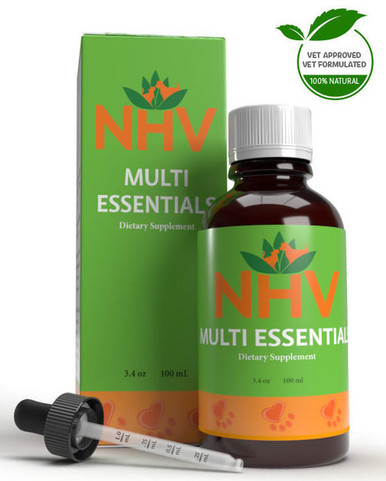
All-Natural Multivitamin for Pocket Pets
buy 2 and save $3
3 month supply for a small to medium size pet
What is it?
To help your gerbil, teddy bear hamster, or hairless guinea pig age gracefully, our pocket pet supplements are formulated to deliver vital nutrients, help maintain many body processes and encourage healthy skin and coat.
How does it work?
Why should I trust it?
NHV supplements use human-grade herbs, so your pet only gets the best!


What is it?
To help your gerbil, teddy bear hamster, or hairless guinea pig age gracefully, our pocket pet supplements are formulated to deliver vital nutrients, help maintain many body processes and encourage healthy skin and coat.
How does it work?
Why should I trust it?
NHV supplements use human-grade herbs, so your pet only gets the best!
As pet parents, we all want our pets to live long and happy lives - whether they're large or tiny pocket-sized pets! Pocket pets are small animals that include:
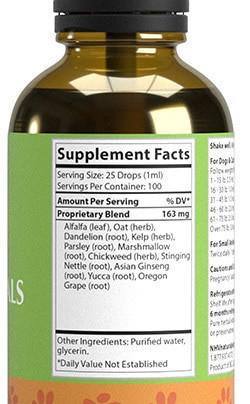
A vitamin deficiency can have detrimental effects on a pocket pet’s health and may lead to many different health conditions. A long and healthy life starts with good nutrition, so for pet parents looking for natural supports for their teddy bear hamster, gerbil, or chinchilla, our Multi Essentials for Pocket Pets offers a liquid formulation made with a blend of 11 nutrient-dense herbs formulated to help maintain many body processes, help metabolize vitamins and minerals, and aid digestion. It is beneficial support for pocket pets exposed to environmental toxins as well as encourages healthy skin and coat. All of our supplements are made with full-spectrum plant extracts that are crafted specifically for pets of all sizes. Full-spectrum means that all of the vitamins, minerals, and trace elements are kept intact during the extraction process to make it easily absorbable for your pocket pet.
Having an imbalanced diet can cause a lot of stress and discomfort for your furry friend. Our Multi Essentials for Pocket Pets is an all-natural herbal remedy formulated to help fill nutritional voids, help reduce fatigue and help to improve digestion.
Common health issues caused by a nutrient deficiency:
With NHV Supplements, you can give your furkiddo the extra support they need to age gracefully! All of our care products are created with 100% organic or wildcrafted ingredients and can be used safely alongside vet-prescribed medication. If you have any questions about pet supplements or holistic remedies, Get in touch with an NHV Pet Expert - we’re here for you every step of the way!
Made with the finest, organically grown, or ethically harvested herbs. Made specifically for pets, vet-formulated and vet approved.
Select your pet's weight to determine the correct dose.
For ferrets: 0.5ml twice a day
For rabbits and guinea pigs: 0.5 ml twice a day
For hamsters and mice: 1 drop per two pounds twice a day
How to Administer
Shake well before use. The easiest method is to use the dropper provide and place the drops into your bird's favorite treat. You can also use the dropper and squirt directly into the bird’s mouth.
For Best Results
Herbal dietary supplements are beneficial to the health and wellbeing of your pet and are safe for long-term use. Every pet responds to natural herbal supplements differently, therefore it is important to be consistent and administer the product daily. Supplements generally take two to four weeks to take effect, however this will vary from one animal to the next.
Product Storage
All NHV Natural Pet Products are pure herbal extracts and contain no artificial additives, preservatives or coloring. Shelf life after opening is 6 months and must be refrigerated after opening.
Cautions and Contraindications
Do not use Multi Essentials in pregnant or nursing animals. Speak to your vet before using our products. A second visit is recommended if your pet’s condition does not improve, or deteriorates after continued use of the supplements.
All information provided by NHV Natural Pet Products is for educational purposes only.
As pet parents, we all want our pets to live long and happy lives - whether they're large or tiny pocket-sized pets! Pocket pets are small animals that include:
A vitamin deficiency can have detrimental effects on a pocket pet’s health and may lead to many different health conditions. A long and healthy life starts with good nutrition, so for pet parents looking for natural supports for their teddy bear hamster, gerbil, or chinchilla, our Multi Essentials for Pocket Pets offers a liquid formulation made with a blend of 11 nutrient-dense herbs formulated to help maintain many body processes, help metabolize vitamins and minerals, and aid digestion. It is beneficial support for pocket pets exposed to environmental toxins as well as encourages healthy skin and coat. All of our supplements are made with full-spectrum plant extracts that are crafted specifically for pets of all sizes. Full-spectrum means that all of the vitamins, minerals, and trace elements are kept intact during the extraction process to make it easily absorbable for your pocket pet.
Having an imbalanced diet can cause a lot of stress and discomfort for your furry friend. Our Multi Essentials for Pocket Pets is an all-natural herbal remedy formulated to help fill nutritional voids, help reduce fatigue and help to improve digestion.
Common health issues caused by a nutrient deficiency:
With NHV Supplements, you can give your furkiddo the extra support they need to age gracefully! All of our care products are created with 100% organic or wildcrafted ingredients and can be used safely alongside vet-prescribed medication. If you have any questions about pet supplements or holistic remedies, Get in touch with an NHV Pet Expert - we’re here for you every step of the way!
Made with the finest, organically grown, or ethically harvested herbs. Made specifically for pets, vet-formulated and vet approved.
Select your pet's weight to determine the correct dose.
For ferrets: 0.5ml twice a day
For rabbits and guinea pigs: 0.5 ml twice a day
For hamsters and mice: 1 drop per two pounds twice a day
How to Administer
Shake well before use. The easiest method is to use the dropper provide and place the drops into your bird's favorite treat. You can also use the dropper and squirt directly into the bird’s mouth.
For Best Results
Herbal dietary supplements are beneficial to the health and wellbeing of your pet and are safe for long-term use. Every pet responds to natural herbal supplements differently, therefore it is important to be consistent and administer the product daily. Supplements generally take two to four weeks to take effect, however this will vary from one animal to the next.
Product Storage
All NHV Natural Pet Products are pure herbal extracts and contain no artificial additives, preservatives or coloring. Shelf life after opening is 6 months and must be refrigerated after opening.
Cautions and Contraindications
Do not use Multi Essentials in pregnant or nursing animals. Speak to your vet before using our products. A second visit is recommended if your pet’s condition does not improve, or deteriorates after continued use of the supplements.
All information provided by NHV Natural Pet Products is for educational purposes only.
hair loss support
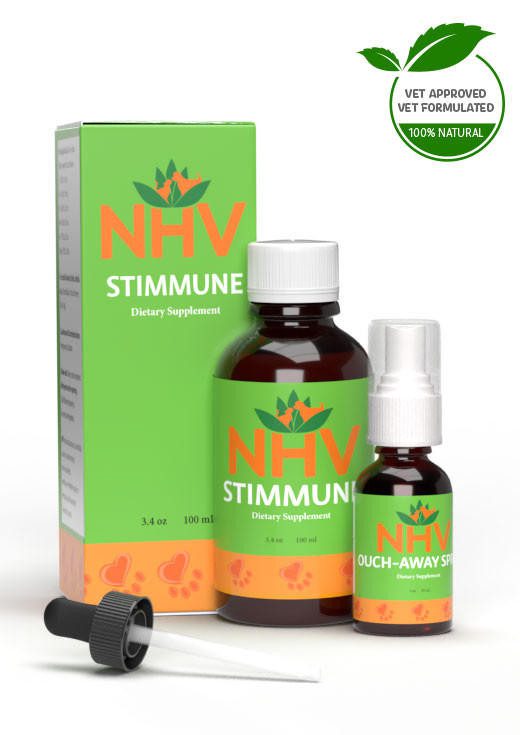
Stimmune & Ouch Away Spray
bundle and save with pet expert kits
3 month supply for a small to medium size pet.
What is it?
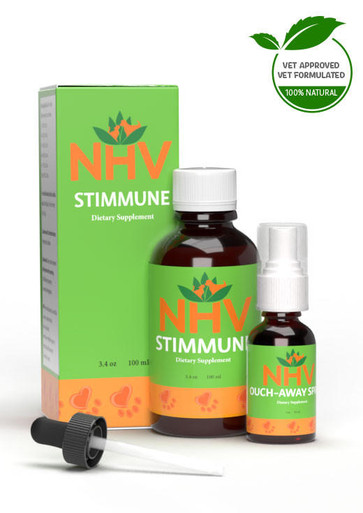
Natural supplements formulated to unclog hair follicles and encourage hair re-growth.
How Does it Work?
Why Should I Trust It?
100% natural, vet-approved and vet-formulated.


What is it?
Natural supplements formulated to unclog hair follicles and encourage hair re-growth.
How Does it Work?
Why Should I Trust It?
100% natural, vet-approved and vet-formulated.
Stimmune Supplement: To be taken twice daily. Determine your pet’s weight and then use the easy chart below to determine the correct dose. This is the minimum dosage.
Pet's Weight Dosage
0 - 15 lb = 0.5 ml
16 - 30 lb = 1.0 ml
31 - 45 lb = 1.5 ml
46 - 60 lb = 2.0 ml
61 - 75 lb = 2.5 ml
Over 75 lb = 3.0 ml
For small animals (rabbits, ferrets), avians and reptiles use 1 drop for every 2 lb of body weight.
How to Administer
Shake well before use. The easiest method is to use the dropper provided and place the drops into your pet’s food or favorite treat. You can also use the dropper and squirt directly into the pet’s mouth. Some pets can be finicky, if this occurs consider hiding the drops in foods most pet’s love such as fish, chicken or yogurt or a favorite treat. If your pet only eats dry food then soak a few kibbles at feeding time.
For Best Results
Herbal dietary supplements are beneficial to the health and well-being of your pet and are safe for long-term use. Every pet responds to natural herbal supplements differently, therefore it is important to be consistent and administer the product daily. Supplements generally take two to four weeks to take effect, however this will vary from one animal to the next.
Product Storage
All NHV Natural Pet Products are pure herbal extracts and contain no artificial additives, preservatives or coloring. Shelf life after opening is 6 months and must be refrigerated after opening.
Ouch Away Spray
Topical Spray: Spray several times a day to affected area until healed. It may some times be necessary to shave or trim your pet’s hair so that the Ouch Away spray reaches the affected area. If necessary, cover the affected area with gauze dressing.
Caution
Do not spray near or into eyes or nose. May initially sting on open cut. A vet examination prior to use of this product is recommended. If your pet’s condition does not improve or deteriorates consult your vet and stop the use of the product.
Information presented by NHV Natural Pet Products is for educational purposes only.
All information provided by NHV Natural Pet Products is for educational purposes only.
Select your pet's weight to determine the correct dose.
There are many things that can cause pets to lose their fur. Stress or discomfort can cause over-grooming, adrenal disease like Cushing's, allergies, autoimmune conditions and more. It is important to have your pet checked by your veterinarian if you notice any unusual hair loss.
Shedding is a normal occurrence for most pets. They shed the dead hairs to make room for new hairs to grow. Shedding will normally not cause any noticeable bald patches on your pet. If you notice patches of skin where fur once was, this is considered hair loss rather than simple shedding.
Generally loss of hair to the point of bald patches is the sign of a problem in the body. Some degree of shedding is normal. Generally an improvement in diet will not cause any hair loss. It's always best to speak with your vet if you notice any unusual hair loss.
We do recommend that you avoid getting Ouch Away Spray in your pets eyes as it may be temporarily uncomfortable for them. However, it will not cause long term effects. It is a very gentle and safe spray and you should not notice any ill effects aside from tearing or rubbing at the face. If you need to apply Ouch Away near the eyes, we recommend applying it to some gauze or a cotton applicator and wiping it on the area rather than spraying it.
Stimmune Supplement: To be taken twice daily. Determine your pet’s weight and then use the easy chart below to determine the correct dose. This is the minimum dosage.
Pet's Weight Dosage
0 - 15 lb = 0.5 ml
16 - 30 lb = 1.0 ml
31 - 45 lb = 1.5 ml
46 - 60 lb = 2.0 ml
61 - 75 lb = 2.5 ml
Over 75 lb = 3.0 ml
For small animals (rabbits, ferrets), avians and reptiles use 1 drop for every 2 lb of body weight.
How to Administer
Shake well before use. The easiest method is to use the dropper provided and place the drops into your pet’s food or favorite treat. You can also use the dropper and squirt directly into the pet’s mouth. Some pets can be finicky, if this occurs consider hiding the drops in foods most pet’s love such as fish, chicken or yogurt or a favorite treat. If your pet only eats dry food then soak a few kibbles at feeding time.
For Best Results
Herbal dietary supplements are beneficial to the health and well-being of your pet and are safe for long-term use. Every pet responds to natural herbal supplements differently, therefore it is important to be consistent and administer the product daily. Supplements generally take two to four weeks to take effect, however this will vary from one animal to the next.
Product Storage
All NHV Natural Pet Products are pure herbal extracts and contain no artificial additives, preservatives or coloring. Shelf life after opening is 6 months and must be refrigerated after opening.
Ouch Away Spray
Topical Spray: Spray several times a day to affected area until healed. It may some times be necessary to shave or trim your pet’s hair so that the Ouch Away spray reaches the affected area. If necessary, cover the affected area with gauze dressing.
Caution
Do not spray near or into eyes or nose. May initially sting on open cut. A vet examination prior to use of this product is recommended. If your pet’s condition does not improve or deteriorates consult your vet and stop the use of the product.
Information presented by NHV Natural Pet Products is for educational purposes only.
All information provided by NHV Natural Pet Products is for educational purposes only.
Select your pet's weight to determine the correct dose.
There are many things that can cause pets to lose their fur. Stress or discomfort can cause over-grooming, adrenal disease like Cushing's, allergies, autoimmune conditions and more. It is important to have your pet checked by your veterinarian if you notice any unusual hair loss.
Shedding is a normal occurrence for most pets. They shed the dead hairs to make room for new hairs to grow. Shedding will normally not cause any noticeable bald patches on your pet. If you notice patches of skin where fur once was, this is considered hair loss rather than simple shedding.
Generally loss of hair to the point of bald patches is the sign of a problem in the body. Some degree of shedding is normal. Generally an improvement in diet will not cause any hair loss. It's always best to speak with your vet if you notice any unusual hair loss.
We do recommend that you avoid getting Ouch Away Spray in your pets eyes as it may be temporarily uncomfortable for them. However, it will not cause long term effects. It is a very gentle and safe spray and you should not notice any ill effects aside from tearing or rubbing at the face. If you need to apply Ouch Away near the eyes, we recommend applying it to some gauze or a cotton applicator and wiping it on the area rather than spraying it.
skin & coat support
Stimmune & Ouch Away Spray
bundle and save with pet expert kits
3 month supply for a small to medium size
What is it?
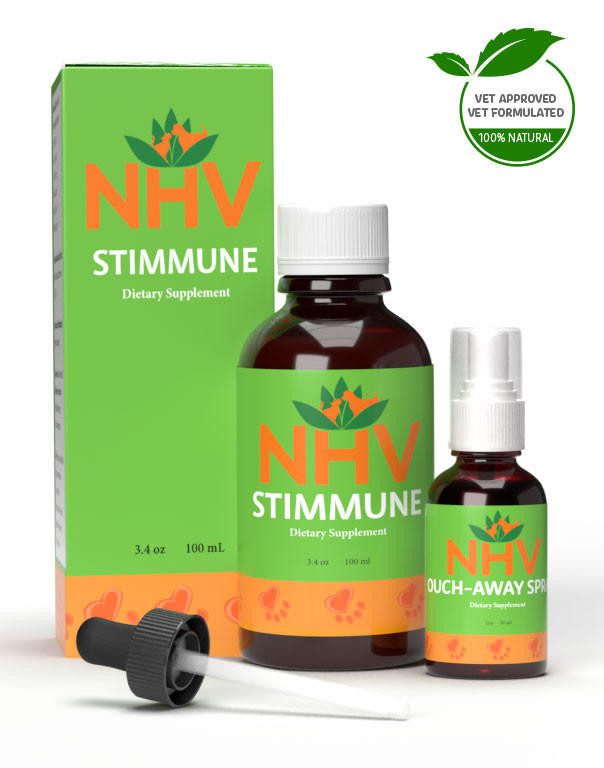
Help support healthy skin and coat care with NHV’s Skin Relief and Coat Health Kit.
How does it work?
Why trust it?
NHV supplements use only organic or wildcrafted herbs, so your pet only gets the good stuff.

What is it?
Help support healthy skin and coat care with NHV’s Skin Relief and Coat Health Kit.
How does it work?
Why trust it?
NHV supplements use only organic or wildcrafted herbs, so your pet only gets the good stuff.
Your pet's skin is their first line of defense against irritants, molds, and infection-causing pathogens. Once these allergens cross the skin barrier, the immune system kicks in. Any redness or inflammation showing up on the skin could signify that the immune system is under attack! Stimmune offers immune support to bolster your pet's internal defenses, while Ouch Away helps strengthen the body's skin barrier and promotes healing.
Since your furkiddo's skin is their largest organ, it probably doesn't surprise you that skin issues are pretty typical amongst cats and dogs. These include (but are not limited to) itchy skin, parasitic infections, mange (dog specific), and hot spots that may lead to partial or complete fur loss. Certain breeds of dogs such as Chinese Shar-Peis, Wire Fox Terriers, Golden Retrievers, Dalmatians, Boxers, Boston Terriers, Labrador Retrievers, Lhasa Apsos, Scottish Terriers, Shih Tzus, and West Highland White Terriers may be susceptible to dermatitis and skin infections.
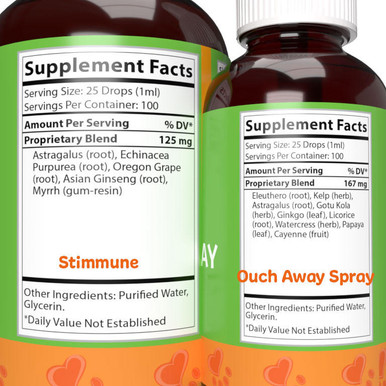
However, any breed or mixed breed (dog or cat) may experience coat and skin issues. The most affected areas are typically their paws, face, ears, front legs, and belly, but scratching all over is also common. Stimmune contains ingredients such as astragalus, Echinacea purpurea, and Oregon grape that help enhance immune function, increase white blood cell count, and may help protect the body from various stresses. And in Ouch Away's formulation, ingredients like rosemary, tea tree oil, and lemongrass oil are effective topically against external parasites, help protect the body against infection, and promote fur regrowth (from obsessive licking or biting).
NHV supplements are formulated by a holistic veterinarian and master herbalist to be gentle, effective remedies that complement a vet-formulated care plan, but they should never replace professional advice from your veterinarian. If you have any questions about your pet’s skin and coat care, get in touch with an NHV Pet Expert.
Made with the finest, organically grown, or ethically harvested herbs. Made specifically for pets, vet-formulated, and vet approved.
Stimmune
Ouch Away
Select your pet's weight to determine the correct dose.
STIMMUNE DOSAGE : To be taken twice daily. Determine your pet’s weight and then use the easy chart below to determine the correct dose. This is the minimum dosage.
Pet's Weight Dosage
0 - 15 lb = 0.5 ml
16 - 30 lb = 1.0 ml
31 - 45 lb = 1.5 ml
46 - 60 lb = 2.0 ml
61 - 75 lb = 2.5 ml
Over 75 lb = 3.0 ml
For small animals (rabbits, ferrets), avians and reptiles use 1 drop for every 2 lb of body weight.
How to Administer
Shake well before use. The easiest method is to use the dropper provided and place the drops into your pet’s food or favorite treat. You can also use the dropper and squirt directly into the pet’s mouth. Some pets can be finicky, if this occurs consider hiding the drops in foods most pet’s love such as fish, chicken or yogurt or a favorite treat. If your pet only eats dry food then soak a few kibbles at feeding time.
For Best Results
Herbal dietary supplements are beneficial to the health and well-being of your pet and are safe for long-term use. Every pet responds to natural herbal supplements differently, therefore it is important to be consistent and administer the product daily. Supplements generally take two to four weeks to take effect, however this will vary from one animal to the next.
Product Storage
All NHV Natural Pet Products are pure herbal extracts and contain no artificial additives, preservatives or coloring. Shelf life after opening is 6 months and must be refrigerated after opening.
Cautions and Contraindications
Do not use in pregnant or nursing animals.
OUCH AWAY SPRAY
How to Administer
Topical Spray: Spray several times a day to affected area until healed. It may some times be necessary to shave or trim your pet’s hair so that the Ouch Away spray reaches the affected area. If necessary, cover the affected area with gauze dressing.
Caution
Do not spray near or into eyes or nose. May initially sting on open cut. A vet examination prior to use of this product is recommended. If your pet’s condition does not improve or deteriorates consult your vet and stop the use of the product.
Information presented by NHV Natural Pet Products is for educational purposes only.
Your pet's skin is their first line of defense against irritants, molds, and infection-causing pathogens. Once these allergens cross the skin barrier, the immune system kicks in. Any redness or inflammation showing up on the skin could signify that the immune system is under attack! Stimmune offers immune support to bolster your pet's internal defenses, while Ouch Away helps strengthen the body's skin barrier and promotes healing.
Since your furkiddo's skin is their largest organ, it probably doesn't surprise you that skin issues are pretty typical amongst cats and dogs. These include (but are not limited to) itchy skin, parasitic infections, mange (dog specific), and hot spots that may lead to partial or complete fur loss. Certain breeds of dogs such as Chinese Shar-Peis, Wire Fox Terriers, Golden Retrievers, Dalmatians, Boxers, Boston Terriers, Labrador Retrievers, Lhasa Apsos, Scottish Terriers, Shih Tzus, and West Highland White Terriers may be susceptible to dermatitis and skin infections.
However, any breed or mixed breed (dog or cat) may experience coat and skin issues. The most affected areas are typically their paws, face, ears, front legs, and belly, but scratching all over is also common. Stimmune contains ingredients such as astragalus, Echinacea purpurea, and Oregon grape that help enhance immune function, increase white blood cell count, and may help protect the body from various stresses. And in Ouch Away's formulation, ingredients like rosemary, tea tree oil, and lemongrass oil are effective topically against external parasites, help protect the body against infection, and promote fur regrowth (from obsessive licking or biting).
NHV supplements are formulated by a holistic veterinarian and master herbalist to be gentle, effective remedies that complement a vet-formulated care plan, but they should never replace professional advice from your veterinarian. If you have any questions about your pet’s skin and coat care, get in touch with an NHV Pet Expert.
Made with the finest, organically grown, or ethically harvested herbs. Made specifically for pets, vet-formulated, and vet approved.
Stimmune
Ouch Away
Select your pet's weight to determine the correct dose.
STIMMUNE DOSAGE : To be taken twice daily. Determine your pet’s weight and then use the easy chart below to determine the correct dose. This is the minimum dosage.
Pet's Weight Dosage
0 - 15 lb = 0.5 ml
16 - 30 lb = 1.0 ml
31 - 45 lb = 1.5 ml
46 - 60 lb = 2.0 ml
61 - 75 lb = 2.5 ml
Over 75 lb = 3.0 ml
For small animals (rabbits, ferrets), avians and reptiles use 1 drop for every 2 lb of body weight.
How to Administer
Shake well before use. The easiest method is to use the dropper provided and place the drops into your pet’s food or favorite treat. You can also use the dropper and squirt directly into the pet’s mouth. Some pets can be finicky, if this occurs consider hiding the drops in foods most pet’s love such as fish, chicken or yogurt or a favorite treat. If your pet only eats dry food then soak a few kibbles at feeding time.
For Best Results
Herbal dietary supplements are beneficial to the health and well-being of your pet and are safe for long-term use. Every pet responds to natural herbal supplements differently, therefore it is important to be consistent and administer the product daily. Supplements generally take two to four weeks to take effect, however this will vary from one animal to the next.
Product Storage
All NHV Natural Pet Products are pure herbal extracts and contain no artificial additives, preservatives or coloring. Shelf life after opening is 6 months and must be refrigerated after opening.
Cautions and Contraindications
Do not use in pregnant or nursing animals.
OUCH AWAY SPRAY
How to Administer
Topical Spray: Spray several times a day to affected area until healed. It may some times be necessary to shave or trim your pet’s hair so that the Ouch Away spray reaches the affected area. If necessary, cover the affected area with gauze dressing.
Caution
Do not spray near or into eyes or nose. May initially sting on open cut. A vet examination prior to use of this product is recommended. If your pet’s condition does not improve or deteriorates consult your vet and stop the use of the product.
Information presented by NHV Natural Pet Products is for educational purposes only.