cancer support
Mammary Tumor Detox Kit
USD $138.95
free shipping over $100 (USA & Canada)
1-877-937-4372 the pet expert hotline


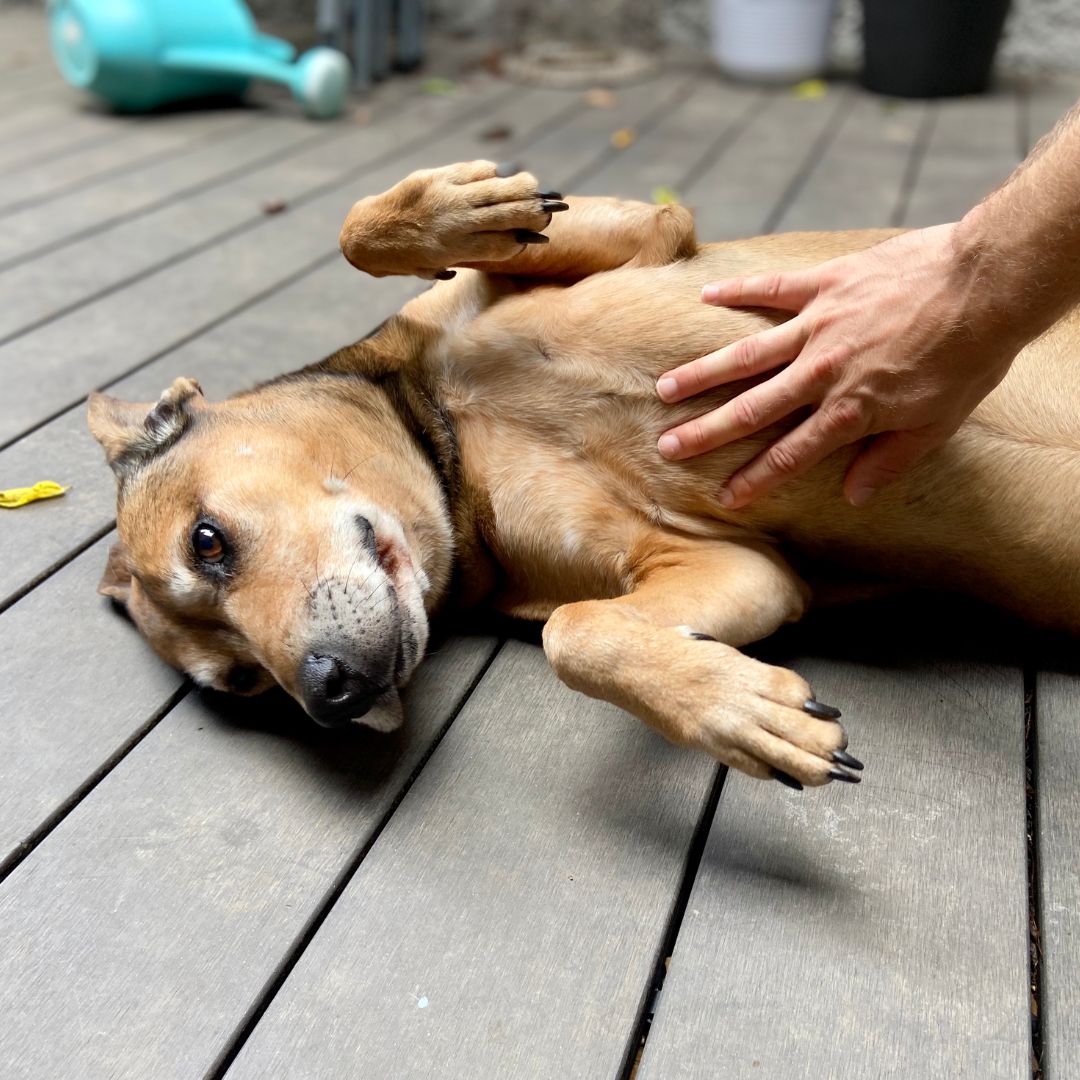
One day, you’re giving your dog their usual belly rub when suddenly your fingers stop. You found a lump on your dog!
For many pet parents, finding an unfamiliar bump immediately brings one frightening thought to mind: “Could this be cancer?” Now, before assuming the worst, it’s important to remember that dogs can develop lumps and bumps for many different reasons, and not every mass is cancerous. Some may be harmless fatty growths or cysts, while others can develop because of inflammation, infection, or changes within the skin and underlying tissues. Some lumps can also be tumors that require further investigation.
The difficult part is that you generally cannot tell what a lump is simply by looking at or touching it. That’s why becoming familiar with your dog’s normal body can be so valuable: everyday moments like grooming, cuddling, and belly rubs give you an opportunity to notice new lumps on your dog and other physical changes, so that you can bring them to your veterinarian’s attention.
So, the big question remains: what should you do when your hand suddenly lands on a bump you’ve never noticed before?
First, try not to panic. Finding a lump does not automatically mean your dog has cancer, and at the same time, trying to diagnose the lump yourself based on how it looks or feels isn’t reliable at all.
Instead, take note of what you’ve found: look at where the lump is located and approximately how large it is (you can take a photograph and compare the size with items like a coin). Make a note of when you first noticed it and whether your dog seems bothered when touched there. Then, contact your veterinarian and let them know you’ve discovered a new mass.
This is especially important with sudden lumps on a dog under the skin. Something that seems to have appeared overnight may genuinely be new, but it’s also possible that the lump was small or hidden beneath the coat and simply wasn’t noticed before.
Either way, your veterinarian can help determine whether this lump needs further evaluation.
There isn’t one single reason dogs develop lumps. A mass can originate from the skin, fatty tissue, connective tissue, glands, immune cells, or other structures within the body; some of these masses become more common as dogs get older, although lumps can occur at virtually any age.
According to the Van Lue Veterinary Surgical team, some of the most common possibilities include:
This list isn’t meant to help diagnose your dog’s lumps at home, but it’s more to illustrate exactly why veterinary evaluation is so useful: many very different conditions can create surprisingly similar-looking lumps.
In short: no.
You may have heard that a soft, movable lump is harmless while a hard or irregular lump is cancerous. Some cancerous lumps may be small and harmless, while some benign lumps can look quite alarming. While veterinarians consider characteristics such as size, firmness, location, mobility, and growth rate, these features alone generally cannot confirm what a mass is or isn’t.
If you’re worried about a cancerous lump on your dog, the most useful next step is veterinary evaluation rather than trying to identify it by appearance or touch. Your vet may recommend a fine needle aspirate (FNA) to obtain cells from the lump to evaluate skin and subcutaneous masses. At other times, they might recommend a biopsy to have a more definitive diagnosis.
These diagnostic tools provide information that simply looking at a lump cannot.
You know your furkiddo better than anyone, and the information you notice at home can be useful when discussing a lump with your veterinarian. Note the lump’s size, color, texture, and whether it’s growing or changing shape. Watch for any discharge, bleeding, or if your dog seems bothered by the area.
Whenever you find something new, keep track of:
A dog’s lumps can change over time, so keeping a log of their location and sizes will help your vet more effectively manage your furkiddo’s health.
Finding a chest lump can raise additional questions because several different tissues and structures are located in this area. A lump on a dog’s chest may originate from the skin or underlying fatty and connective tissues, just like masses elsewhere on the body.
Depending on its exact location, lymph nodes or mammary tissues may also be involved. For example, female dogs have mammary glands arranged in two chains along the underside of the chest and abdomen. This means a lump near the chest, abdomen, or nipple area may sometimes originate from mammary tissue. And while not every mammary mass is malignant, mammary tumors can be benign or cancerous, which is why a new mass in this area deserves veterinary evaluation. If the mass turns out to be a mammary tumor, the NHV Mammary Super Support Kit may make a helpful addition to your pet’s daily care alongside their veterinarian’s suggestions. It’s a trio of all-natural supplements to provide extra natural support, daily.
If you discover any form of lump on your dog, it’s in your furkiddo’s best interest to have the lump examined by their vet. While the lump may be a harmless lipoma, if the lump does turn out to be a form of cancer, early detection and treatment are essential for good outcomes.
While not every mass is cancerous, there are a few indicators that mean it’s time for a vet visit:
Remember that regular checkups are one of the best tools for catching health issues early. Don’t wait for a mass to look bad before getting your vet to assess it. Knowing what the lump is helps your veterinarian determine what (if anything) needs to happen next.
Finding a lump can be frightening, but a lump does not automatically mean cancer. Dogs develop many kinds of masses throughout their lives, and many of them are benign. At the same time, there’s no reliable way to determine exactly what a lump is based on appearance or touch alone.
Early detection and treatment can make all the difference
Regular grooming, brushing, cuddling, and belly rubs aren’t only wonderful bonding opportunities! They also help you become familiar with your furkiddo’s body. Running your hands gently over their chest, neck, shoulders, back, belly, legs, and paws from time to time will allow you to notice what has always been there and what feels different, and once you find it, let your vet know so they can help you determine what comes next. Remember, early detection and treatment can make all the difference in the world.
In addition to veterinary care, you can support your dog at home with natural supplements. NHV supplements, such as the Lumps Kit, can complement vet care, working holistically alongside each other as part of your pet’s care routine.
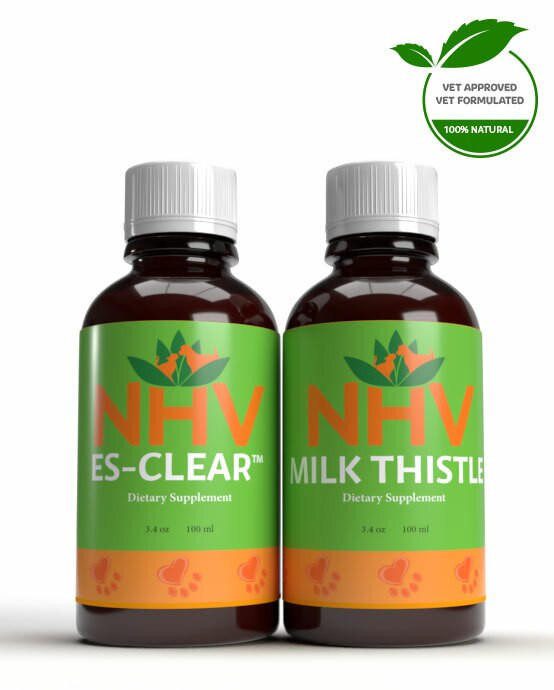
The NHV Lumps Kit contains two 100% natural, vet-approved supplements: ES-Clear and Milk Thistle. NHV ES-Clear is our main cancer support supplement. Made only with human-grade herbs, like slippery elm and sheep’s sorrel, it encourages vitality and organ wellness in pets with cancer. NHV Milk Thistle, on the other hand, has only one herb: a full-spectrum extract of organic milk thistle seed, an herb that may support antioxidant activity in the liver, encouraging the body’s natural detoxification processes.
Curious about how the Lumps Kit or other NHV supplements could play a role in your fur kid’s wellness plan? Reach out to a Pet Expert using the chat button below!
cancer support
ES Clear, Milk Thistle & BK Detox
bundle and save with pet expert kits
3 month supply for a small to medium size pet
What is it?
Our Mammary Tumor Detox Kit is formulated to be used alongside cancer treatments or surgery to help address symptoms and encourage healthy immune function.
How does it work?
Why trust it?
NHV supplements are vet-formulated and vet-approved.

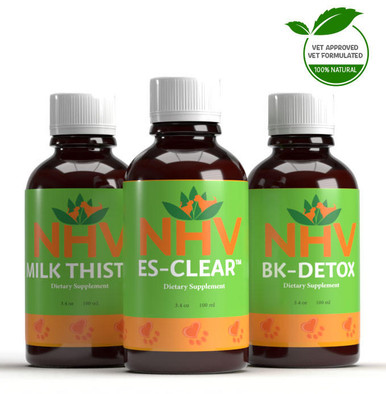
What is it?
Our Mammary Tumor Detox Kit is formulated to be used alongside cancer treatments or surgery to help address symptoms and encourage healthy immune function.
How does it work?
Why trust it?
NHV supplements are vet-formulated and vet-approved.
Mammary cancer is the equivalent of breast cancer in humans. Two common types of cancer growth that often affect mammary tissue are sarcomas (bone and connective tissue) and carcinomas (skin).
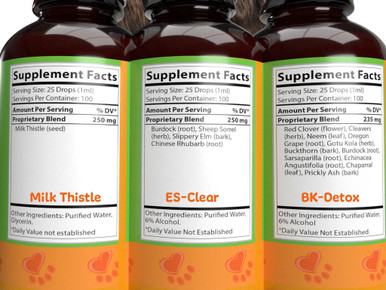
Mammary Cancer may be a serious diagnosis but it is far from the end of the road! If caught in its early stages, and with a lot of patience and care, your pet can still have lots of life ahead of them! Our Mammary Tumor Detox Kit which contains ES-Clear, Milk Thistle, and BK-Detox can be used for proactive pet care as well as be helpful for mammary tumors in dogs and cats. NHV supplements are formulated to be used alongside chemotherapy and other cancer medications to help flush harmful toxins from vital organs and support the immune system.
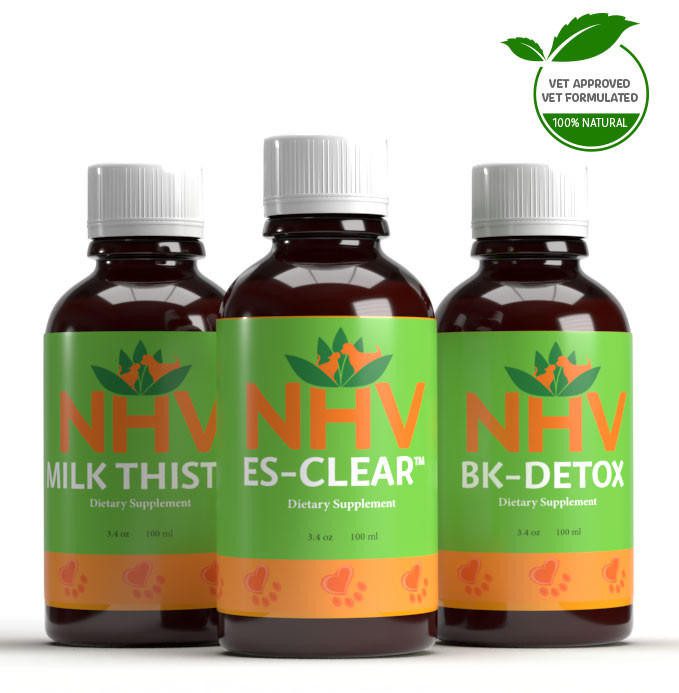
Our Mammary Tumor Detox Kit is formulated to address the areas of the body affected by mammary tumors and cancerous growth. This bundle contains ES-Clear, Milk Thistle, and BK-Detox.
Additional Info: While there is a lot of awareness about this type of cancer in humans, many pet parents don't know that mammary cancer and mammary tumors in dogs and cats is even more common! 1 in 4 unspayed female dogs is affected and in cats, it is the 3rd most common type of cancer. While in humans, roughly 1 in every 8 or 9 women are affected. A tumor in mammary tissue may feel like a pebble or dried pea. Surgery is often recommended to try and remove all of the cancerous cells. If left alone, mammary tumors may grow, harden, and break through the skin as pus-filled lumps. Spaying or neutering your pet may decrease their risk of developing mammary tumors but more research still needs to be done about this correlation.
NHV supplements are formulated by a holistic veterinarian and master herbalist to be gentle, effective remedies that complement vet care plans. But it should never replace professional advice from your veterinarian. If your furkiddo is battling cancer, know that you don't have to face it alone. We are here with our team of pet experts to help you every step of the way!
Made with the finest, organically grown, or ethically harvested herbs. Made specifically for pets, vet-formulated and vet approved
ES Clear
Milk Thistle
BK Detox
Select your pet's weight to determine the correct dose.
To be taken twice daily. Determine your pet’s weight and then use the easy chart below to determine the correct dose. This is the minimum dosage.
Pet's Weight Dosage
0 - 15 lb = 0.5 ml
16 - 30 lb = 1.0 ml
31 - 45 lb = 1.5 ml
46 - 60 lb = 2.0 ml
61 - 75 lb = 2.5 ml
Over 75 lb = 3.0 ml
For small animals (rabbits, ferrets), avians and reptiles use 1 drop for every 2 lb of body weight.
How to Administer
Shake well before use. The easiest method is to use the dropper provided and place the drops into your pet’s food or favorite treat. You can also use the dropper and squirt directly into the pet’s mouth. Some pets can be finicky, if this occurs consider hiding the drops in foods most pet’s love such as fish, chicken or yogurt or a favorite treat. If your pet only eats dry food then soak a few kibbles at feeding time.
For Best Results
Herbal dietary supplements are beneficial to the health and well-being of your pet and are safe for long-term use. Every pet responds to natural herbal supplements differently, therefore it is important to be consistent and administer the product daily. Supplements generally take two to four weeks to take effect, however this will vary from one animal to the next.
Product Storage
All NHV Natural Pet Products are pure herbal extracts and contain no artificial additives, preservatives or coloring. Shelf life after opening is 6 months and must be refrigerated after opening.
Cautions and Contraindications
Do not use in pregnant or nursing animals.
All information provided by NHV Natural Pet Products is for educational purposes only.
Mammary cancer is the equivalent of breast cancer in humans. Two common types of cancer growth that often affect mammary tissue are sarcomas (bone and connective tissue) and carcinomas (skin).
Mammary Cancer may be a serious diagnosis but it is far from the end of the road! If caught in its early stages, and with a lot of patience and care, your pet can still have lots of life ahead of them! Our Mammary Tumor Detox Kit which contains ES-Clear, Milk Thistle, and BK-Detox can be used for proactive pet care as well as be helpful for mammary tumors in dogs and cats. NHV supplements are formulated to be used alongside chemotherapy and other cancer medications to help flush harmful toxins from vital organs and support the immune system.
Our Mammary Tumor Detox Kit is formulated to address the areas of the body affected by mammary tumors and cancerous growth. This bundle contains ES-Clear, Milk Thistle, and BK-Detox.
Additional Info: While there is a lot of awareness about this type of cancer in humans, many pet parents don't know that mammary cancer and mammary tumors in dogs and cats is even more common! 1 in 4 unspayed female dogs is affected and in cats, it is the 3rd most common type of cancer. While in humans, roughly 1 in every 8 or 9 women are affected. A tumor in mammary tissue may feel like a pebble or dried pea. Surgery is often recommended to try and remove all of the cancerous cells. If left alone, mammary tumors may grow, harden, and break through the skin as pus-filled lumps. Spaying or neutering your pet may decrease their risk of developing mammary tumors but more research still needs to be done about this correlation.
NHV supplements are formulated by a holistic veterinarian and master herbalist to be gentle, effective remedies that complement vet care plans. But it should never replace professional advice from your veterinarian. If your furkiddo is battling cancer, know that you don't have to face it alone. We are here with our team of pet experts to help you every step of the way!
Made with the finest, organically grown, or ethically harvested herbs. Made specifically for pets, vet-formulated and vet approved
ES Clear
Milk Thistle
BK Detox
Select your pet's weight to determine the correct dose.
To be taken twice daily. Determine your pet’s weight and then use the easy chart below to determine the correct dose. This is the minimum dosage.
Pet's Weight Dosage
0 - 15 lb = 0.5 ml
16 - 30 lb = 1.0 ml
31 - 45 lb = 1.5 ml
46 - 60 lb = 2.0 ml
61 - 75 lb = 2.5 ml
Over 75 lb = 3.0 ml
For small animals (rabbits, ferrets), avians and reptiles use 1 drop for every 2 lb of body weight.
How to Administer
Shake well before use. The easiest method is to use the dropper provided and place the drops into your pet’s food or favorite treat. You can also use the dropper and squirt directly into the pet’s mouth. Some pets can be finicky, if this occurs consider hiding the drops in foods most pet’s love such as fish, chicken or yogurt or a favorite treat. If your pet only eats dry food then soak a few kibbles at feeding time.
For Best Results
Herbal dietary supplements are beneficial to the health and well-being of your pet and are safe for long-term use. Every pet responds to natural herbal supplements differently, therefore it is important to be consistent and administer the product daily. Supplements generally take two to four weeks to take effect, however this will vary from one animal to the next.
Product Storage
All NHV Natural Pet Products are pure herbal extracts and contain no artificial additives, preservatives or coloring. Shelf life after opening is 6 months and must be refrigerated after opening.
Cautions and Contraindications
Do not use in pregnant or nursing animals.
All information provided by NHV Natural Pet Products is for educational purposes only.
cancer support
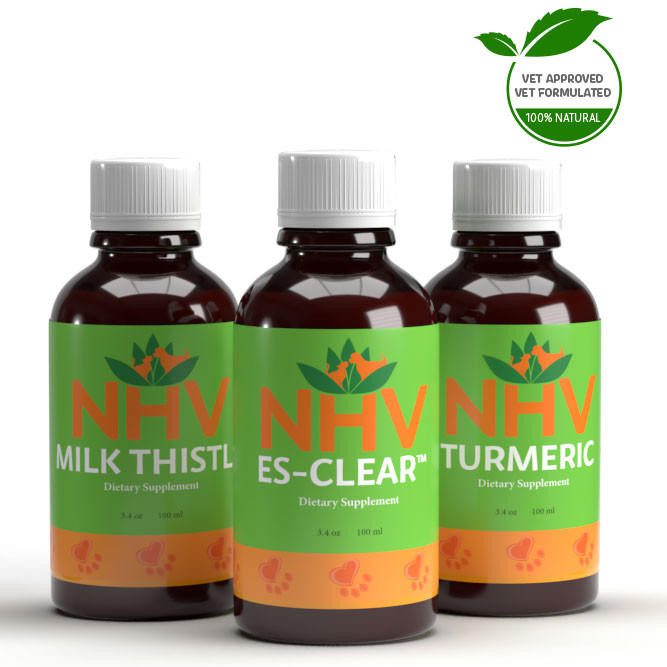
ES-Clear, Milk Thistle & Turmeric
bundle and save with pet expert kits
3 month supply for a small to medium size pet
What is it?
Our Mammary Tumor Super Support Kit is formulated to be used alongside chemotherapy and other cancer treatments to help address symptoms and encourage healthy immune function.
How does it work?
Why trust it?
NHV supplements use only human-grade natural ingredients, free from artificial additives.

What is it?
Our Mammary Tumor Super Support Kit is formulated to be used alongside chemotherapy and other cancer treatments to help address symptoms and encourage healthy immune function.
How does it work?
Why trust it?
NHV supplements use only human-grade natural ingredients, free from artificial additives.
No one wants to hear that their furkiddo has mammary cancer but with the right care and support, your pet can still live many happy days ahead!
Mammary cancer is the equivalent of breast cancer in humans. While there is ongoing research and multiple awareness campaigns for this type of cancer in humans, many pet parents don't know that the incidence of mammary tumors in dogs and cats is much higher. One in eight or nine women develops this type of cancer, whereas in dogs, for example, 1 in 4 unspayed female dogs is affected. And mammary cancer in cats is the 3rd most common type of cancer.
If a tumor is detected, it may feel like a pebble or dried pea. Surgery is often recommended to try and remove it altogether. If left alone, mammary tumors may grow, harden, and break through the skin as pus-filled lumps.
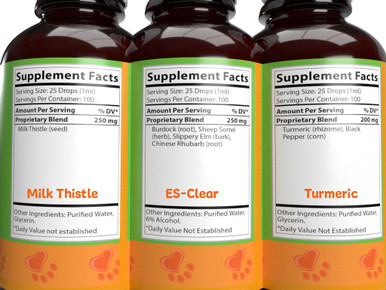
Cancer can be a scary diagnosis but it isn't necessarily a death sentence. If caught early, and with a lot of love and care, your pet may be able to get on top of their symptoms and still maintain a good quality of life! Our Mammary Tumor Super Support Kit which contains ES-Clear, Milk Thistle, and Turmeric, can be used for proactive pet care as well as be helpful for more serious conditions like mammary cancer. NHV supplements are formulated to be used alongside conventional veterinary treatments and chemotherapy to support gentle detoxification, help to shield the body against free radical damage and help support immune function before or after surgery.
When your pet is diagnosed with mammary cancer, surgery is typically the treatment recommended. After surgery, your vet may recommend chemotherapy to help prevent tumor growth so your furkiddo’s liver, kidneys and immune system may become weakened and need extra support. Our Mammary Tumor Super Support Kit is formulated to help support areas affected by cancerous tumors and degenerative disease. This bundle contains ES-Clear, Milk Thistle, and Turmeric.
Your pet’s health and wellness means everything to us. We have worked with a holistic veterinarian and a master herbalist to formulate gentle yet effective remedies to focus on the areas of the body most affected by breast cancer in dogs and cats. For any questions or concerns about your little one’s cancer or immune health, don’t hesitate to reach out to an NHV Pet Expert - we are here to help!
Made with the finest, organically grown, or ethically harvested herbs. Made specifically for pets, vet-formulated and vet approved.
ES Clear
Milk Thistle
Turmeric
Select your pet's weight to determine the correct dose.
To be taken twice daily. Determine your pet’s weight and then use the easy chart below to determine the correct dose. This is the minimum dosage.
Pet's Weight Dosage
0 - 15 lb = 0.5 ml
16 - 30 lb = 1.0 ml
31 - 45 lb = 1.5 ml
46 - 60 lb = 2.0 ml
61 - 75 lb = 2.5 ml
Over 75 lb = 3.0 ml
For small animals (rabbits, ferrets), avians and reptiles use 1 drop for every 2 lb of body weight.
How to Administer
Shake well before use. The easiest method is to use the dropper provided and place the drops into your pet’s food or favorite treat. You can also use the dropper and squirt directly into the pet’s mouth. Some pets can be finicky, if this occurs consider hiding the drops in foods most pet’s love such as fish, chicken or yogurt or a favorite treat. If your pet only eats dry food then soak a few kibbles at feeding time.
For Best Results
Herbal dietary supplements are beneficial to the health and well-being of your pet and are safe for long-term use. Every pet responds to natural herbal supplements differently, therefore it is important to be consistent and administer the product daily. Supplements generally take two to four weeks to take effect, however this will vary from one animal to the next.
Product Storage
All NHV Natural Pet Products are pure herbal extracts and contain no artificial additives, preservatives or coloring. Shelf life after opening is 6 months and must be refrigerated after opening.
Cautions and Contraindications
Do not use in pregnant or nursing animals.
All information provided by NHV Natural Pet Products is for educational purposes only.
No one wants to hear that their furkiddo has mammary cancer but with the right care and support, your pet can still live many happy days ahead!
Mammary cancer is the equivalent of breast cancer in humans. While there is ongoing research and multiple awareness campaigns for this type of cancer in humans, many pet parents don't know that the incidence of mammary tumors in dogs and cats is much higher. One in eight or nine women develops this type of cancer, whereas in dogs, for example, 1 in 4 unspayed female dogs is affected. And mammary cancer in cats is the 3rd most common type of cancer.
If a tumor is detected, it may feel like a pebble or dried pea. Surgery is often recommended to try and remove it altogether. If left alone, mammary tumors may grow, harden, and break through the skin as pus-filled lumps.
Cancer can be a scary diagnosis but it isn't necessarily a death sentence. If caught early, and with a lot of love and care, your pet may be able to get on top of their symptoms and still maintain a good quality of life! Our Mammary Tumor Super Support Kit which contains ES-Clear, Milk Thistle, and Turmeric, can be used for proactive pet care as well as be helpful for more serious conditions like mammary cancer. NHV supplements are formulated to be used alongside conventional veterinary treatments and chemotherapy to support gentle detoxification, help to shield the body against free radical damage and help support immune function before or after surgery.
When your pet is diagnosed with mammary cancer, surgery is typically the treatment recommended. After surgery, your vet may recommend chemotherapy to help prevent tumor growth so your furkiddo’s liver, kidneys and immune system may become weakened and need extra support. Our Mammary Tumor Super Support Kit is formulated to help support areas affected by cancerous tumors and degenerative disease. This bundle contains ES-Clear, Milk Thistle, and Turmeric.
Your pet’s health and wellness means everything to us. We have worked with a holistic veterinarian and a master herbalist to formulate gentle yet effective remedies to focus on the areas of the body most affected by breast cancer in dogs and cats. For any questions or concerns about your little one’s cancer or immune health, don’t hesitate to reach out to an NHV Pet Expert - we are here to help!
Made with the finest, organically grown, or ethically harvested herbs. Made specifically for pets, vet-formulated and vet approved.
ES Clear
Milk Thistle
Turmeric
Select your pet's weight to determine the correct dose.
To be taken twice daily. Determine your pet’s weight and then use the easy chart below to determine the correct dose. This is the minimum dosage.
Pet's Weight Dosage
0 - 15 lb = 0.5 ml
16 - 30 lb = 1.0 ml
31 - 45 lb = 1.5 ml
46 - 60 lb = 2.0 ml
61 - 75 lb = 2.5 ml
Over 75 lb = 3.0 ml
For small animals (rabbits, ferrets), avians and reptiles use 1 drop for every 2 lb of body weight.
How to Administer
Shake well before use. The easiest method is to use the dropper provided and place the drops into your pet’s food or favorite treat. You can also use the dropper and squirt directly into the pet’s mouth. Some pets can be finicky, if this occurs consider hiding the drops in foods most pet’s love such as fish, chicken or yogurt or a favorite treat. If your pet only eats dry food then soak a few kibbles at feeding time.
For Best Results
Herbal dietary supplements are beneficial to the health and well-being of your pet and are safe for long-term use. Every pet responds to natural herbal supplements differently, therefore it is important to be consistent and administer the product daily. Supplements generally take two to four weeks to take effect, however this will vary from one animal to the next.
Product Storage
All NHV Natural Pet Products are pure herbal extracts and contain no artificial additives, preservatives or coloring. Shelf life after opening is 6 months and must be refrigerated after opening.
Cautions and Contraindications
Do not use in pregnant or nursing animals.
All information provided by NHV Natural Pet Products is for educational purposes only.
cancer support
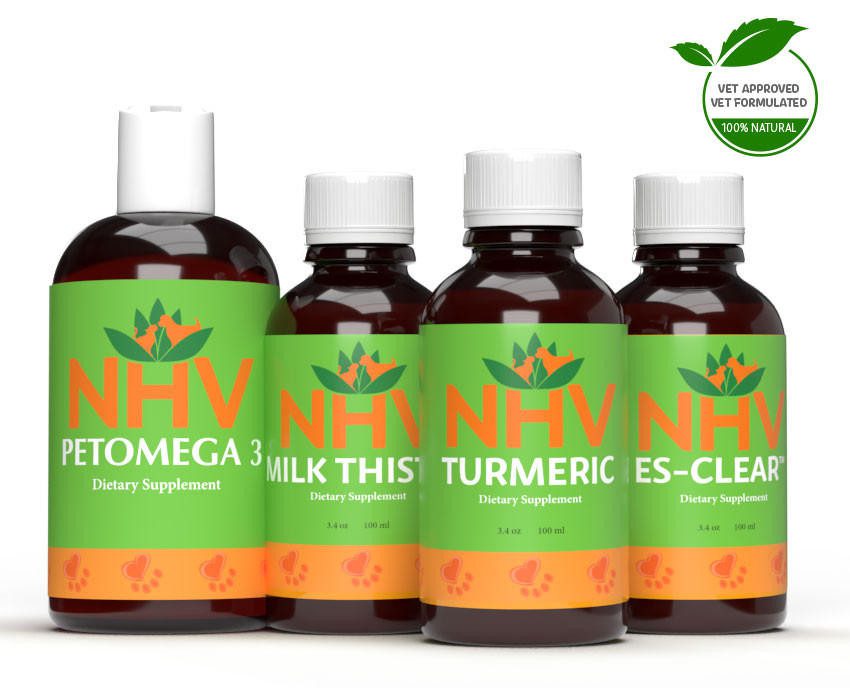
PetOmega 3, Milk Thistle, ES-Clear, Turmeric
bundle and save with pet expert kits
3 month supply for a small to medium size pet.
What is it?
A full range of natural veterinarian-formulated herbal remedies designed to help your cat or dog manage the symptoms of cancer, boost immune function, improve energy, help scavenge free radicals. Use these supplements for cat and dog cancer care to improve their quality of life.
How Does it Work?
Why Should I Trust It?
Veterinarian-formulated and approved.
What is it?
A full range of natural veterinarian-formulated herbal remedies designed to help your cat or dog manage the symptoms of cancer, boost immune function, improve energy, help scavenge free radicals. Use these supplements for cat and dog cancer care to improve their quality of life.
How Does it Work?
Why Should I Trust It?
Veterinarian-formulated and approved.
No pet parent wants to find out their pet has cancer, but not all forms of cancer are terminal. If caught early, the chances of recovery are drastically improved. In later cancer stages, the right support can provide a better quality of life for your pet. Using an integrative approach, which incorporates veterinarian-prescribed cancer treatments for pets as well as holistic and nutritional care can give your pet the best chance at fighting cancer.
Cancer occurs when abnormal cells start reproducing and eventually taking over the normal functioning cells, often uniting to form a mass or tumor in the process. Some tumors are benign (non-cancerous) but some are malignant (cancerous), and those tend to spread through the bloodstream or lymph nodes.
Cancer care for dogs and cats is critical, and at NHV, we have a wide range of holistic, natural vet-approved remedies that provide safe support to be given along with a vet-recommended treatment plan.
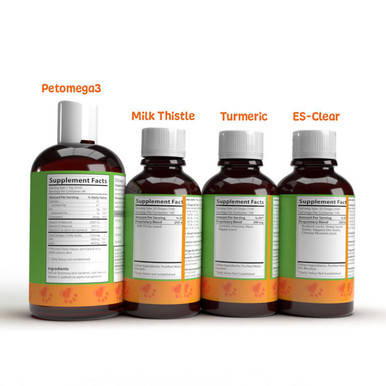
The cancer fighter pack contains four powerful human-grade quality products:
All of our products are third-party tested to guarantee quality and concentration with no additives or preservatives. Read our blog on how NHV’s cancer care for cat Ziggy helped him get back to his cat-hletic self.
If you have questions on the holistic approach to cancer care for dogs or cats, you can schedule a consultation because, at NHV, the health and wellbeing of your pet is our top priority.
ES Clear
Burdock – Traditionally used to eliminate toxins from the bloodstream, remove waste through urine output and a nutritive liver tonic. Used in oncology for fighting cancer due to the belief that the properties in the herbs may stop cancer cells from metastasizing. Burdock is eaten as a vegetable in Europe and Asia. Studies show the root to be high in antioxidant properties, which are beneficial in scavenging free radicals and supporting the immune system. Burdock has prebiotic properties that could improve health and digestion.
Sheep’s Sorrel – Used for hundreds of years in North America to fight cancer and support liver purification. Sheep’s Sorrel is high in vitamins and minerals and is considered to be a good source of antioxidants, which may increase the production of white blood cells and T-cells.
Slippery Elm – Helps eliminate toxins and waste by lubricating the digestive tract. High in nutrition values, used to help with irritation of the intestines and stomach. Slippery Elm is used as food in North America.
Chinese Rhubarb – Traditionally used to improve appetite and stimulate digestion. Helps the body rid itself of waste products and cleanse the bowels.
MILK THISTLE – has numerous benefits to the body; In addition to its detoxifying and anti-inflammatory properties, it is high in antioxidants. The bioflavonoid antioxidants help to increase the body’s immunity and slow down oxidative stress.
TURMERIC- The active compound of turmeric is Curcumin. Turmeric contains strong antioxidant properties and help scavenge free radicals.
NHV PETOMEGA 3 - A source of Omega 3 fatty acids derived from fish. PetOmega 3 contains vitamin A, D and E. Research has found that adding omega 3 may help the effectiveness of cancer therapies.
Select your pet's weight to determine the correct dose.
DOSAGE FOR PETOMEGA 3. To be taken once per day. Add to food based on weight chart.
Pet’s Weight Dosage
0-15 lb = ¼ tsp
15-30 lb = ½ tsp
30-60 lb = 1 tsp
60-90 lb = 1 ½ tsp
DOSAGE FOR: MILK THISTLE, ES CLEAR, TURMERIC:
To be taken twice daily. Determine your pet’s weight and then use the easy chart below to determine the correct dose. This is the minimum dosage.
Pet's Weight Dosage
0 - 15 lb = 0.5 ml
16 - 30 lb = 1.0 ml
31 - 45 lb = 1.5 ml
46 - 60 lb = 2.0 ml
61 - 75 lb = 2.5 ml
Over 75 lb = 3.0 ml
For small animals (rabbits, ferrets), avians and reptiles use 1 drop for every 2 lb of body weight.
How to Administer
Shake well before use. The easiest method is to use the dropper provide and places the drops into your pet’s food or favorite treat. You can also use the dropper and squirt directly into the pet’s mouth.
Some pets can be finicky, if this occurs consider hiding the drops in foods most pet’s love such as fish, chicken or yogurt or a favorite treat. If your pet only eats dry food then soak a few kibbles at feeding time.
For Best Results
Herbal dietary supplements are beneficial to the health and wellbeing of your pet and are safe for long-term use. Every pet responds to natural herbal supplements differently, therefore it is important to be consistent and administer the product daily. Supplements generally take two to four weeks to take effect, however this will vary from one animal to the next.
Product Storage
All NHV Natural Pet Products are pure herbal extracts and contain no artificial additives, preservatives or coloring. Shelf life after opening is 6 months and must be refrigerated after opening.
Cautions and Contraindications - MILK THISTLE, ES CLEAR
Do not use in pregnant or nursing animals. Speak to your vet before using our products. A second visit is recommended if your pet’s condition does not improve, or deteriorates after continued use of the supplements.
No pet parent wants to find out their pet has cancer, but not all forms of cancer are terminal. If caught early, the chances of recovery are drastically improved. In later cancer stages, the right support can provide a better quality of life for your pet. Using an integrative approach, which incorporates veterinarian-prescribed cancer treatments for pets as well as holistic and nutritional care can give your pet the best chance at fighting cancer.
Cancer occurs when abnormal cells start reproducing and eventually taking over the normal functioning cells, often uniting to form a mass or tumor in the process. Some tumors are benign (non-cancerous) but some are malignant (cancerous), and those tend to spread through the bloodstream or lymph nodes.
Cancer care for dogs and cats is critical, and at NHV, we have a wide range of holistic, natural vet-approved remedies that provide safe support to be given along with a vet-recommended treatment plan.
The cancer fighter pack contains four powerful human-grade quality products:
All of our products are third-party tested to guarantee quality and concentration with no additives or preservatives. Read our blog on how NHV’s cancer care for cat Ziggy helped him get back to his cat-hletic self.
If you have questions on the holistic approach to cancer care for dogs or cats, you can schedule a consultation because, at NHV, the health and wellbeing of your pet is our top priority.
ES Clear
Burdock – Traditionally used to eliminate toxins from the bloodstream, remove waste through urine output and a nutritive liver tonic. Used in oncology for fighting cancer due to the belief that the properties in the herbs may stop cancer cells from metastasizing. Burdock is eaten as a vegetable in Europe and Asia. Studies show the root to be high in antioxidant properties, which are beneficial in scavenging free radicals and supporting the immune system. Burdock has prebiotic properties that could improve health and digestion.
Sheep’s Sorrel – Used for hundreds of years in North America to fight cancer and support liver purification. Sheep’s Sorrel is high in vitamins and minerals and is considered to be a good source of antioxidants, which may increase the production of white blood cells and T-cells.
Slippery Elm – Helps eliminate toxins and waste by lubricating the digestive tract. High in nutrition values, used to help with irritation of the intestines and stomach. Slippery Elm is used as food in North America.
Chinese Rhubarb – Traditionally used to improve appetite and stimulate digestion. Helps the body rid itself of waste products and cleanse the bowels.
MILK THISTLE – has numerous benefits to the body; In addition to its detoxifying and anti-inflammatory properties, it is high in antioxidants. The bioflavonoid antioxidants help to increase the body’s immunity and slow down oxidative stress.
TURMERIC- The active compound of turmeric is Curcumin. Turmeric contains strong antioxidant properties and help scavenge free radicals.
NHV PETOMEGA 3 - A source of Omega 3 fatty acids derived from fish. PetOmega 3 contains vitamin A, D and E. Research has found that adding omega 3 may help the effectiveness of cancer therapies.
Select your pet's weight to determine the correct dose.
DOSAGE FOR PETOMEGA 3. To be taken once per day. Add to food based on weight chart.
Pet’s Weight Dosage
0-15 lb = ¼ tsp
15-30 lb = ½ tsp
30-60 lb = 1 tsp
60-90 lb = 1 ½ tsp
DOSAGE FOR: MILK THISTLE, ES CLEAR, TURMERIC:
To be taken twice daily. Determine your pet’s weight and then use the easy chart below to determine the correct dose. This is the minimum dosage.
Pet's Weight Dosage
0 - 15 lb = 0.5 ml
16 - 30 lb = 1.0 ml
31 - 45 lb = 1.5 ml
46 - 60 lb = 2.0 ml
61 - 75 lb = 2.5 ml
Over 75 lb = 3.0 ml
For small animals (rabbits, ferrets), avians and reptiles use 1 drop for every 2 lb of body weight.
How to Administer
Shake well before use. The easiest method is to use the dropper provide and places the drops into your pet’s food or favorite treat. You can also use the dropper and squirt directly into the pet’s mouth.
Some pets can be finicky, if this occurs consider hiding the drops in foods most pet’s love such as fish, chicken or yogurt or a favorite treat. If your pet only eats dry food then soak a few kibbles at feeding time.
For Best Results
Herbal dietary supplements are beneficial to the health and wellbeing of your pet and are safe for long-term use. Every pet responds to natural herbal supplements differently, therefore it is important to be consistent and administer the product daily. Supplements generally take two to four weeks to take effect, however this will vary from one animal to the next.
Product Storage
All NHV Natural Pet Products are pure herbal extracts and contain no artificial additives, preservatives or coloring. Shelf life after opening is 6 months and must be refrigerated after opening.
Cautions and Contraindications - MILK THISTLE, ES CLEAR
Do not use in pregnant or nursing animals. Speak to your vet before using our products. A second visit is recommended if your pet’s condition does not improve, or deteriorates after continued use of the supplements.
Dr. Yuvia Hernandez graduated from the Universidad Autonoma de Ciudad Juarez (Mexico) with a degree in Veterinary Medicine and Animal Husbandry, and later got her Master’s Degree in Educational Strategies from the Universidad Regional del Norte. She has taken several courses throughout her career to train in the veterinary field, such as emergency veterinary care, animal nutrition, and holistic veterinary care. Dr. Hernandez shares her home with two adorable cats as she continues to learn about animal welfare and care.
Published: September 21, 2026
lump support
ES-Clear and Milk Thistle
bundle and save with pet expert kits
3 month supply for a small to medium size pet
Are you asking yourself: “What are these lumps on dogs and cats? And what do I do about them?” We completely understand your worries. There is probably nothing more alarming than discovering lumps on your furkid as our thoughts race about some hidden health concern, even possibly cancer. NHV’s lumps and bumps dog supplement, and cat supplement, Lumps Kit, may help your pet’s lump and bumps journey. This bundle offers proactive support for lumps, can help improve the overall quality of life, and may ease any discomfort lumps cause. Best of all? Like all of our supplements, it is 100% natural.
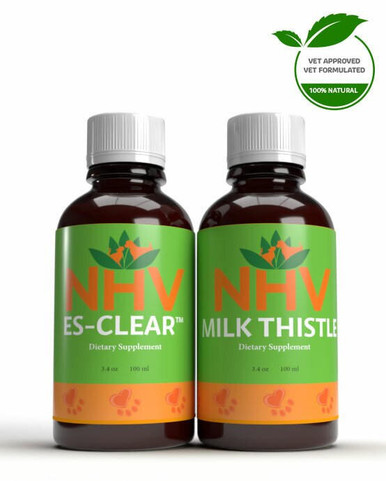
Are you asking yourself: “What are these lumps on dogs and cats? And what do I do about them?” We completely understand your worries. There is probably nothing more alarming than discovering lumps on your furkid as our thoughts race about some hidden health concern, even possibly cancer. NHV’s lumps and bumps dog supplement, and cat supplement, Lumps Kit, may help your pet’s lump and bumps journey. This bundle offers proactive support for lumps, can help improve the overall quality of life, and may ease any discomfort lumps cause. Best of all? Like all of our supplements, it is 100% natural.
Noticing a lump on cat or a dog can be incredibly unnerving, especially when it could mean cancer. But did you know not all lumps and bumps indicate cancer in your little one? When you discover a lump on your little one, besides seeking traditional treatment, our Lumps Kit can help support them.
ES-Clear and Milk Thistle, the supplements in this kit, contain herbs rich in organic compounds that can help support your pet. They work well together to encourage healthy healing, support their immune system to fight diseases, and help them maintain energy levels.
Many of our supplements make excellent proactive supports for health conditions so that you can get ahead of potential bumps for furkiddos who have had them in the past.
Different types of lumps could point to different conditions. As mentioned earlier, cancer is only one factor in lumps in dogs and cats.
They could also be caused by the following:
Even though the underlying reason for your little one’s lumps can be harmless, it is still crucial to visit a veterinarian as soon as you notice them. This is the only way to determine the nature of those bumps and seek the corresponding treatment.
In addition to traditional medication and treatment, we recommend taking supplements like the ones in our Lumps Kit to help your little one through this tough time.
NHV believes in an integrative wellness philosophy, meaning that we believe in the use of supplements, diet, and other therapeutics to support the body alongside medication when needed. That’s why all our products are safe to use in conjunction with conventional treatment.
Toxins may build up in furkids’ systems during conventional treatment like chemotherapy for cancer. That’s why both supplements in this kit help your furkiddo through that process. ES-Clear helps vital organs and blood detoxify, while Milk Thistle focuses on removing toxins from livers and kidneys. Milk Thistle can also support damaged kidneys from using drugs and radiation therapy.
The herbs in ES Clear are vet-formulated and designed to help your furkid fight cancer and tumor growth. Sheep Sorrel and Burdock, especially, have been used to support cancer. Studies have shown that Burdock has free-radical scavenging properties. On top of that, they also help with inflammatory skin disorders caused by bacterial infections. All this may help your little one with lumps.
In addition, Milk Thistle not only helps remove toxins, but research has also shown that this herb may help slow down the growth of certain cancer cells and may prevent cells from dividing in the body. Furthermore, other studies have shown that Milk Thistle may help decrease or reverse damage to the liver caused by cancer.
To top it all off, the powerful anti-inflammatory properties of Milk Thistle also benefit diseases like granuloma.
No matter the condition, the supplements in this kit will support our furriends in their healing process.
NHV’s supplements are all manufactured in a GMP-certified and FDA-approved facility. They are also safe for long-term use.
We have a team of very supportive Pet Experts that is always here to help you and your little one! So if you have any questions about lumps on dogs and cats or anything else, feel free to contact us!
Made with the finest, organically grown, or ethically harvested herbs. Made specifically for pets, vet-formulated and vet approved.
ES Clear
Select your pet's weight to determine the correct dose.
DOSAGE:
To be taken twice daily. All NHV supplements are designed to be used together, and can therefore be given at once for convenience.
Maintenance Dosage
1 drop for every 2 lb of body weight twice a day up to 50 lb. This is the minimum dosage. We recommend using this dosage when the supplements are being used as proactive care or for general health. When addressing a condition, we recommend using the therapeutic dosage (see below).
Determine your pet’s weight and then use the chart below to determine the correct dose.
Pet's Weight Dosage (twice daily)
0 - 15 lb 0.5 mL
16 - 30 lb 1.0 mL
31 - 45 lb 1.5 mL
46 - 60 lb 2.0 mL
61 - 75 lb 2.5 mL
Over 75 lb 3.0 mL
How to Administer
Shake well before use. The easiest method is to use the dropper provided and place the drops into your furkiddo’s food or favorite treat. You can also use the dropper and squirt directly into the side of their mouth (into the cheek pocket). Some pets can be finicky, if this occurs consider hiding the drops in foods that cats and dogs go crazy for like: fish, chicken, yogurt or a favorite treat. At NHV, we really like using bone broth as a topper to be put on top of medication or dry food. Bone broth has a mouth-watering smell that will help encourage your precious pet to eat and get excited about meal time. It’s also rich in nutrients and is made for pets without toxic ingredients like garlic or salt so you know that you’re feeding them something tasty as well as nutritious. You can find recipe ideas for making your own bone broth at home here.
For Best Results
Herbal dietary supplements are beneficial to the health and well-being of your furry companion and are safe for long-term use. Every pet responds to natural herbal supplements differently, therefore it is important to be consistent and administer the drops daily. Supplements generally take two to four weeks to take effect, however this will vary from one animal to the next.
Product Storage
All NHV Natural Pet Products are pure herbal extracts and contain no added artificial additives, preservatives or coloring. Shelf life after opening is 6 months and must be refrigerated after opening.
Cautions and Contraindications
Do not use it with pregnant or nursing animals.
All information provided by NHV Natural Pet Products is for educational purposes only.
Noticing a lump on cat or a dog can be incredibly unnerving, especially when it could mean cancer. But did you know not all lumps and bumps indicate cancer in your little one? When you discover a lump on your little one, besides seeking traditional treatment, our Lumps Kit can help support them.
ES-Clear and Milk Thistle, the supplements in this kit, contain herbs rich in organic compounds that can help support your pet. They work well together to encourage healthy healing, support their immune system to fight diseases, and help them maintain energy levels.
Many of our supplements make excellent proactive supports for health conditions so that you can get ahead of potential bumps for furkiddos who have had them in the past.
Different types of lumps could point to different conditions. As mentioned earlier, cancer is only one factor in lumps in dogs and cats.
They could also be caused by the following:
Even though the underlying reason for your little one’s lumps can be harmless, it is still crucial to visit a veterinarian as soon as you notice them. This is the only way to determine the nature of those bumps and seek the corresponding treatment.
In addition to traditional medication and treatment, we recommend taking supplements like the ones in our Lumps Kit to help your little one through this tough time.
NHV believes in an integrative wellness philosophy, meaning that we believe in the use of supplements, diet, and other therapeutics to support the body alongside medication when needed. That’s why all our products are safe to use in conjunction with conventional treatment.
Toxins may build up in furkids’ systems during conventional treatment like chemotherapy for cancer. That’s why both supplements in this kit help your furkiddo through that process. ES-Clear helps vital organs and blood detoxify, while Milk Thistle focuses on removing toxins from livers and kidneys. Milk Thistle can also support damaged kidneys from using drugs and radiation therapy.
The herbs in ES Clear are vet-formulated and designed to help your furkid fight cancer and tumor growth. Sheep Sorrel and Burdock, especially, have been used to support cancer. Studies have shown that Burdock has free-radical scavenging properties. On top of that, they also help with inflammatory skin disorders caused by bacterial infections. All this may help your little one with lumps.
In addition, Milk Thistle not only helps remove toxins, but research has also shown that this herb may help slow down the growth of certain cancer cells and may prevent cells from dividing in the body. Furthermore, other studies have shown that Milk Thistle may help decrease or reverse damage to the liver caused by cancer.
To top it all off, the powerful anti-inflammatory properties of Milk Thistle also benefit diseases like granuloma.
No matter the condition, the supplements in this kit will support our furriends in their healing process.
NHV’s supplements are all manufactured in a GMP-certified and FDA-approved facility. They are also safe for long-term use.
We have a team of very supportive Pet Experts that is always here to help you and your little one! So if you have any questions about lumps on dogs and cats or anything else, feel free to contact us!
Made with the finest, organically grown, or ethically harvested herbs. Made specifically for pets, vet-formulated and vet approved.
ES Clear
Select your pet's weight to determine the correct dose.
DOSAGE:
To be taken twice daily. All NHV supplements are designed to be used together, and can therefore be given at once for convenience.
Maintenance Dosage
1 drop for every 2 lb of body weight twice a day up to 50 lb. This is the minimum dosage. We recommend using this dosage when the supplements are being used as proactive care or for general health. When addressing a condition, we recommend using the therapeutic dosage (see below).
Determine your pet’s weight and then use the chart below to determine the correct dose.
Pet's Weight Dosage (twice daily)
0 - 15 lb 0.5 mL
16 - 30 lb 1.0 mL
31 - 45 lb 1.5 mL
46 - 60 lb 2.0 mL
61 - 75 lb 2.5 mL
Over 75 lb 3.0 mL
How to Administer
Shake well before use. The easiest method is to use the dropper provided and place the drops into your furkiddo’s food or favorite treat. You can also use the dropper and squirt directly into the side of their mouth (into the cheek pocket). Some pets can be finicky, if this occurs consider hiding the drops in foods that cats and dogs go crazy for like: fish, chicken, yogurt or a favorite treat. At NHV, we really like using bone broth as a topper to be put on top of medication or dry food. Bone broth has a mouth-watering smell that will help encourage your precious pet to eat and get excited about meal time. It’s also rich in nutrients and is made for pets without toxic ingredients like garlic or salt so you know that you’re feeding them something tasty as well as nutritious. You can find recipe ideas for making your own bone broth at home here.
For Best Results
Herbal dietary supplements are beneficial to the health and well-being of your furry companion and are safe for long-term use. Every pet responds to natural herbal supplements differently, therefore it is important to be consistent and administer the drops daily. Supplements generally take two to four weeks to take effect, however this will vary from one animal to the next.
Product Storage
All NHV Natural Pet Products are pure herbal extracts and contain no added artificial additives, preservatives or coloring. Shelf life after opening is 6 months and must be refrigerated after opening.
Cautions and Contraindications
Do not use it with pregnant or nursing animals.
All information provided by NHV Natural Pet Products is for educational purposes only.